


Running a modern barbershop requires more than skilled barbers and quality service. Customers now expect easy booking, digital payments, reminders, and personalized experiences. Understanding the barbershop app development cost helps business owners plan a realistic budget before investing in technology. The cost to develop a barbershop app depends on features, platform choice, design quality, and development complexity. Whether you own a single shop or a growing franchise, this guide explains pricing, important cost factors, and practical ways to maximize your investment while building a scalable mobile solution.
The Importance of Barbershop Apps
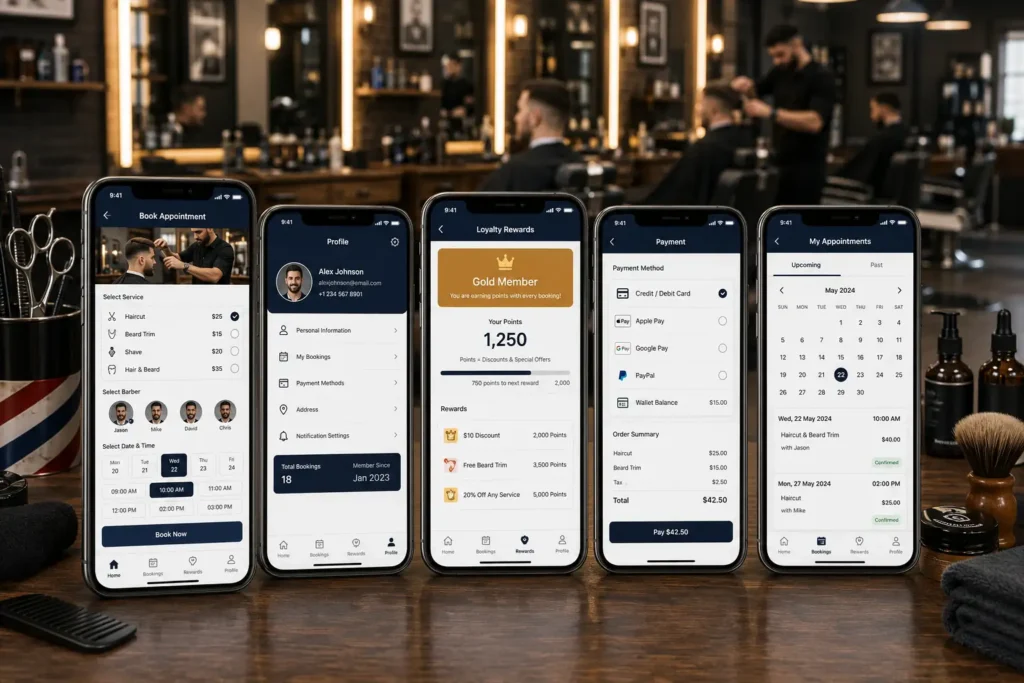
The grooming industry has changed significantly in recent years. Customers prefer digital convenience over phone calls or walk-in appointments. A dedicated mobile app for barbershop business improves customer satisfaction while helping owners streamline daily operations. A well-designed app offers convenience for customers and improves operational efficiency. Instead of manually handling reservations, staff can focus on delivering quality service.
Some major business benefits include:
- Faster barber appointment booking
- Better customer retention through loyalty programs
- Reduced no-shows with push notifications
- Easier appointment management
- Improved customer communication
- Digital payment support
- Better business insights through analytics
Today’s customers also expect online barber booking. They want to choose their barber, compare available time slots, and receive instant confirmation. Modern businesses increasingly treat their app as an important customer engagement platform rather than just another booking tool. This approach creates long-term customer loyalty and increases repeat visits.
Factors Affecting the Cost to Develop a Barbershop App
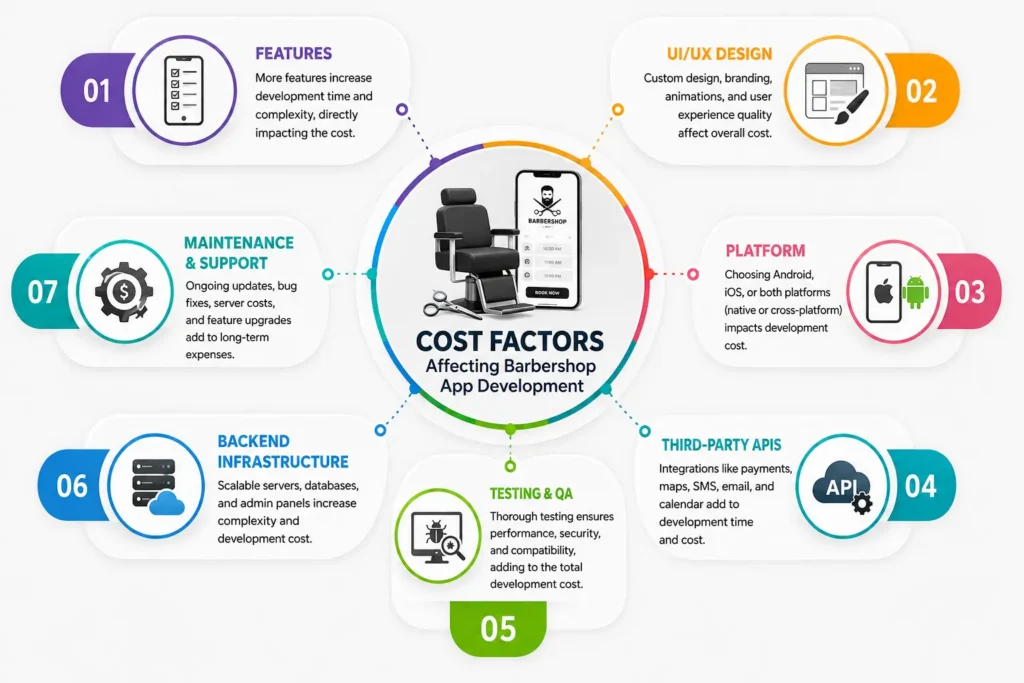
Several technical and business decisions influence the final barbershop app development cost. Understanding these variables helps avoid unexpected expenses.
1. Feature Complexity
Features have the biggest impact on pricing. A simple booking application costs much less than a complete business management platform.
Common barbershop app features include:
- Customer registration
- Service catalog
- Barber profiles
- Appointment calendar
- Ratings and reviews
- Loyalty rewards
- In-app payments
- Promotional offers
- Admin dashboard
Adding advanced capabilities such as AI recommendations or virtual hairstyle previews increases development time and cost.
2. UI and User Experience
A clean interface encourages users to book appointments quickly. Investing in professional design improves customer retention. The overall UI/UX design cost depends on screen count, branding, animations, and interactive elements. Custom designs require more effort than standard templates but provide a stronger brand identity.
3. Platform Selection
Businesses usually choose between Android, IOS app development, or both platforms. Native development delivers the best performance but increases overall expenses. Cross-platform frameworks reduce development time while maintaining a consistent user experience across devices.
4. Backend Infrastructure
Every booking application needs reliable servers to manage appointments, customer accounts, and notifications. A scalable cloud-based booking system allows businesses to handle growing customer demand without performance issues. Backend complexity increases when supporting multiple branches, employee management, inventory tracking, and reporting dashboards.
5. Third-Party Integrations
Many businesses integrate external services instead of building everything from scratch.
Examples include:
- Payment gateway integration
- SMS verification
- Maps
- Email services
- Marketing platforms
- Third-party API integration
- Calendar synchronization
Each integration requires additional development and testing.
6. Development Approach
Many startups begin with MVP app development. An MVP includes only essential features that validate the business idea before making a larger investment. Launching an MVP reduces risk and provides valuable customer feedback for future updates.
7. Testing and Quality Assurance
Quality testing prevents technical issues after launch.
Professional app testing and deployment includes:
- Functional testing
- Security testing
- Device compatibility
- Performance optimization
- Bug fixing
Skipping testing often results in higher costs after release. Overall, these app development cost factors determine whether your project remains affordable or becomes significantly more expensive.
Explore more: Salon app development cost guide
Average Cost of Barbershop App Development
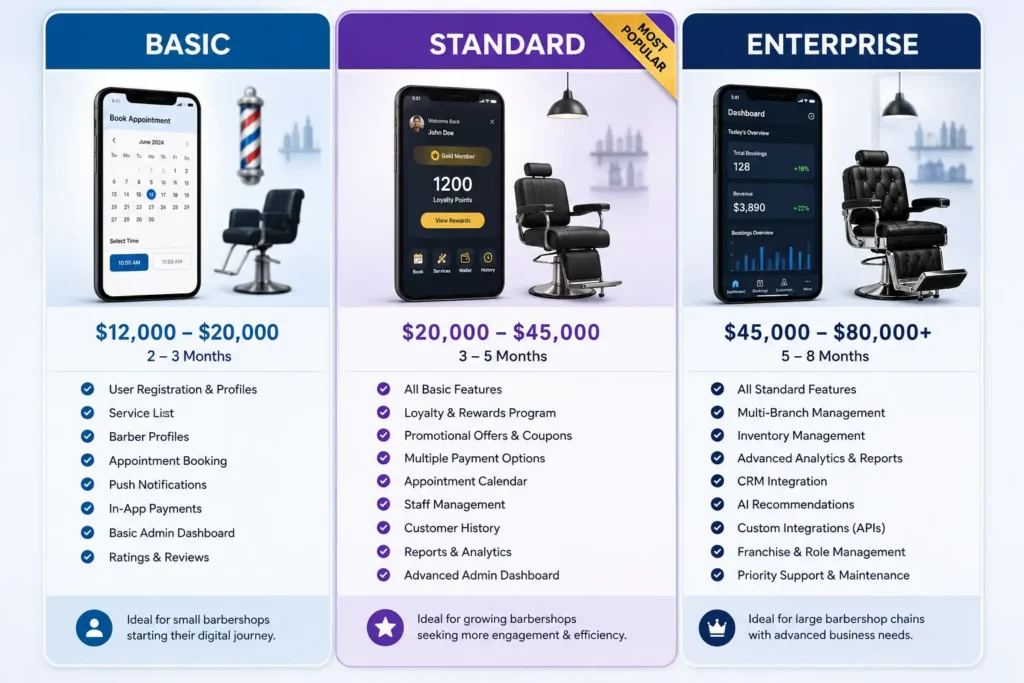
The total barbershop app development cost varies according to project scope and technical requirements. Current global market rates generally fall within these ranges.
| App Type | Estimated Cost (USD) | Development Time |
|---|---|---|
| Basic Booking App | $12,000–$20,000 | 2–3 months |
| Standard Business App | $20,000–$45,000 | 3–5 months |
| Advanced Multi-Branch Solution | $45,000–$80,000+ | 5–8 months |
A basic application typically supports customer registration, booking, payments, and notifications. A mid-level solution may include loyalty programs, marketing tools, analytics, and employee scheduling. Enterprise platforms often include CRM integration, inventory management, franchise administration, and advanced reporting.
Businesses planning salon and barbershop app development should budget according to long-term goals rather than immediate requirements. For comparison, the hair salon app development cost often falls within similar pricing because both industries require nearly identical booking workflows and customer management systems.
If your business requires specialized branding and custom workflows, custom barbershop app development will naturally cost more than template-based applications. Companies entering the on-demand market may also invest in on-demand barber app development, where customers can request barbers at home. These applications require live location tracking and real-time availability.
When selecting a technology partner, businesses should evaluate experience instead of choosing only the lowest quote. Working with the best barbershop app development company often reduces long-term expenses through better architecture and fewer post-launch issues.
Tips for Keeping Barbershop App Development Cost Low
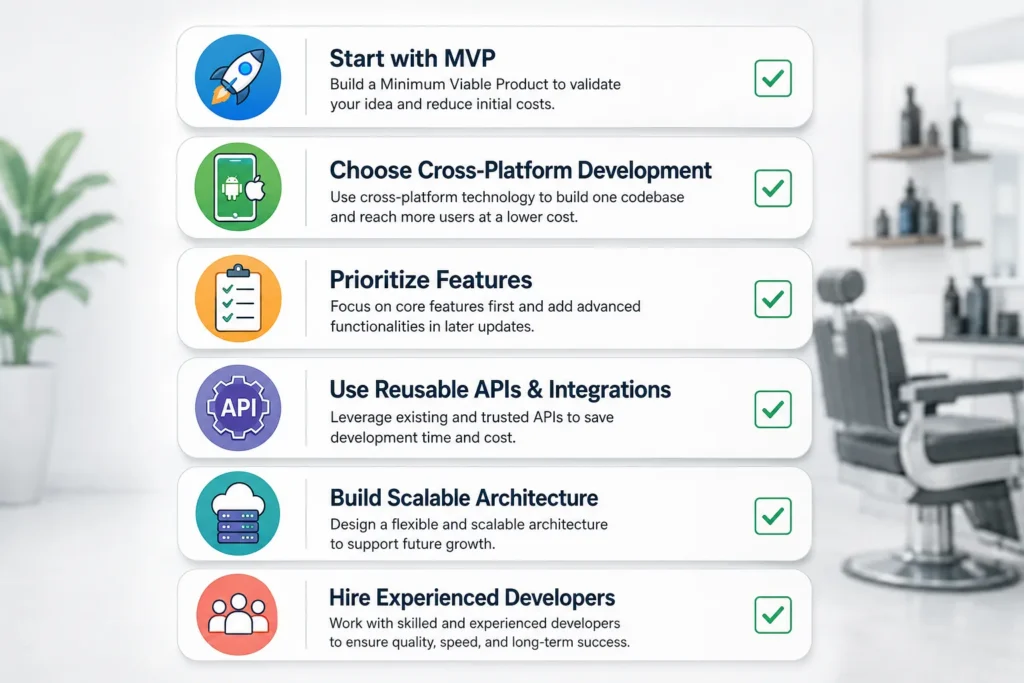
Reducing development expenses does not mean sacrificing quality. Smart planning helps businesses control budgets while building scalable products.
1. Start Small
Launch essential features first. An MVP allows you to validate customer demand before investing in premium functionality.
2. Prioritize Core Features
Avoid adding unnecessary capabilities during the first release. Focus on booking, payments, customer profiles, and notifications before expanding.
3. Choose Cross-Platform Development
Building one codebase often reduces development time compared to separate native applications. This approach works well for most growing businesses.
4. Use Existing Integrations
Instead of creating payment systems or messaging platforms from scratch, integrate trusted third-party services. This lowers development costs while improving reliability.
5. Plan Future Scalability
Build an architecture that supports future expansion. Adding new features later becomes easier and less expensive.
6. Select an Experienced Team
Many businesses simply compare hourly rates. However, experienced developers complete projects faster and produce cleaner code. If you plan to hire mobile app development agency, evaluate technical expertise, communication, previous projects, and long-term support instead of choosing solely on price.
Hiring a Barbershop App Development Team
Selecting the right development partner directly affects project quality, timeline, and future maintenance.
Professional barbershop app development services typically include:
- Business analysis
- UI/UX design
- Backend development
- Mobile development
- Testing
- Deployment
- Ongoing support
A reliable team understands both technology and business operations. During barbershop mobile app development, developers should recommend scalable architecture instead of temporary solutions.
Before signing a contract, review:
- Previous portfolio
- Industry experience
- Development methodology
- Communication process
- Maintenance plans
- Security practices
- Client testimonials
Many businesses also decide to hire app developers with experience in booking platforms because scheduling logic differs from traditional eCommerce applications. If your business plans to launch a complete barber shop booking app, ensure the team understands calendar synchronization, recurring appointments, cancellations, and loyalty systems.
Applications serving the beauty and wellness app industry often share similar workflows. Experienced teams can reuse proven architecture while customizing features for your business. Choosing the right partner improves delivery quality and lowers future operational costs.
Explore more: Barbershop website development cost guide
Conclusion
Understanding the cost to develop a barbershop app helps businesses create realistic budgets and avoid unexpected expenses. The final investment depends on features, design quality, integrations, platforms, scalability, and long-term business goals. Instead of focusing only on the initial price, evaluate long-term value, customer experience, and future growth. A professionally developed app can increase bookings, improve customer loyalty, and simplify daily operations, making it a worthwhile investment for modern barbershops.