


The real estate industry has changed rapidly over the last decade. Buyers and investors now expect instant property access, personalized recommendations, and seamless communication from any device. A custom real estate app helps businesses meet these expectations while improving operational efficiency. Investing in custom real estate app development allows companies to create unique digital experiences that match their goals, audience, and business model.
Unlike generic platforms, a custom real estate app offers flexibility, stronger security, and room for future growth. Whether you manage residential listings, commercial properties, rentals, or investments, a tailored application can simplify daily operations and improve customer satisfaction. Businesses that choose custom real estate app development gain a competitive advantage through better user experiences, streamlined workflows, and scalable technology.
Key Benefits of Custom Real Estate App Development
1. Deliver a Personalized Customer Experience
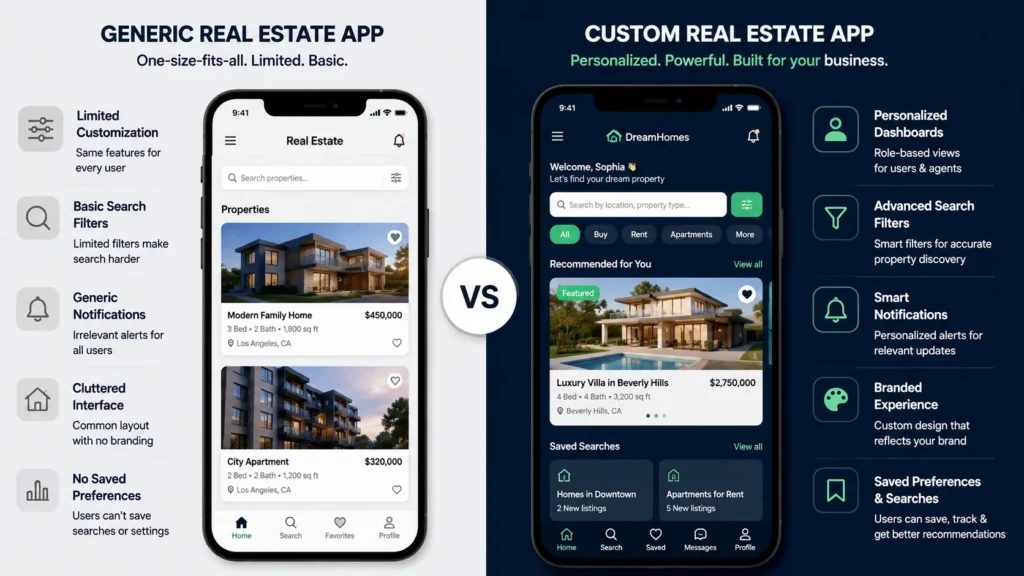
Every real estate business serves a different audience. Some focus on luxury homes, while others specialize in rentals or commercial properties. A custom solution lets you build features around your customers instead of adjusting your business to fit a ready-made platform. With real estate app development, businesses can customize dashboards, search filters, notifications, and user journeys. Buyers enjoy a smoother experience, while agents spend less time handling repetitive tasks.
2. Strengthen Brand Identity
Brand recognition plays a significant role in customer trust. A customized application reflects your company identity through unique colors, layouts, navigation, and functionality. A branded application also creates consistency across your website, marketing campaigns, and customer interactions. This consistency helps users remember your business and increases long-term engagement.
3. Improve Property Discovery
Property searches become faster when users receive relevant recommendations based on location, budget, lifestyle, and preferences. Advanced filtering combined with GPS property search allows buyers to discover nearby properties with accurate location information. Businesses can also build an intelligent property search app that remembers previous searches and suggests similar listings automatically.
Interactive maps, neighborhood insights, nearby schools, and transportation details further improve the buying experience.
4. Simplify Property Listings
Managing hundreds or thousands of properties manually consumes valuable time. A modern property listing app allows administrators and agents to publish, update, archive, and promote listings through one centralized dashboard. Businesses can also include high-quality images, floor plans, pricing history, availability status, and contact details without switching between multiple systems.
5. Increase Customer Engagement
Real estate decisions often require multiple interactions before a purchase. Push notifications, saved searches, appointment reminders, and personalized recommendations encourage users to return regularly. Businesses can further improve engagement through chat support, mortgage calculators, favorite property collections, and instant inquiry forms.
6. Support Better Buying Decisions
Modern buyers want complete information before scheduling a visit. Features such as virtual property tours enable customers to explore homes remotely. Interactive walkthroughs save time for buyers and agents while increasing qualified property visits. These immersive experiences are especially valuable for overseas buyers and busy professionals.
7. Automate Everyday Operations
Manual paperwork slows business growth. Automation reduces repetitive work and improves accuracy. A custom platform can connect with real estate CRM integration tools to synchronize customer data automatically. Businesses can also automate lead assignment, follow-ups, appointment scheduling, document sharing, and notifications.
This level of real estate automation improves productivity and lets sales teams focus on closing deals instead of managing administrative tasks.
8. Enable Seamless System Integrations
Real estate businesses depend on multiple software platforms. A custom solution can support MLS integration, payment gateways, digital signature tools, accounting software, analytics platforms, and marketing automation systems. Instead of maintaining disconnected software, businesses gain one connected ecosystem that improves collaboration and reduces duplicate work.
9. Build for Future Growth
Business requirements evolve. A scalable application grows alongside your organization. Whether you want to launch new services, enter different markets, or add subscription plans, custom real estate app development provides flexibility without rebuilding your platform. Companies also benefit from stronger security, better performance, and easier maintenance compared to many off-the-shelf products.
Explore more: Real estate website development cost guide
How Custom Real Estate Apps Can Benefit Different Types of Real Estate Businesses
Different businesses have different operational needs. A tailored application helps every organization solve unique challenges while creating better customer experiences.
1. Residential Real Estate Agencies
Residential agencies manage frequent inquiries, property visits, and customer communication. A mobile app for real estate agents helps agents manage appointments, communicate with buyers, share listings, and receive instant inquiries from anywhere. Buyers also benefit from personalized recommendations, saved searches, and faster communication.
2. Commercial Property Businesses
Commercial transactions often involve larger investments and longer decision cycles. A custom platform supports detailed property specifications, lease management, document sharing, financial projections, and investor communication. These capabilities help businesses manage complex deals more efficiently.
3. Property Management Companies
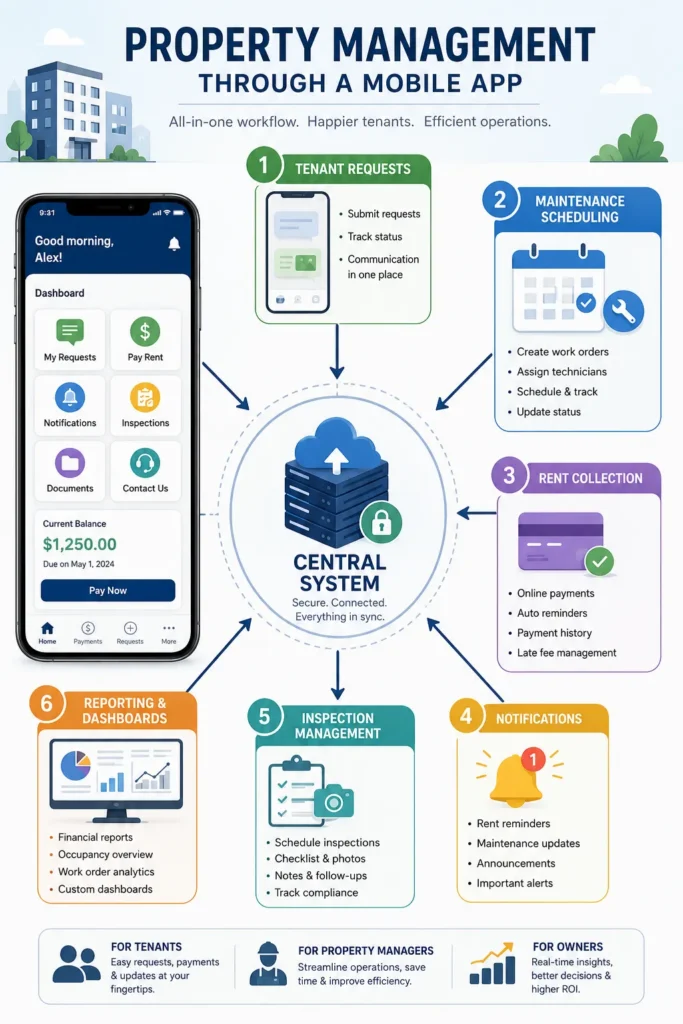
Managing multiple residential or commercial buildings requires organized workflows. A dedicated property management app allows managers to track maintenance requests, collect rent, manage tenant communication, schedule inspections, and monitor occupancy through one platform. Automation reduces administrative work while improving tenant satisfaction.
4. Real Estate Brokerages
Brokerages coordinate multiple agents, offices, and customers simultaneously. A centralized real estate business app helps brokers monitor agent performance, manage leads, assign prospects, track commissions, and review sales reports through real-time dashboards. This visibility supports better business decisions.
5. Home Buyers and Sellers
Consumers increasingly expect digital convenience throughout the buying process. A modern home buying app provides property comparisons, mortgage estimates, neighborhood insights, appointment booking, and document sharing within one interface. Sellers benefit from easier listing management and faster buyer communication.
6. Property Investors
Investors evaluate opportunities based on financial performance rather than appearance alone. A dedicated property investment app can display rental income estimates, market trends, return projections, portfolio tracking, and investment comparisons. These insights support faster and more informed investment decisions.
7. Real Estate Marketplaces
Businesses operating multi-vendor platforms require flexible architecture. A scalable real estate marketplace app enables agencies, builders, brokers, and independent sellers to publish listings through one secure platform while maintaining separate accounts and permissions. Marketplace operators can generate revenue through featured listings, premium memberships, advertising, and subscription models.
8. Businesses Expanding Their Digital Strategy
Growing companies increasingly invest in real estate mobile solutions to improve customer engagement across every touchpoint. Custom applications support online bookings, digital documentation, secure payments, and centralized communication. These improvements contribute directly to real estate digital transformation, helping businesses modernize operations and stay competitive in a rapidly evolving market.
Businesses planning long-term innovation often start with a custom property app that reflects their workflow today while remaining flexible for future enhancements.
Explore more: Real estate app development cost
The Process of Custom Real Estate App Development
Developing a successful application requires careful planning and collaboration. Every stage contributes to the final product’s quality, usability, and long-term performance.
1. Define Business Goals and Requirements
The first step is understanding your business model, target audience, and operational challenges. Clear goals help determine the right features, integrations, and technology stack. During this phase, development teams identify user personas, project scope, security requirements, and future scalability needs. This foundation reduces risks and keeps the project aligned with business objectives.
2. Plan Features and User Experience
Once the requirements are clear, designers create user journeys and wireframes. A smooth interface improves customer satisfaction and increases user retention. Popular features include property search, saved listings, appointment booking, secure messaging, mortgage calculators, push notifications, and document sharing. These capabilities make real estate mobile app development more valuable for both businesses and customers.
3. UI/UX Design and Prototyping
A professional design creates trust from the first interaction. Designers build clickable prototypes to validate navigation, layout, and usability before development begins. Early feedback helps eliminate issues and reduces development costs later. The goal is to create an intuitive experience that works seamlessly across Android, iOS, and tablets.
4. Development and System Integration
Developers build the application using scalable architecture and secure coding practices. This stage includes backend development, APIs, databases, authentication, payment gateways, and third-party integrations. Businesses investing in real estate application development should prioritize performance, security, and future scalability from the beginning.
5. Testing and Quality Assurance
Comprehensive testing ensures every feature performs reliably. Teams verify functionality, security, performance, compatibility, and usability before launch. Continuous testing minimizes bugs and delivers a stable application that customers can trust.
6. Deployment and Continuous Improvement
Launching the app is only the beginning. Successful businesses monitor user behavior, collect feedback, release updates, and introduce new features regularly. Continuous improvement helps maintain customer satisfaction and keeps the application competitive as market expectations evolve.
Choosing the Right App Development Partner
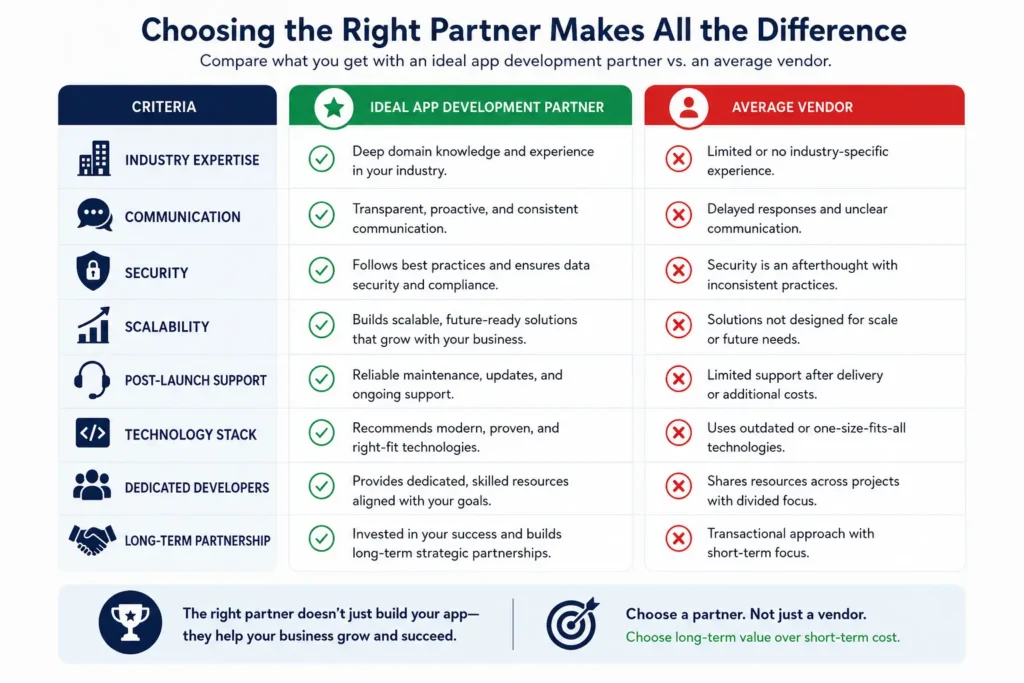
Selecting the right technology partner directly affects project success. Experience, communication, and technical expertise matter just as much as pricing.
Look for a company with proven experience in property app development, strong UI/UX capabilities, secure development practices, and post-launch support. Reviewing case studies and client testimonials provides valuable insight into their delivery standards.
If your business operates in Europe, partnering with the best real estate app development company UK can provide industry knowledge, regulatory understanding, and localized market expertise. This approach also creates a strong opportunity for future collaboration and internal service expansion.
Beyond technical skills, evaluate how the development team approaches discovery sessions, project planning, and ongoing communication. Transparent processes reduce misunderstandings and improve delivery timelines.
As your business grows internationally, you may also require specialized expertise. Many organizations explore custom real estate app development services USA when expanding into North American markets or building region-specific products. Choosing a partner with global delivery capabilities ensures smoother scaling without compromising quality.
Technology expertise is equally important. A top mobile app development firm should offer modern architectures, cloud deployment, API integrations, security compliance, and long-term maintenance. These capabilities help protect your investment while supporting future business growth.
If your project demands rapid scaling or specialized technical knowledge, consider teams that allow you to hire top dedicated developers for specific technologies or long-term product development. Dedicated resources often improve communication, accelerate delivery, and maintain consistent product quality throughout the project lifecycle.
Modern businesses also benefit from partners experienced in on-demand app solutions, enabling faster feature deployment, flexible scaling, and seamless customer experiences across multiple digital channels.
Explore more: How to select a real estate app development company
Conclusion
A custom real estate app is more than a digital tool. It becomes a strategic business asset that strengthens customer relationships, streamlines operations, and supports sustainable growth. From intelligent property searches to automated workflows and seamless integrations, custom real estate app development helps businesses deliver better experiences while improving efficiency. Companies that invest in tailored solutions position themselves for long-term success in an increasingly digital market.
Whether you serve residential buyers, commercial investors, or property managers, the right application creates measurable value. Choosing an experienced development partner ensures your investment delivers lasting results and adapts to changing market demands.