


The demand for eLearning app development continues to grow as learners prefer flexible and engaging digital experiences. Businesses, schools, and training providers now invest in educational app development to reach users anytime and anywhere. From professional certifications to school education, mobile learning has changed how people gain knowledge. A well-designed learning application improves engagement, tracks progress, and delivers content efficiently.
Modern learners expect more than digital textbooks. They want interactive lessons, quizzes, live sessions, and personalized recommendations. Companies also use learning apps to train employees and improve workplace skills. As a result, educational technology has become an important investment for organizations of every size.
Whether you plan to launch a language learning app, a corporate training solution, or an academic platform, success depends on careful planning. Every feature should solve a real learning challenge while keeping users motivated. This guide explains the complete process, from understanding the basics to building a successful learning application.
Understanding eLearning App Development
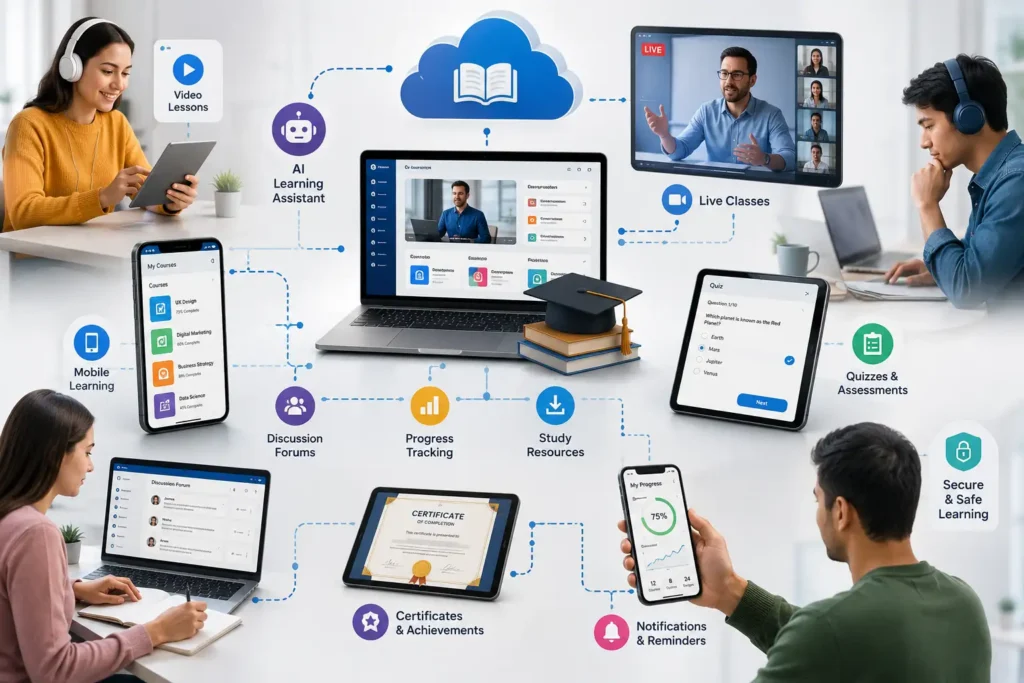
eLearning app development is the process of designing and building digital applications that help people learn through mobile devices or computers. These applications combine educational content with engaging experiences to improve learning outcomes. They serve schools, universities, businesses, coaching centers, and independent educators. Unlike traditional classroom learning, digital applications allow learners to study at their own pace. Users can access lessons from anywhere with an internet connection.
This flexibility makes digital education attractive for busy professionals, students, and lifelong learners. Today’s learning applications support videos, live classes, assignments, assessments, discussion forums, and performance tracking. Many also use artificial intelligence to recommend personalized learning paths based on user progress.
Why Businesses Are Investing in Learning Apps
Organizations now recognize that digital education offers long-term value. Companies train employees faster while reducing travel and classroom expenses. Educational institutions expand their reach beyond physical campuses. Training providers generate recurring revenue through subscriptions and online courses. Businesses also collect valuable learning data. These insights help improve course quality and learner engagement over time.
Many organizations choose custom eLearning app development because every business has different training goals. A tailored solution offers better flexibility, branding, and scalability than generic software.
Different Types of eLearning Applications
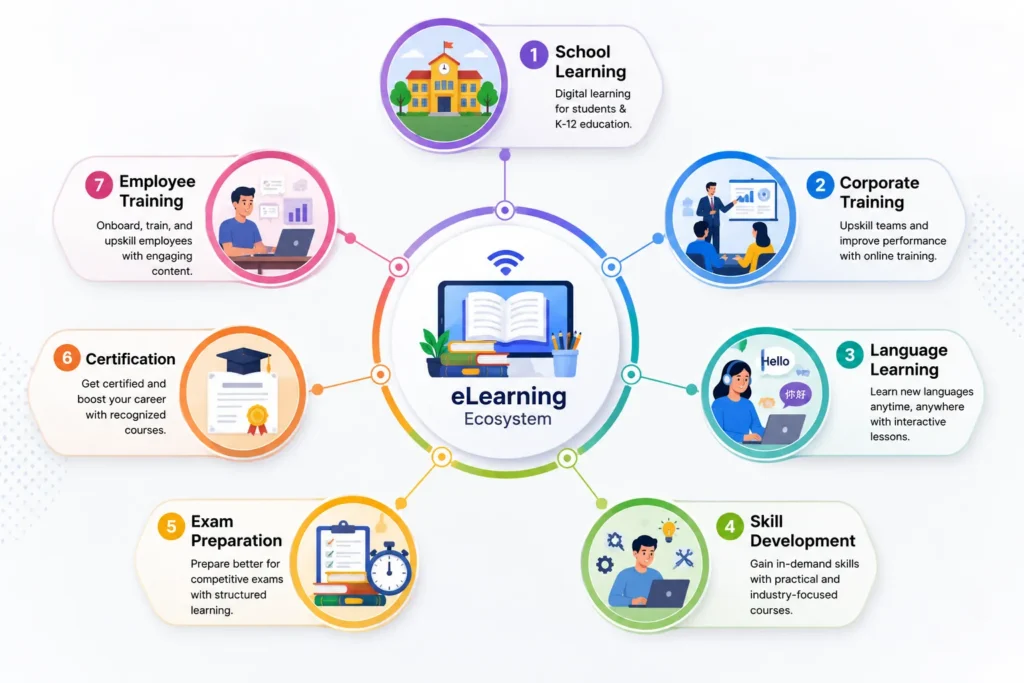
Learning applications serve different audiences and objectives. Choosing the right model depends on your business goals.
Some common examples include:
- School learning apps
- Corporate training applications
- Language learning platforms
- Skill development applications
- Exam preparation apps
- Certification platforms
- Employee onboarding solutions
A successful eLearning mobile app combines useful content with a simple interface. Users should find lessons quickly without feeling overwhelmed.
Core Components of a Successful Learning App
Every successful learning application includes several essential elements. Together, they create a smooth learning experience. A user-friendly dashboard keeps navigation simple. Course management allows instructors to organize lessons effectively. Progress tracking motivates learners by showing completed modules. Notifications remind users about upcoming classes and assignments.
Many platforms also include discussion boards, downloadable resources, certificates, and secure payment options. An effective online education platform should support learners throughout their educational journey rather than simply delivering content.
The Growing Role of AI and Modern Technologies
Technology continues to reshape digital education. One major trend is AI in eLearning apps, which helps personalize learning experiences. AI can recommend lessons based on performance, generate quizzes automatically, identify weak topics, and provide instant feedback. These capabilities make learning more engaging and efficient.
Cloud technology also improves accessibility. Learners can continue lessons across multiple devices without losing progress. Organizations increasingly adopt a cloud-based learning platform because it supports remote access, automatic updates, and scalable infrastructure.
Meeting Different User Needs
Every learner has unique expectations. Some prefer video lessons, while others learn better through interactive exercises or quizzes. An effective interactive learning app offers multiple learning formats to suit different preferences. It also encourages regular participation through achievements, progress badges, and personalized recommendations.
Accessibility also matters. Clear navigation, readable text, subtitles, and responsive design ensure that more learners benefit from the platform.
Step-by-Step Guide to Creating an eLearning App
Creating a successful learning application requires careful planning before writing a single line of code. Every stage should focus on user needs and long-term business goals.
Step 1: Define Your Learning Objectives
Start by identifying your audience and educational goals. A school application serves different needs than a corporate training platform.
Ask important questions before development begins.
- Who are your learners?
- What problems will the app solve?
- Which devices will users prefer?
- How will success be measured?
Clear answers reduce development risks and improve product quality. If your target users include universities or businesses, your solution may require a complete learning management system to organize courses, instructors, reports, and certifications efficiently.
Step 2: Conduct Market Research
Study existing learning applications before designing your own. Look at user reviews to identify common complaints. Analyze competitors to discover missing features that your product can improve. Research also helps determine pricing models, subscription plans, and user expectations.
For example, many successful platforms combine recorded lessons with live sessions and downloadable materials. This approach increases engagement while supporting different learning styles.
Step 3: Choose the Right Features
Selecting practical features is more valuable than adding unnecessary complexity.
Some essential features include:
- User registration
- Course catalog
- Video lessons
- Live classes
- Assessments
- Certificates
- Push notifications
- Progress reports
- Secure payments
These eLearning platform features create a complete learning experience for students and instructors alike.
A well-planned feature roadmap also simplifies future updates.
Step 4: Design an Engaging User Experience
Good design helps learners stay focused. Avoid cluttered screens and confusing menus. Keep navigation simple and consistent throughout the application. A clean interface allows users to find courses, continue lessons, and track progress without frustration. For younger audiences, colorful illustrations and animations improve engagement. Professional learners often prefer minimal designs with quick access to learning materials. An effective student learning app balances visual appeal with usability.
Explore more: eLearning app development cost guide
Step 5: Select the Development Approach
The technology stack depends on project goals, budget, and timeline. Businesses planning online learning app development should decide whether to build native applications, cross-platform apps, or web solutions. Each approach offers different advantages for performance, maintenance, and development costs. Your technical team should also consider scalability, security, and future integrations during planning.
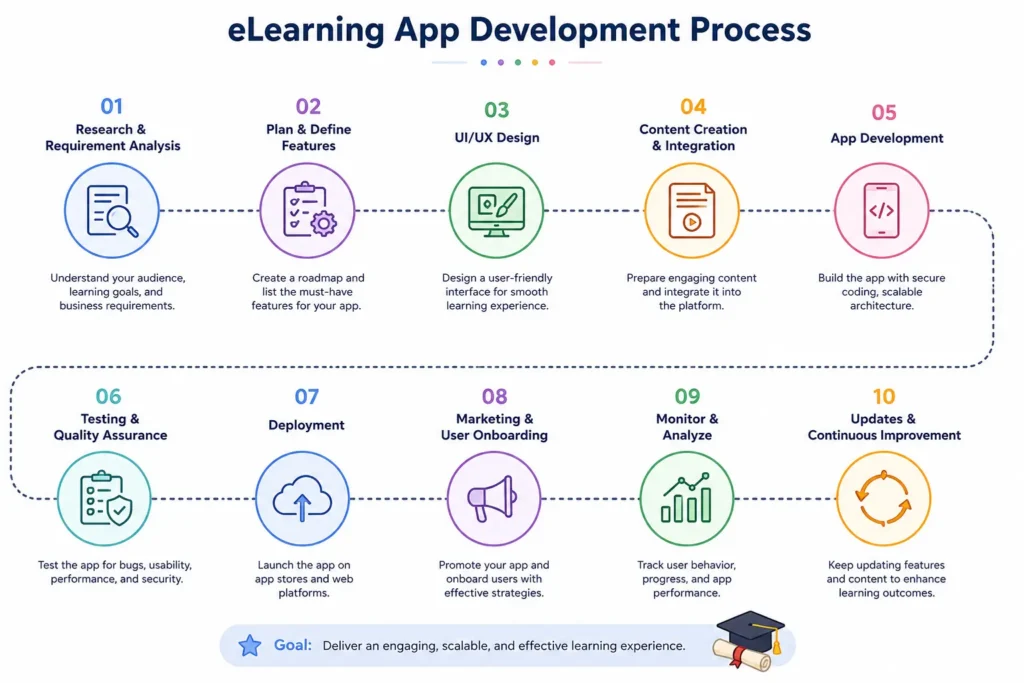
Step 6: Build Separate Experiences for Students and Teachers
Different users need different capabilities. Students require course enrollment, lesson tracking, quizzes, certificates, and discussion forums. Teachers need content management, assignment creation, grading tools, and learner analytics. Effective teacher app development focuses on simplifying course management while reducing administrative work. Providing separate dashboards improves productivity for both groups.
Step 7: Develop High-Quality Learning Content
Technology alone cannot create a successful learning platform. Invest in professional videos, practical exercises, downloadable resources, and well-structured lessons. Many organizations now combine text, images, videos, podcasts, and interactive assessments into one video learning platform to keep learners engaged for longer periods. High-quality content encourages repeat usage and positive reviews.
Step 8: Test Before Launch
Testing ensures a smooth user experience. Check application performance on different devices and screen sizes. Review navigation, payment systems, video playback, notifications, and security. Invite real users to test the application before public release. Their feedback often reveals usability issues that internal teams overlook. A successful launch depends on careful testing rather than rushing to market.
Step 9: Plan Future Improvements
Launching the application is only the beginning. Monitor user feedback, learning analytics, and engagement metrics regularly. Update content frequently and introduce new features based on learner behavior. Many businesses partner with the best eLearning app development company to maintain, improve, and scale their applications as user expectations evolve. Continuous improvement keeps the platform competitive and valuable for learners.
Best Practices for Designing an Effective eLearning App
Creating a successful learning application requires more than attractive screens. The best products focus on user needs, learning outcomes, and long-term engagement. Good planning also reduces maintenance costs and improves learner satisfaction.
1. Keep the User Experience Simple
A clean interface helps learners stay focused on lessons instead of searching for buttons. Use consistent navigation, readable fonts, and clear labels throughout the application. Every screen should guide users toward the next learning step. A well-designed mobile education app removes unnecessary distractions and makes learning enjoyable.
2. Personalize the Learning Journey
Every learner has different goals and learning speeds. Personalization improves engagement because users receive content that matches their progress and interests. Course recommendations, adaptive quizzes, and progress reminders encourage learners to continue their education. These digital learning solutions increase completion rates while creating a better learning experience.
3. Make Learning Interactive
People remember information better when they actively participate. Include quizzes, flashcards, polls, discussions, and practical exercises throughout each course. Interactive activities encourage learners to apply their knowledge instead of simply watching videos. Many successful platforms also use gamification in education through badges, points, leaderboards, and achievement levels. These rewards motivate learners to complete courses consistently.
Explore more: How much does eLearning website development cost?
4. Support Multiple Devices
Learners switch between smartphones, tablets, laptops, and desktop computers during the day. Your application should provide the same experience across every device. Businesses investing in mobile learning app development should ensure smooth synchronization so users can continue lessons without losing progress. Responsive layouts also improve accessibility for different screen sizes.
5. Prioritize Security and Privacy
Learning platforms often store personal details, payment information, and academic records. Use secure authentication, encrypted data storage, and regular software updates. Protecting user information builds trust and supports long-term business growth. Security should remain a priority from planning through deployment.
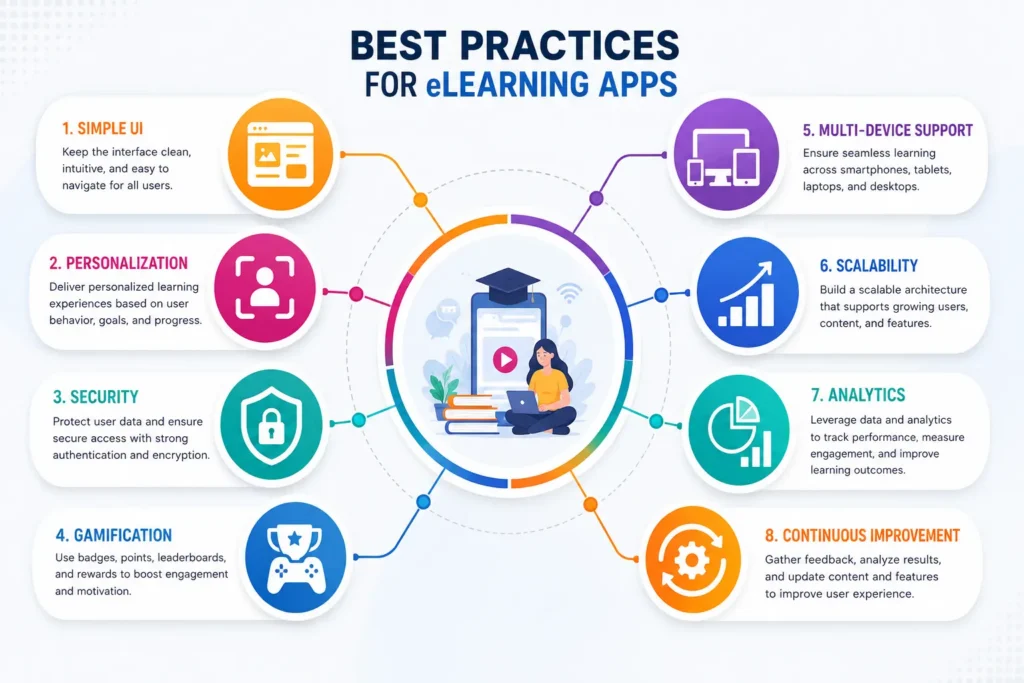
6. Build for Future Growth
A successful learning application attracts more users over time. Plan your architecture so new courses, instructors, and features can be added without affecting performance. Businesses offering LMS app development often design scalable platforms that support growing organizations and expanding course libraries.
7. Enable Live and Self-Paced Learning
Different learners prefer different teaching methods. Some users enjoy live classes with instructors. Others prefer recorded lessons they can watch anytime. Combining both approaches creates a stronger virtual learning platform that supports flexible education. Adding downloadable resources also helps learners continue studying offline.
8. Focus on Business Goals
An application should solve real business problems while creating value for learners. Many organizations invest in app development for online education to improve employee training, reduce operational costs, or expand educational services. Working with the professional mobile application development firm can help businesses create scalable products that align with long-term goals and deliver measurable results.
After defining your strategy, the next step is selecting a development partner that understands your industry. Many organizations also look for custom education app development services USA when expanding into international markets or building region-specific learning solutions.
As projects grow, businesses often hire top dedicated developers to accelerate delivery, maintain quality, and support future enhancements without interrupting ongoing operations.
Conclusion
Digital learning continues to transform education and professional training. Organizations now expect learning applications to deliver flexibility, engagement, and measurable results. Successful eLearning app development starts with understanding learner needs, selecting the right features, and building an application that grows with your business. A thoughtful approach improves user satisfaction while increasing long-term adoption.
Whether you are creating a corporate training platform, an online course app, or a school solution, planning remains the foundation of success. The right strategy helps you deliver an educational mobile application that supports both learners and instructors.
Modern businesses also benefit from creating an app for students and teachers that combines communication, assessments, and progress tracking in one place. As demand for remote learning solutions continues to grow, investing in educational app development can help organizations stay competitive and deliver meaningful learning experiences for years to come.