


Every successful software product starts with the right people. If you plan to hire dedicated programmers, choosing professionals who focus only on your project can make a real difference. Expert dedicated programmers bring technical expertise, consistency, and long-term commitment that many traditional hiring options cannot match. They work as an extension of your business, helping you deliver quality software while keeping timelines on track.
Whether you are building a startup product, upgrading an enterprise platform, or launching a customer-facing application, the right talent influences every stage of development. A dedicated hiring approach gives you greater control over the project while allowing your business to stay focused on growth. Instead of juggling multiple vendors or short-term contractors, you gain a reliable development partner invested in your success.
Benefits of Hiring Dedicated Programmers
Hiring the right software professionals is no longer just about filling technical positions. It is about building a team that understands your goals, adapts to changing priorities, and delivers consistent results. Let’s explore the biggest advantages of choosing this approach.
1. Strong Focus on Your Project
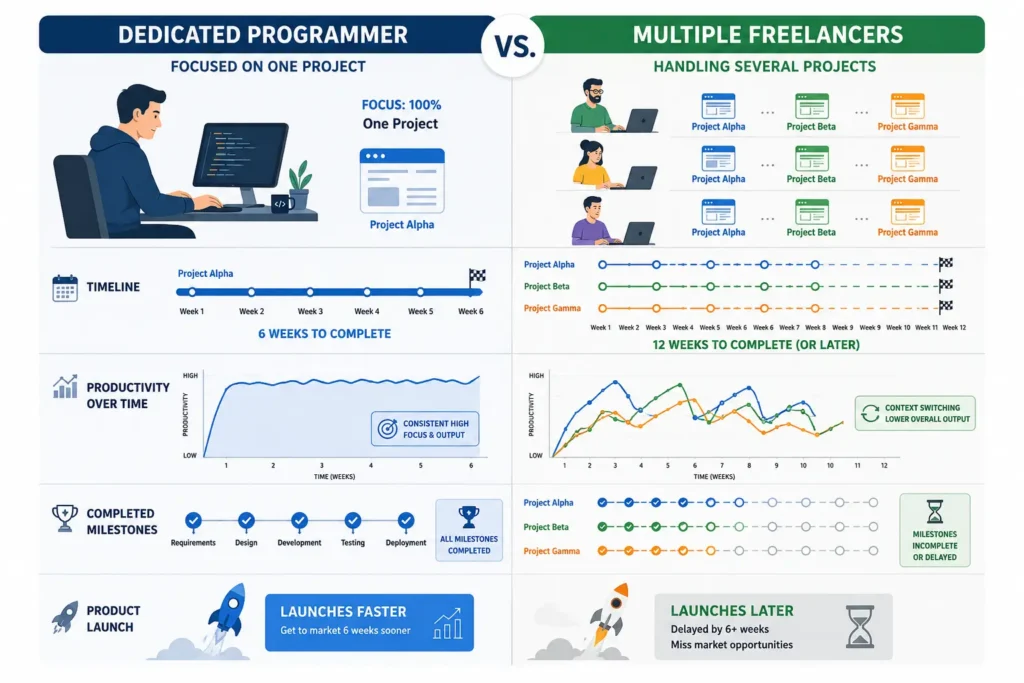
Unlike professionals who divide their time across multiple clients, professional dedicated programmers work exclusively on your project. They understand your business objectives, technical requirements, and long-term vision. As they become familiar with your product, they make better technical decisions and solve problems faster. This continuity reduces misunderstandings and improves the overall quality of the final product.
2. Access to Specialized Technical Expertise
Modern applications require expertise across different technologies, frameworks, and platforms. Finding every skill internally can be expensive and time-consuming. Working with an expert programming team gives you access to specialists with proven experience in web development, mobile applications, cloud platforms, APIs, AI integrations, and more. Their practical knowledge helps avoid common development mistakes while improving software quality.
3. Faster Project Delivery
Speed matters in today’s competitive market. Delayed launches often lead to missed opportunities and increased development expenses. An experienced team follows proven workflows, maintains regular communication, and resolves technical issues quickly. This results in faster product development without sacrificing quality. Projects also move smoothly because developers remain involved from planning through deployment instead of switching between multiple assignments.
4. Flexible Team Expansion
Business requirements rarely stay the same throughout development. New features, changing customer expectations, or market opportunities often require additional resources. A flexible hiring model allows you to increase or reduce team size without going through lengthy recruitment cycles. This flexibility helps businesses respond quickly while maintaining development momentum. Instead of hiring permanent employees for temporary workloads, organizations can adjust resources according to project demands.
5. Better Collaboration and Communication
Communication gaps often slow software projects more than technical problems. Dedicated professionals participate in regular meetings, sprint planning, code reviews, and daily updates. They become familiar with your internal processes and collaborate closely with designers, testers, and product managers. This creates a unified software development team where everyone works toward the same business objectives.
6. Cost Efficiency Without Compromising Quality
Recruiting, onboarding, training, and retaining experienced developers requires significant investment. Businesses must also manage infrastructure, employee benefits, office space, and ongoing administrative costs.
Choosing dedicated development services allows companies to access skilled professionals while avoiding many of these operational expenses. This approach helps organizations reduce development costs without lowering coding standards or project quality. The savings can be invested in product improvements, marketing, or future innovation.
7. Easier Project Scalability
Software products rarely remain static after launch. New users, changing business requirements, and additional features demand continuous improvements. A scalable development team supports long-term growth by adapting to evolving project needs. Developers already understand your architecture, making future enhancements easier and more efficient.
This directly contributes to better project scalability, allowing your application to grow without requiring a complete redevelopment effort.
8. Consistent Quality Throughout Development
Quality comes from consistency rather than occasional improvements. A dedicated team follows coding standards, documentation practices, testing procedures, and version control throughout the project lifecycle. Their familiarity with the codebase reduces bugs and improves maintainability. This consistent approach creates reliable software that performs well even as new features are introduced.
9. Better Support for Custom Software Projects
Every business has unique goals and operational challenges. Generic software often cannot meet every requirement. Experienced dedicated software developers understand how to build solutions around your specific workflows instead of forcing your business to adapt to pre-built software. This makes them an excellent choice for custom application development, where flexibility and business alignment matter more than one-size-fits-all solutions.
10. Long-Term Partnership Instead of Temporary Assistance
Many businesses underestimate the value of continuity. Developers who stay with your project understand previous decisions, architectural choices, customer feedback, and future roadmaps. This knowledge improves decision-making and shortens future development cycles. Instead of rebuilding technical knowledge every few months, your business benefits from continuous improvement.
11. A Reliable Development Model for Growing Businesses
Choosing the right engagement approach can influence project success as much as choosing the right technology. The dedicated development model provides stability, transparency, and predictable collaboration. Teams work according to your priorities while remaining accountable for deadlines and quality. This approach works well for startups launching new products, established companies modernizing existing systems, and enterprises managing complex digital transformation initiatives.
Explore more: How non-technical founders can hire developers
How to Find and Hire Best Dedicated Programmers
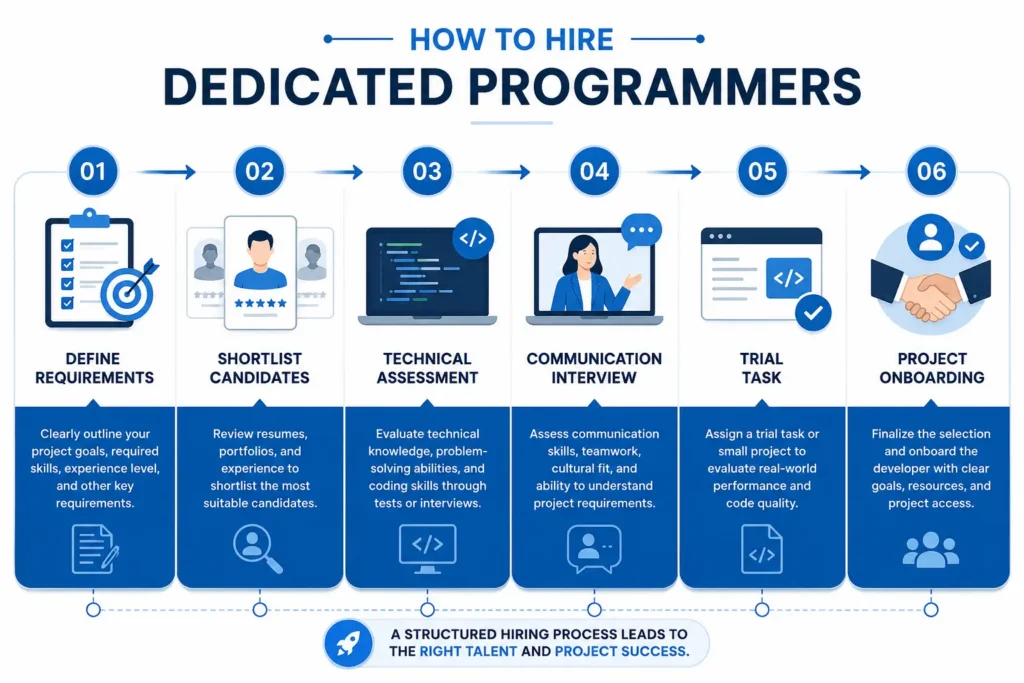
Finding the right development partner takes more than reviewing resumes. You need professionals who understand your goals, communicate clearly, and deliver reliable results. A structured hiring process helps you reduce risks and build a productive working relationship.
1. Define Your Project Requirements
Start by outlining your project scope, timeline, budget, and expected outcomes. List the technologies you need and identify the skills that matter most. Clear requirements help candidates understand your expectations. They also make it easier to compare developers based on relevant experience rather than general technical knowledge.
2. Choose the Right Hiring Model
Different projects require different engagement models. Short-term assignments may suit freelancers, while long-term products often benefit from dedicated resources. If your application needs continuous updates and ongoing collaboration, it may be the right time to consider when to hire dedicated programmers. Businesses with evolving products usually gain more value from a long-term partnership than a temporary arrangement.
3. Evaluate Technical and Communication Skills
Strong coding skills are essential, but communication is equally important. Review previous projects, technical portfolios, client feedback, and problem-solving abilities. During interviews, discuss real business scenarios instead of only asking theoretical questions. Developers who communicate clearly can resolve issues faster and collaborate better with designers, testers, and business stakeholders.
4. Compare Hiring Options Carefully
Many businesses compare a dedicated programmer vs a freelancer before making a decision. Freelancers can work well for small or one-time tasks. However, complex software products usually need consistent involvement, deeper product knowledge, and long-term collaboration. Dedicated professionals provide greater stability because they stay focused on your project throughout its lifecycle.
5. Partner with a Trusted Development Company
Working with an established technology partner reduces hiring risks. Experienced companies provide pre-vetted professionals, project management support, quality assurance, and flexible engagement options. They also help replace resources quickly if business needs change. If your project requires long-term collaboration, many organizations prefer to hire dedicated developers through experienced software development companies instead of managing recruitment independently.
6. Consider Global Talent
Technology allows businesses to work with experts across different regions. Many organizations successfully collaborate with offshore dedicated developers to access specialized skills while optimizing budgets. Modern communication tools, agile processes, and overlapping working hours make remote collaboration more efficient than ever before. Similarly, remote dedicated programmers can integrate with your internal workflows and participate in daily meetings just like in-house employees.
Tips for Managing and Working with Top Dedicated Programmers
Hiring talented professionals is only the beginning. Effective management creates an environment where developers can perform at their best while keeping projects on schedule.
1. Set Clear Goals from Day One
Define project milestones, responsibilities, timelines, and success metrics before development begins. When everyone understands the objectives, decisions become faster and misunderstandings decrease. Clear expectations also improve accountability throughout the project.
2. Maintain Regular Communication
Consistent communication keeps projects moving forward. Schedule weekly planning sessions, sprint reviews, and progress updates. Encourage developers to share challenges early instead of waiting until deadlines approach. Transparent communication helps resolve issues before they become expensive problems.
3. Use Modern Collaboration Tools
Project management platforms, version control systems, and communication tools improve coordination. Shared documentation and organized workflows help everyone stay informed. They also simplify onboarding when new team members join the project.
4. Encourage Ownership
Developers perform better when they understand how their work contributes to business success. Invite them to participate in planning discussions and technical decisions. When developers feel trusted, they become more proactive in suggesting improvements and solving problems.
5. Measure Performance with Outcomes
Avoid focusing only on the number of completed tasks. Instead, evaluate software quality, delivery consistency, customer feedback, and business impact. A results-oriented approach encourages continuous improvement while maintaining high development standards.
6. Build a Long-Term Relationship
Successful software products evolve. Retaining experienced developers reduces onboarding time and preserves valuable product knowledge. Long-term collaboration also creates stronger trust between business stakeholders and the development team. Whether you need a single specialist or a completely dedicated programming team, investing in lasting relationships often delivers better results than frequent resource changes.
Conclusion
Choosing the right development talent can determine whether your project succeeds or struggles. A dedicated approach provides technical expertise, better collaboration, predictable delivery, and room for future growth. From improved communication to easier scaling, the benefits of hiring expert dedicated programmers extend far beyond writing code.
Businesses gain reliable professionals who understand their goals and remain committed throughout the project lifecycle. Whether you are building an MVP, expanding an existing platform, or developing enterprise software, the right team creates lasting value. Investing in skilled dedicated programmers helps you deliver quality products faster while preparing your business for future growth.