


Modern customers search online before calling a service provider. That is why understanding the plumber website development cost helps business owners plan their digital investment wisely. The plumbing website development cost depends on your goals, required features, and the level of customization. Whether you own a small local business or a growing company, a well-built website creates trust, generates leads, and supports long-term growth without unnecessary spending.
Understanding the Importance of a Website for Plumbers
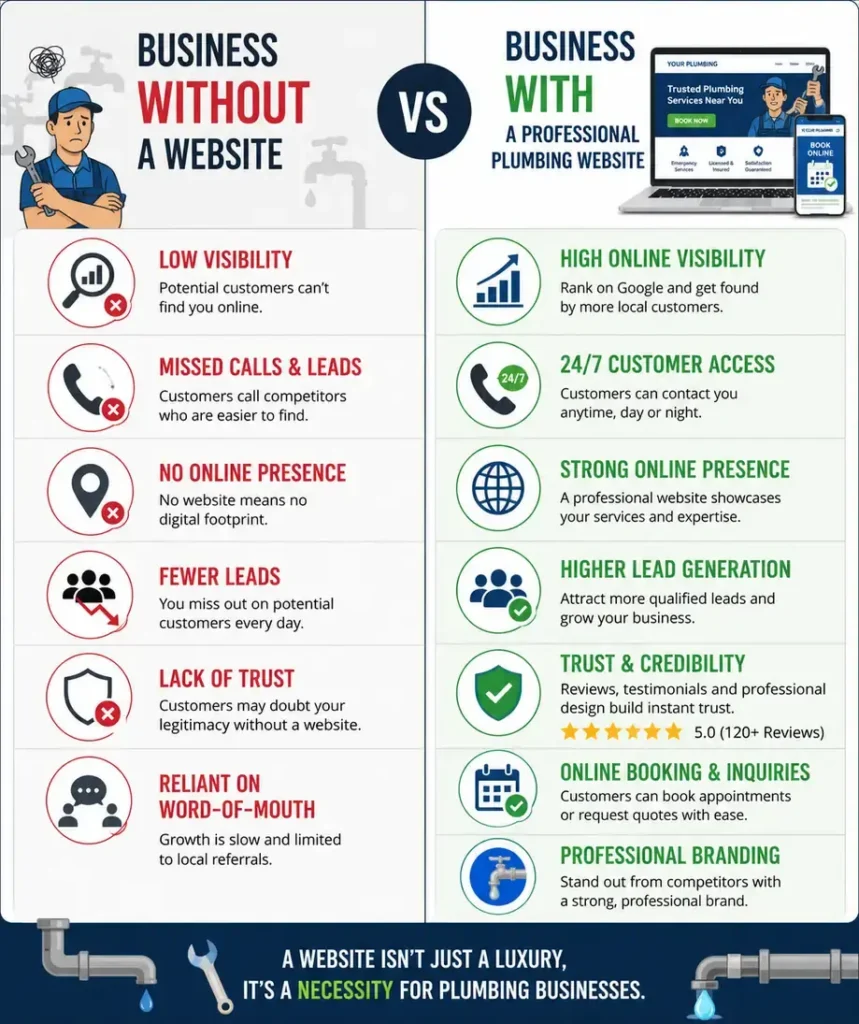
A website is often the first place where customers learn about your services. It helps homeowners compare businesses, read reviews, and request quotes. Without a strong online presence, you may lose valuable opportunities to competitors. A website for a plumbing business acts as your digital storefront. It showcases your services, service areas, certifications, and contact details in one place. Customers can quickly decide whether your business meets their needs.
Many people need urgent plumbing services outside regular business hours. A website allows them to find your business anytime. They can view your services, request help, or schedule appointments without making a phone call. A professional plumbing website also improves your credibility. Customers trust businesses that provide clear information, real customer reviews, and transparent service details.
A polished website creates confidence before the first conversation. An effective website also supports your marketing efforts. Search engine optimization, local search listings, and paid advertising perform better when visitors land on a reliable website with useful information. For businesses that serve multiple cities or neighbourhoods, a website helps attract local customers.
A local plumber website can include location-specific pages that improve visibility in search results while making it easier for customers to contact you. Mobile browsing now dominates local searches. A responsive plumbing website adjusts smoothly across smartphones, tablets, and desktops. This improves the user experience and helps visitors stay on your website longer.
A modern website also reduces manual work. Customers can submit inquiries, upload photos of plumbing issues, and request estimates online. These simple features save time for both customers and business owners.
Factors That Influence the Plumbing Website Development Cost
Several factors determine the final plumbing website development cost. Understanding these elements helps you allocate your budget more effectively and avoid unnecessary expenses.
1. Website Size and Number of Pages
The number of pages directly affects the overall plumber website development cost. A basic website may include Home, About, Services, Contact, and Reviews pages. Larger businesses often require service-specific pages, blog sections, FAQs, and multiple location pages. More pages require additional planning, design, content integration, and testing. As a result, development costs increase accordingly.
2. Design Requirements
Every plumbing business has unique branding needs. A template-based design usually costs less than a fully customized solution. A custom website for a plumbing company reflects your brand identity through personalized layouts, colors, graphics, and user experience. Although custom designs require a higher investment, they often deliver better customer engagement and stronger brand recognition.
The overall plumbing website design cost also depends on animation, interactive elements, custom graphics, and accessibility improvements.
3. Website Features and Functionality
The functionality you choose significantly impacts the cost to build a plumbing website. Basic websites focus on information, while advanced websites include interactive tools that improve customer convenience.
Common features include:
- Online appointment scheduling
- Quote request forms
- Live chat
- Service area maps
- Customer reviews
- Emergency contact forms
- Online payments
- Customer portals
An appointment booking website for plumbers requires calendar integration, booking management, automated confirmations, and reminder notifications. These advanced capabilities increase development time. Similarly, an emergency plumbing website may include one-click calling, priority request forms, and instant contact options for urgent service requests.
4. Custom Development Requirements
Some plumbing businesses require specialized workflows instead of standard templates. This is where custom plumbing website development becomes valuable. Custom development supports unique business processes such as service calculators, maintenance plan subscriptions, technician availability tracking, or CRM integration.
These features improve efficiency but increase project complexity. Businesses planning long-term growth often choose scalable solutions instead of rebuilding their website later.
5. Content Creation
Professional content improves both customer engagement and search engine visibility. Website content includes service descriptions, location pages, FAQs, blogs, images, and calls to action. Well-written content also helps explain your expertise clearly. Investing in quality copywriting supports better conversion rates and improves overall website performance.
Explore more: Mobile app development for plumbers
6. SEO and Local Search Optimization
A visually attractive website alone does not generate leads. Search engine optimization helps potential customers discover your business online. SEO services include keyword optimization, technical improvements, metadata creation, internal linking, page speed optimization, and structured data implementation. A well-optimized plumbing service website design attracts more qualified visitors without depending entirely on paid advertising.
7. Third-Party Integrations
Many plumbing companies connect their website with external tools. Popular integrations include CRM platforms, email marketing software, online payment gateways, analytics, review platforms, and customer support systems. Each integration requires additional development, testing, and ongoing compatibility checks. The number of connected services directly affects project pricing.
8. Choosing the Right Development Partner
The experience of your development team greatly influences both quality and pricing. A skilled agency follows best practices, provides scalable architecture, and delivers long-term value. Some businesses choose bespoke plumbing website development services because they require highly customized solutions with dedicated planning, branding, and business-specific functionality.
These projects typically involve detailed consultation and tailored implementation rather than standard website templates. Your choice of development partner should focus on expertise, communication, portfolio quality, and long-term support instead of price alone.
9. Technology Stack and Scalability
Modern websites should support future business growth. Developers often recommend scalable frameworks that allow you to add new features without rebuilding the website. Businesses planning expansion should discuss future requirements during the planning stage. This approach reduces redevelopment costs later and improves long-term flexibility.
10. Security and Performance
Security protects customer information and builds trust. Features such as SSL certificates, firewall configuration, secure hosting, spam protection, and regular software updates contribute to overall project costs. Performance optimization is equally important. Faster websites improve user experience and support better search rankings, making them a worthwhile investment.
Average Cost Breakdown of Plumber Website Development
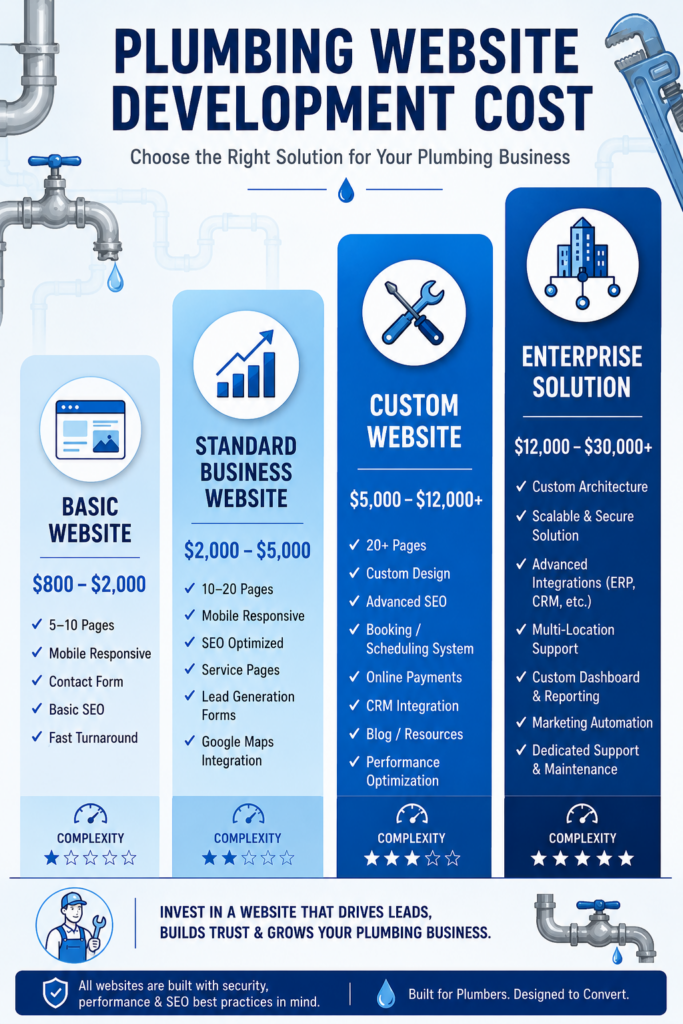
The plumber website development cost varies according to business size, required functionality, and customization. A simple brochure website costs far less than a platform with booking, payments, and customer management features.
The table below shows typical market pricing in 2026. Actual pricing may vary depending on your project scope and development partner.
| Website Type | Estimated Cost (USD) | Suitable For |
|---|---|---|
| Basic website | $800–$2,000 | Small plumbing businesses |
| Standard business website | $2,000–$5,000 | Growing service companies |
| Custom business website | $5,000–$12,000+ | Established plumbing companies |
| Enterprise solution | $12,000–$30,000+ | Multi-location businesses |
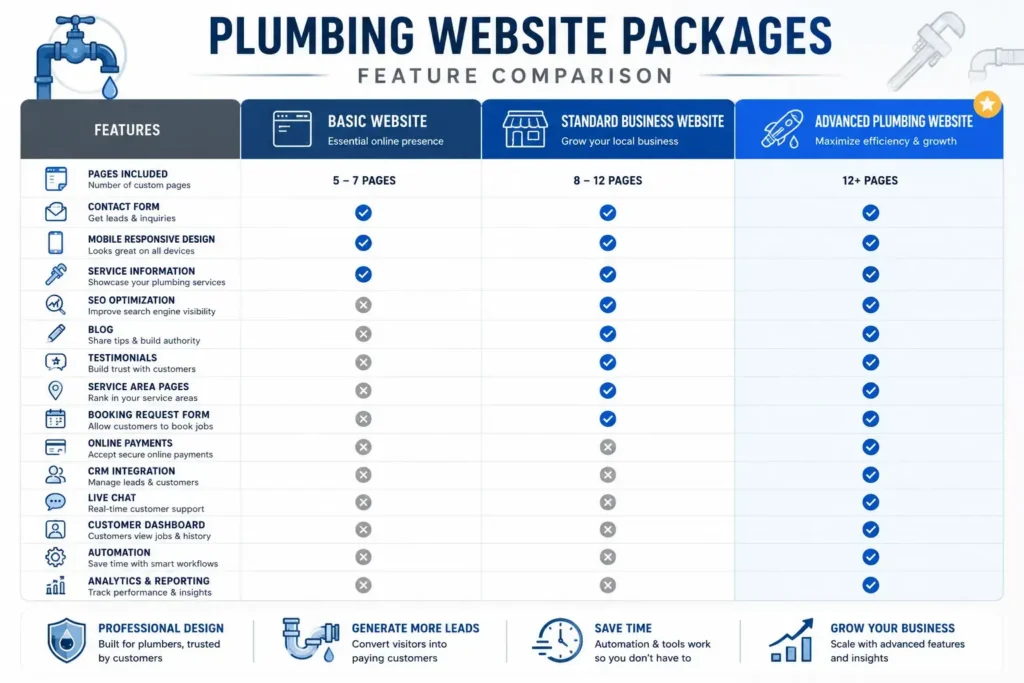
A basic website usually includes five to seven pages, contact forms, mobile responsiveness, and service information. It works well for businesses that only need an online presence. A standard plumbing company website often includes blog functionality, customer testimonials, service area pages, appointment requests, local SEO, and lead generation tools. This option balances affordability with business growth.
Large businesses usually invest in advanced solutions. These projects may include CRM integration, online payments, customer dashboards, marketing automation, and custom workflows. When planning your budget, remember that the plumbing business website cost includes more than design and coding. Content creation, testing, SEO, hosting, and launch support also contribute to the total investment.
Another important consideration is the plumber’s website pricing after launch. Ongoing updates, backups, and security improvements help your website perform reliably throughout the year.
Tips to Keep the Cost of Website Development Within Budget
A realistic budget does not mean sacrificing quality. Smart planning helps reduce unnecessary expenses while delivering a website that supports business growth.
1. Define Your Goals Before Development
Start by identifying your business objectives. Decide whether your website should generate leads, accept bookings, promote maintenance plans, or showcase completed projects. Clear goals prevent unnecessary features and reduce development time.
2. Prioritize Essential Features
Build the most important functionality first. Additional features can always be added later as your business grows. This phased approach keeps your initial investment manageable while allowing future expansion.
3. Choose Scalable Technology
A scalable website supports new services without major redevelopment. Investing in flexible architecture today often reduces future expenses. Businesses that expect steady growth benefit from planning beyond their immediate needs.
4. Invest in Quality Development
Choosing the cheapest option often creates expensive problems later. Poor coding, slow performance, and security issues usually require costly fixes. Working with a top web development company helps ensure your website follows industry standards and remains easy to maintain as your business expands. More than one provider may appear affordable initially, but experience often delivers greater long-term value.
5. Use Existing Business Assets
If you already have a logo, service photos, and brand guidelines, reuse them whenever possible. Using existing assets reduces design costs while maintaining brand consistency.
6. Plan Content Early
Prepare service descriptions, customer testimonials, certifications, and business information before development begins. Well-organized content speeds up the project and minimizes revisions.
7. Hire Experienced Developers
Experienced professionals build efficient websites that require fewer corrections after launch. Many businesses prefer to hire dedicated programmers for complex projects because they provide focused expertise, better communication, and consistent development quality throughout the project lifecycle. Choosing specialists also reduces delays caused by technical issues.
Explore more: Website design and development costs breakdown
The Benefits of Investing in a Professional Website for Plumbers
A quality website is more than an online brochure. It becomes an important business tool that attracts customers and supports daily operations.
1. Stronger Customer Trust
Customers often judge a business within seconds of visiting its website. A clean layout, clear service information, and genuine customer reviews build confidence and encourage visitors to make contact.
2. Better Lead Generation
A professionally designed website guides visitors toward booking a service or requesting a quote. Clear calls to action, contact forms, and booking options increase conversions without making the experience complicated.
3. Improved Search Visibility
Search engines reward websites that provide useful content, fast loading speeds, and excellent user experiences. A well-optimized website helps your plumbing business appear in relevant local searches and attract qualified customers.
4. Easier Business Management
Modern websites automate several routine tasks. Online forms, appointment scheduling, customer inquiries, and review collection reduce administrative work while improving customer service.
5. Long-Term Business Growth
A professional website supports future expansion. Whether you introduce new services, hire additional technicians, or enter new service areas, your website can grow alongside your business. Businesses looking for specialized solutions sometimes work with a top plumbing web development company that understands large-scale service platforms, advanced integrations, and scalable digital strategies for growing plumbing companies.
Choosing an experienced team makes future improvements easier and more cost-effective.
Conclusion
Understanding the plumber website development cost helps you make informed decisions before starting your project. Every business has different goals, so pricing depends on design complexity, features, integrations, and long-term scalability.
A professionally built website strengthens your online presence, improves customer trust, and creates new business opportunities. Instead of focusing only on the lowest quote, consider the overall value, future flexibility, and ongoing support. Investing wisely in website development for plumbers delivers lasting benefits that support sustainable business growth while keeping your plumbing website development cost aligned with your long-term objectives.