


Understanding the recruitment website development cost helps businesses set realistic budgets before starting a hiring platform project. The cost to develop a recruitment website depends on business goals, required features, design quality, integrations, and long-term maintenance. Whether you are building a simple careers portal or a complete hiring platform, costs vary based on complexity and technology choices.
Modern companies invest in digital recruitment because it improves hiring speed, candidate experience, and employer branding. A professionally built recruitment website attracts qualified applicants while reducing manual work for recruiters. This guide explains pricing, major cost factors, expected budgets, and practical ways to optimize development expenses without sacrificing quality.
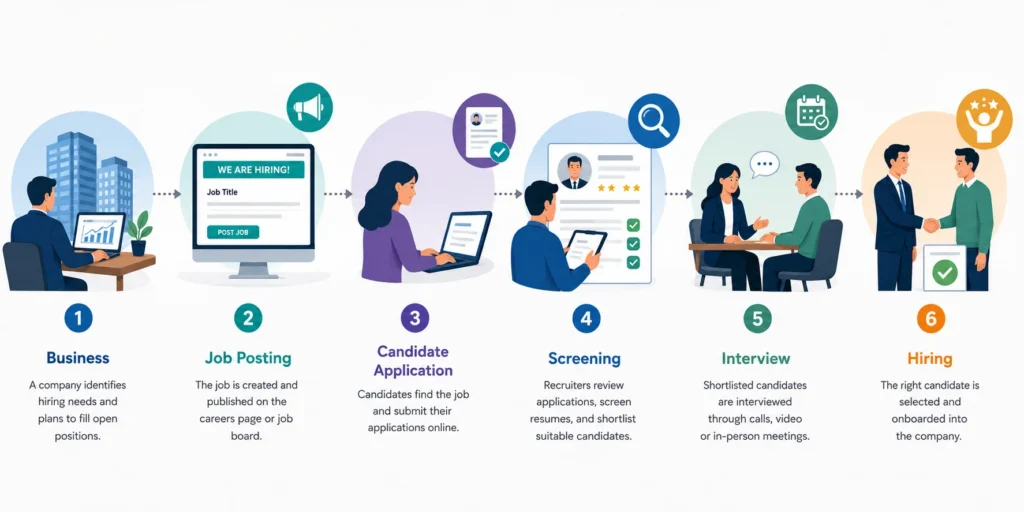
Factors Affecting Cost to Develop a Recruitment Website
Several business and technical factors influence the overall recruitment website development cost. Understanding these elements helps you allocate your budget wisely and avoid unexpected expenses later.
1. Project Scope and Business Requirements
Every business has different hiring goals. A startup usually needs a simple career portal, while large organizations often require advanced automation and multiple recruiter roles. A basic website costs significantly less than enterprise-level recruitment website development because additional modules require more planning, coding, and testing.
2. Design and User Experience
A professional interface directly affects candidate engagement. Investing in quality recruitment website UI/UX makes navigation simple for both recruiters and applicants. Custom layouts, accessibility improvements, responsive design, and branding increase the recruitment website design cost, but they also improve application completion rates.
3. Core Features
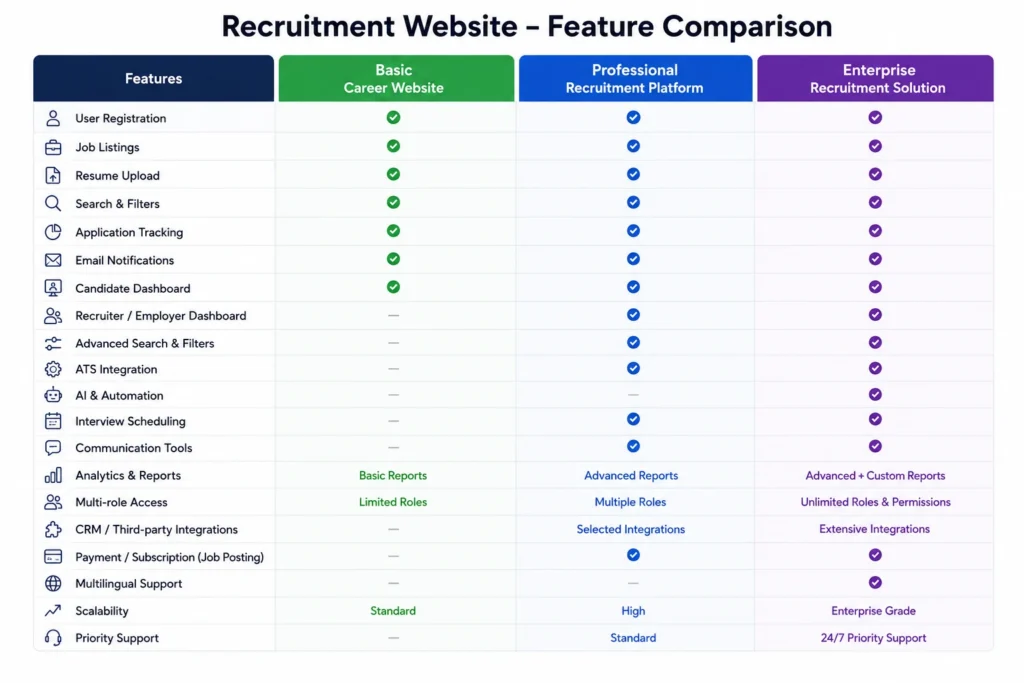
The number of built-in functions has the greatest impact on pricing. Essential recruitment website features usually include:
- User registration
- Job listings
- Resume upload
- Search filters
- Email notifications
- Application tracking
Advanced projects may also include a job posting platform, interview scheduling, communication tools, analytics, and reporting dashboards.
4. Recruiter and Candidate Portals
Modern hiring platforms need separate workspaces. Recruiters benefit from an employer dashboard that manages vacancies, applicants, interviews, and reports. Applicants expect a dedicated candidate dashboard where they can submit resumes, track applications, and update profiles easily. These personalized portals increase development time but improve user satisfaction.
5. ATS and Resume Management
Many businesses integrate an applicant tracking system integration to organize hiring activities automatically. A centralized resume management system stores candidate profiles, enables quick searches, and simplifies recruiter workflows. These integrations often require third-party APIs and increase development costs.
6. AI and Automation
Many organizations now prefer an AI recruitment website to improve hiring efficiency. AI can recommend suitable candidates, rank resumes, detect duplicate applications, and automate communication. Businesses also invest in recruitment automation to reduce repetitive administrative work while improving recruitment speed.
7. Scalability and Cloud Infrastructure
Future growth should influence today’s development decisions. A scalable architecture supports increasing traffic without performance issues. Good recruitment website scalability prevents expensive rebuilds as your company expands. Many businesses choose a cloud-based recruitment platform because cloud hosting offers flexibility, automatic backups, and better reliability.
8. Security and Compliance
Recruitment websites store personal information, resumes, and employment records. Strong recruitment website security protects sensitive data through encryption, secure authentication, access controls, and regular vulnerability monitoring. Ignoring security often leads to much higher costs after deployment.
9. Technology Stack
Programming languages, frameworks, databases, APIs, and cloud providers all influence pricing. Choosing suitable recruitment website development technologies improves long-term maintainability while reducing operational expenses.
Explore more: WordPress website development cost guide
Average Cost of Recruitment Website Development
The recruitment website development pricing varies depending on functionality, complexity, and business objectives. While every project differs, current market estimates provide a useful starting point.
| Website Type | Estimated Cost | Development Time |
|---|---|---|
| Basic Career Website | $5,000–$12,000 | 6–10 weeks |
| Professional Recruitment Platform | $12,000–$30,000 | 3–5 months |
| Enterprise Recruitment Solution | $30,000–$80,000+ | 6–9 months |
These estimates include design, development, testing, and deployment. However, ongoing support remains a separate investment. The recruitment portal development cost increases when businesses require multiple recruiter roles, AI capabilities, custom workflows, and CRM integrations.
Similarly, the job portal development cost becomes higher when the platform supports employer subscriptions, payment gateways, advanced search filters, recommendation engines, and multilingual functionality. Companies requesting custom recruitment website development often invest more initially. However, custom solutions deliver better flexibility, stronger branding, and easier expansion.
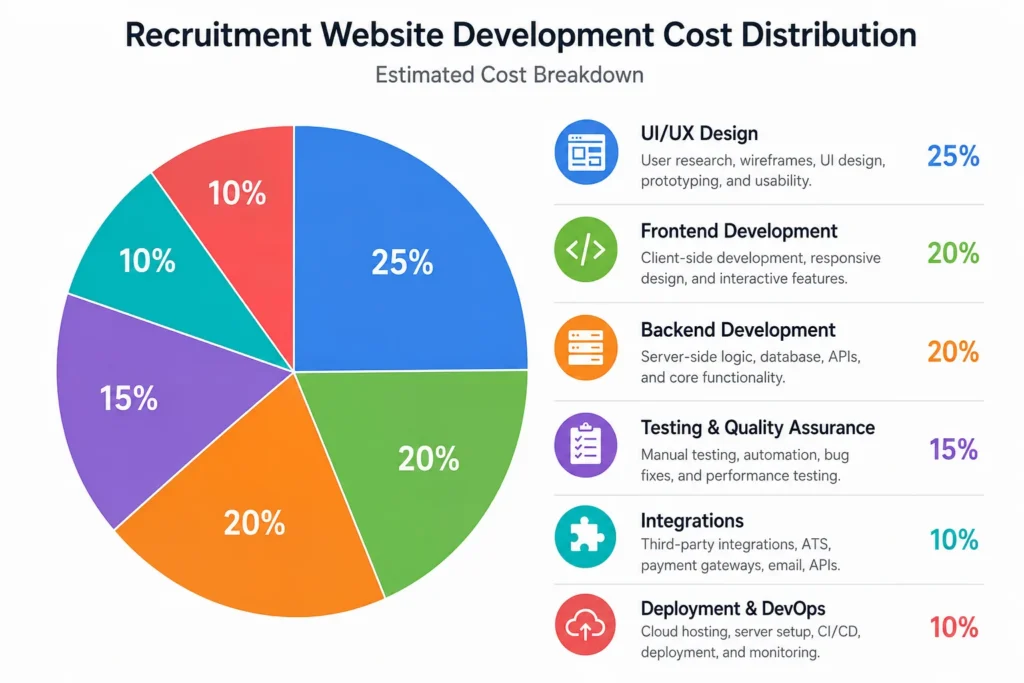
The complete recruitment website development process usually includes discovery, planning, wireframing, UI design, frontend development, backend implementation, testing, deployment, and post-launch optimization. Businesses planning online recruitment website development should also budget for cloud hosting, SSL certificates, domain registration, third-party APIs, maintenance, and future feature updates.
A reliable recruitment website pricing guide should always include hidden operational expenses instead of focusing only on initial development. The recruitment website maintenance cost generally ranges between 15% and 25% of the original development investment annually. Maintenance covers security updates, bug fixes, server monitoring, feature improvements, and compatibility upgrades.
Explore more: Recruitment app development cost guide
Tips for Reducing Recruitment Website Development Cost
Reducing expenses does not mean compromising quality. Careful planning often saves both time and money.
Start with a minimum viable product instead of building every feature immediately. Launch essential functionality first and expand after collecting user feedback.
Clearly define project requirements before development begins. Frequent requirement changes increase costs because developers must redesign completed modules.
Choose reusable frameworks and reliable technologies instead of experimental solutions. Stable technologies reduce maintenance costs and improve long-term stability.
Prioritize essential recruitment portal features before adding advanced capabilities. Features such as AI recommendations or video interviews can be introduced later.
A well-planned recruitment web application architecture also minimizes future redevelopment expenses.
Partnering with experienced teams offering custom web development services helps businesses avoid technical mistakes, unnecessary delays, and hidden development costs.
Regular testing throughout development identifies issues early. Fixing problems during development costs much less than repairing production systems.
Hiring a Professional Website Development Company
Choosing the right development partner often determines project success. An experienced top recruitment website development company understands recruitment workflows, compliance requirements, scalability, and user expectations.
Review previous projects before selecting a vendor. Industry experience often reduces project risks because developers already understand recruitment-specific challenges. Ask about their experience with recruitment website development services, API integrations, cloud deployment, testing practices, and post-launch support.
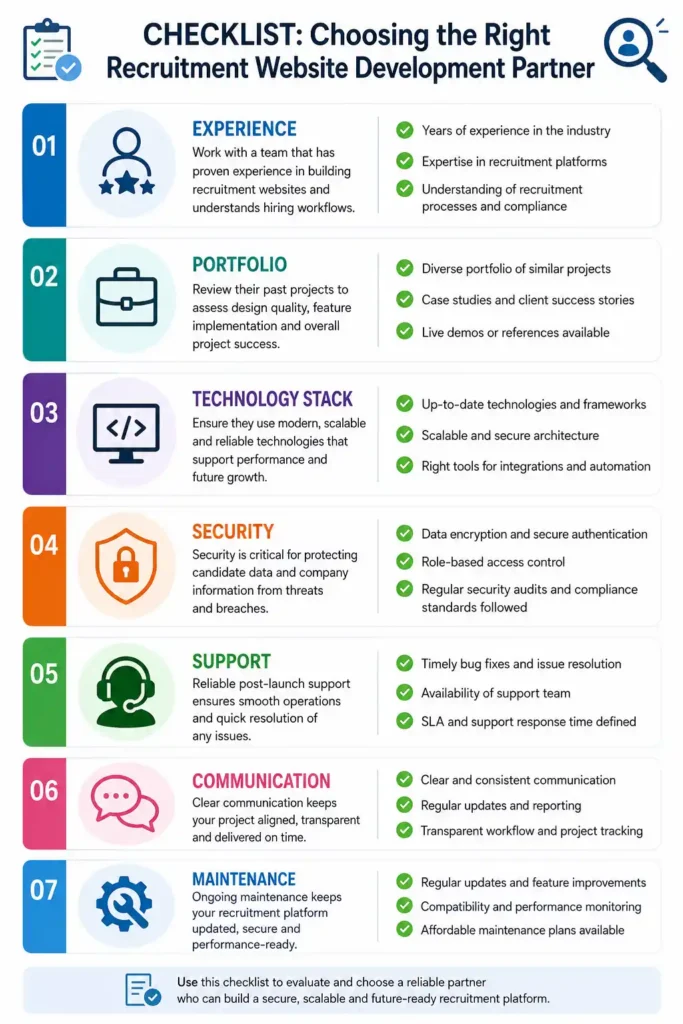
Discuss project communication, delivery methodology, security standards, and maintenance services before signing any agreement. Businesses planning long-term hiring platform development should select teams that provide strategic guidance instead of only writing code.
If your project requires continuous improvements, consider hire expert dedicated developers instead of building an in-house team. Dedicated specialists often deliver faster updates while reducing recruitment overhead.
Conclusion
Planning your recruitment website development cost begins with understanding your business requirements instead of choosing the lowest quotation. A well-designed recruitment platform improves hiring efficiency, candidate engagement, and long-term business growth.
The final cost to develop a recruitment website depends on project complexity, features, integrations, design quality, technology choices, and ongoing maintenance. Investing in experienced developers and scalable architecture usually delivers better value than cutting essential functionality.