


Building a professional website has become essential for every modern cafe. Understanding the cafe website development cost helps owners plan their budget and avoid unexpected expenses. The cost to develop a cafe website depends on the website’s features, design quality, integrations, and ongoing support. Whether you own a small neighbourhood cafe or a growing coffee chain, investing in the right website improves visibility, customer engagement, and online sales. This guide explains every major cost factor, pricing range, and practical tip to help you make an informed decision before starting your project.
Benefits of Having a Website for a Cafe
A professional website for a cafe business acts as a digital storefront that stays open every hour of the day. Customers can discover your menu, operating hours, location, and special offers without making a phone call. A well-designed cafe business website also builds trust. Many customers check online before visiting a new cafe. A polished website creates a positive first impression and encourages more walk-in traffic.
Modern customers also expect online food ordering. Offering this convenience increases sales while reducing dependency on third-party delivery platforms with high commission fees.
Key business benefits include:
- Better local visibility
- Improved brand credibility
- Faster customer communication
- Higher direct orders
- Better customer retention
- Increased revenue opportunities
A strong digital presence for cafes helps businesses compete with larger restaurant chains while attracting local customers searching online.
Factors Affecting Cost to Develop a Cafe Website
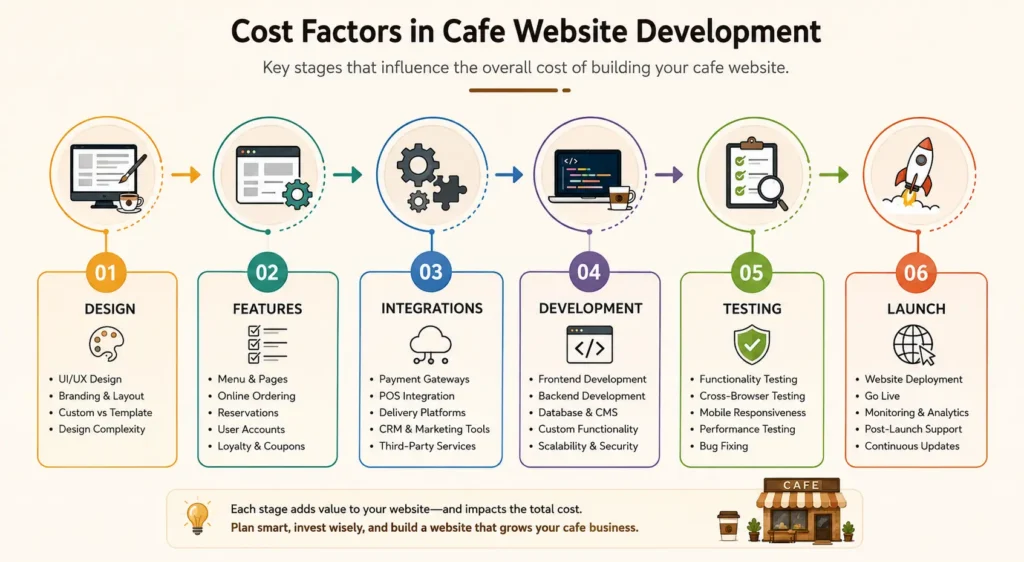
Several elements determine the final cafe website development cost. Understanding them helps you decide where to invest and where you can save money.
1. Website Type and Complexity
A simple informational website costs much less than a fully featured food ordering website. Basic websites usually include Home, About, Menu, Gallery, Contact, and Location pages. Advanced websites include customer accounts, ordering, loyalty programs, and delivery tracking.
2. Design Requirements
The cafe website design cost depends on whether you choose a template or custom web design. Templates reduce development time but offer limited branding flexibility. Custom designs create a unique customer experience and strengthen your brand identity.
3. Features and Functionality
The number of cafe website features directly affects pricing.
Common features include:
- Interactive menu
- Photo gallery
- Contact forms
- Google Maps
- Customer reviews
- Blog
- Promotions
Advanced functionality may include:
- online ordering system
- menu management
- table reservation system
- Customer login
- Loyalty rewards
- Coupon management
Every additional feature requires more development and testing.
4. Technology Stack
The technology used during cafe website development influences project costs. Businesses often choose scalable solutions using modern frameworks combined with reliable CMS development for easy content updates.
5. Payment Integration
Adding payment gateway integration allows customers to complete purchases securely. Popular payment providers charge setup fees and transaction commissions, which increase the total project budget.
6. Mobile Optimization
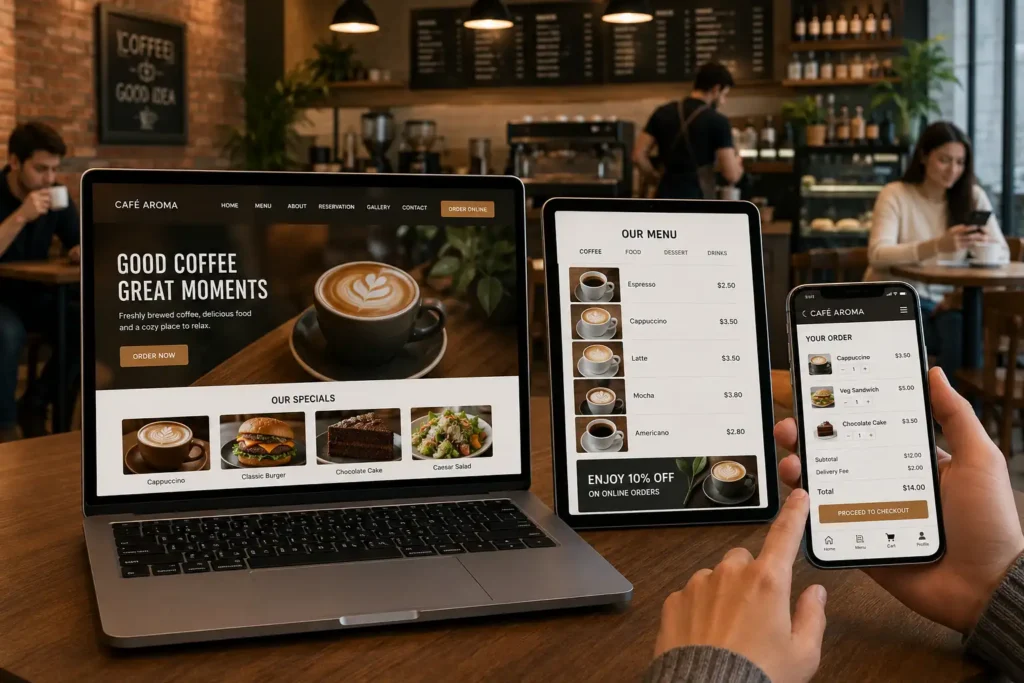
Today, most visitors browse from smartphones. A mobile-friendly website with fast loading speeds improves customer satisfaction and search rankings. Developers also build a responsive cafe website that adapts smoothly across desktop, tablet, and mobile devices.
7. Third-Party Integrations
Some cafes connect websites with:
- POS software
- Delivery platforms
- CRM systems
- Marketing tools
- Email automation
These integrations require additional development hours.
Explore more: Catering website development cost
Average Costs for Cafe Website Development
The cost to develop a cafe website varies according to business goals and required functionality.
Below are typical market estimates.
| Website Type | Estimated Cost |
|---|---|
| Basic cafe website | $800–$2,000 |
| Professional business website | $2,000–$5,000 |
| Custom ordering website | $5,000–$12,000 |
| Enterprise multi-location website | $12,000–$30,000+ |
A basic website focuses on information and branding. A mid-range website adds booking, promotions, and customer engagement features. A premium custom cafe website development project includes ordering, loyalty programs, advanced analytics, and personalized customer experiences.
If you’re comparing projects, remember that restaurant website development cost often follows a similar pricing structure because both industries require menus, ordering, and reservations.
Mini Case Study
A local coffee shop wanted a professional website with online ordering. The project included a custom homepage, digital menu, reservations, secure checkout, and customer reviews. Development took eight weeks. The total investment reached approximately $6,500, including design, testing, and launch.
Within six months, direct online orders increased by 38%, reducing dependence on food delivery marketplaces. Several businesses evaluate portfolios before selecting a top cafe website development company because experience often leads to better long-term value than choosing the lowest quote.
Explore more: How a mobile app can transform your restaurant business
Additional Costs to Consider
Many business owners only budget for development. However, several recurring expenses continue after launch.
1. Website Hosting
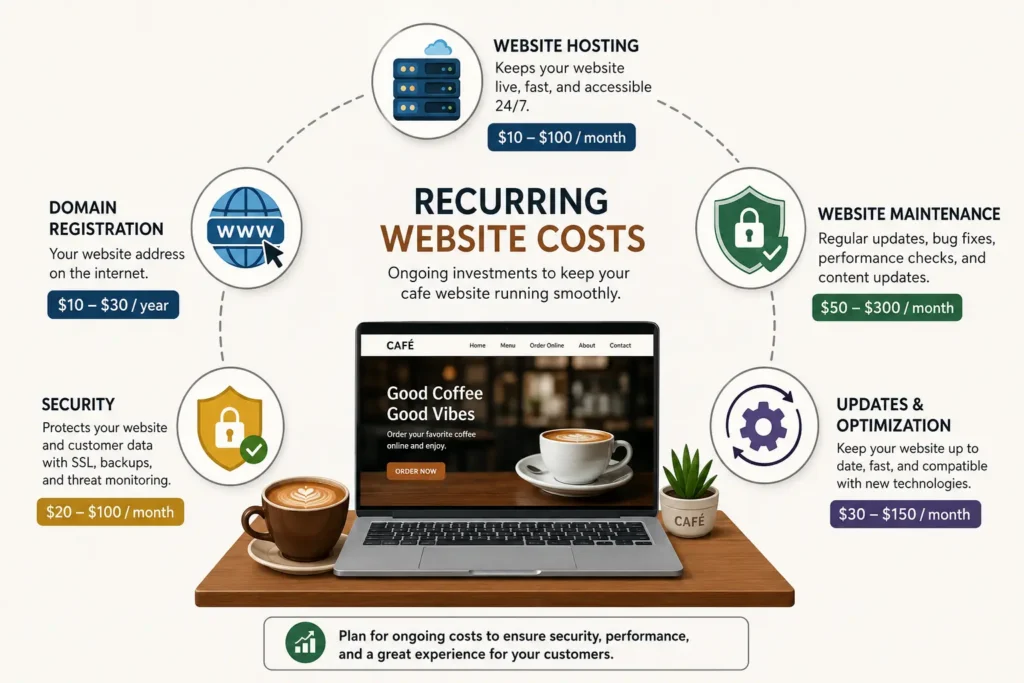
Reliable website hosting keeps your website fast, secure, and available around the clock. Hosting costs typically range between $10 and $100 per month depending on traffic and server performance.
2. Domain Registration
Your website also needs domain registration. Most domain names cost between $10 and $30 annually. Premium domain names may cost significantly more.
3. Website Maintenance
Regular website maintenance keeps software updated, fixes bugs, improves speed, and protects customer information. The average cafe website maintenance cost ranges from $50 to $300 per month for small businesses. Larger websites often require dedicated monthly support plans.
4. Security
Investing in website security protects customer data and payment information. Security measures include SSL certificates, malware monitoring, firewalls, backups, and regular updates.
5. Performance Optimization
Improving website performance helps pages load quickly. Fast websites reduce bounce rates and improve search engine visibility. Image optimization, caching, and server improvements usually require ongoing investment. Businesses planning long-term growth often compare providers before choosing the best website development agency, focusing on technical expertise, support quality, and transparent pricing instead of only initial costs.
Visual Suggestion #4: Illustration of recurring website costs including hosting, maintenance, security, domain, and updates.
Explore more: Website development cost guide
Tips for Reducing Website Development Costs
Reducing expenses does not mean sacrificing quality. Smart planning helps control your budget.
1. Start with Essential Features
Launch with only the most important pages. You can always add advanced functionality later.
2. Choose Scalable Technology
Flexible platforms reduce future redevelopment costs. Scalable architecture also supports business growth.
3. Prepare Content Early
Providing menus, images, branding assets, and business information before development reduces project delays.
4. Prioritize User Experience
A smooth customer ordering experience increases conversions more than adding unnecessary features. Simple navigation often performs better than complicated layouts.
5. Hire Experienced Professionals
Experienced teams complete projects faster and avoid expensive mistakes. Some businesses prefer to hire dedicated programmers for complex projects requiring ongoing improvements and feature updates.
6. Compare Multiple Quotes
Review deliverables instead of choosing the cheapest proposal. Transparent cafe website pricing usually includes design, development, testing, deployment, and support.
Conclusion
Understanding the cafe website development cost helps business owners make smarter investment decisions. Every project differs because design, features, integrations, and maintenance requirements vary. Focus on business goals rather than selecting the lowest price. A professional website creates stronger customer relationships, supports online sales, and improves long-term growth. Before starting your project, carefully evaluate the cost to develop a cafe website alongside the value it delivers over time.