


Understanding the catering website development cost helps business owners plan their digital investment with confidence. The cost to build a catering website depends on your business goals, required features, design preferences, and long-term growth plans. A simple website costs much less than a platform with advanced booking and ordering tools.
Today, most customers search online before choosing a catering provider. A modern website builds trust, showcases menus, and generates more inquiries. Knowing the catering website development cost in advance helps you avoid unexpected expenses and choose the right solution for your budget.
Why a Professional Website is Essential for Catering Businesses
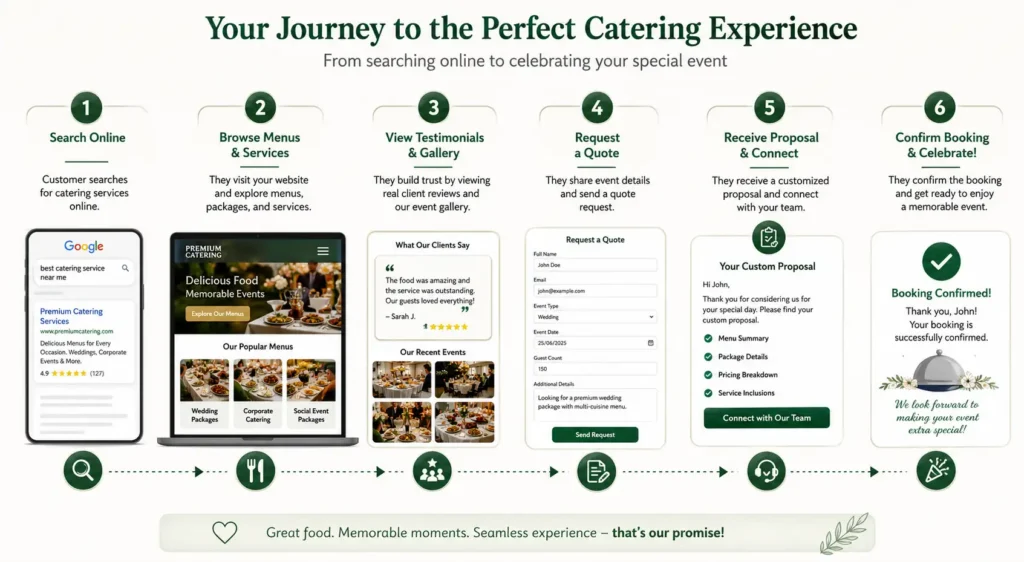
A strong online presence is no longer optional for catering companies. Customers expect fast information, attractive food galleries, and an easy way to request quotes or book services.
A professional catering website helps your business:
- Display menus and pricing clearly.
- Showcase previous events with photos.
- Collect customer inquiries around the clock.
- Build trust through testimonials.
- Improve visibility on search engines.
- Increase direct bookings without relying only on third-party platforms.
Research shows that more than 75% of customers judge a business by its website before making contact. A slow or outdated website can reduce inquiries, while a modern design encourages visitors to take action. A well-designed website for catering services also supports marketing campaigns. It connects with social media, email marketing, and local SEO, helping you attract more qualified customers throughout the year.
Explore more: Cafe website development cost guide
Factors Affecting Catering Website Development Cost
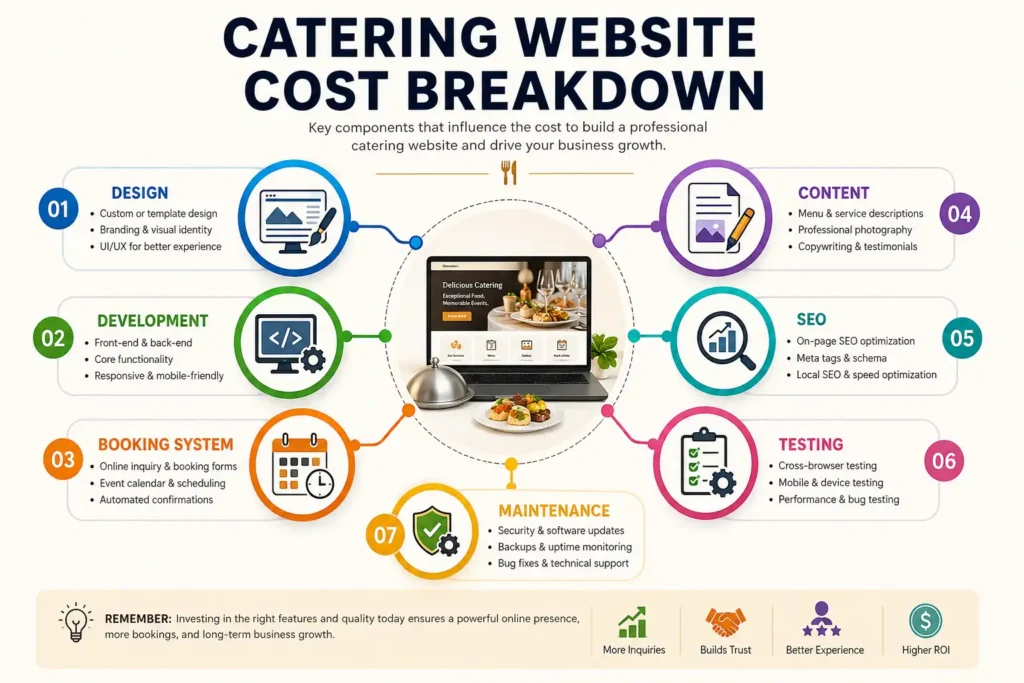
Several elements influence the overall catering website development cost. Understanding these factors makes budgeting much easier.
1. Website Size and Number of Pages
A small business website with five or six pages costs less than a large website with dozens of service pages, blogs, galleries, and event portfolios.
2. Design Requirements
Template-based websites reduce development expenses. A custom catering website requires unique layouts, branding, graphics, and user experience planning, which increases the budget. Your catering website design cost also depends on animation, image optimization, interactive galleries, and accessibility improvements.
3. Features and Functionality
Basic contact forms cost very little.
Advanced functions increase pricing, including:
- Quote request forms
- Event booking
- Menu management
- Customer dashboard
- Online payment
- Calendar integration
- CRM integration
- Email automation
Businesses that need a complete online catering booking system should expect higher development costs because of additional integrations and testing.
4. Content and Media
Professional photography, menu writing, blog content, and videos improve customer engagement. However, they also increase project costs. Many businesses underestimate content creation, even though it plays a major role in conversions.
5. Mobile Optimization
More than half of catering searches now happen on smartphones. A mobile-friendly catering website ensures visitors can browse menus, complete inquiry forms, and request quotes without difficulty. Likewise, a responsive catering website automatically adapts to different screen sizes, improving both user experience and search visibility.
6. Development Team
The company you hire affects both quality and pricing. An experienced website development company may charge more initially, but it often delivers better performance, stronger security, and fewer future issues. This can reduce long-term ownership costs.
Types of Catering Websites and Their Costs
The cost to build a catering website varies based on complexity. Below are common website types and their approximate market pricing.
1. Basic Informational Website
Estimated cost: $800–$2,000. Suitable for startups and local caterers.
Usually includes:
- Home page
- About page
- Services
- Gallery
- Contact form
This option provides a simple catering business website for businesses that mainly receive inquiries by phone or email.
2. Business Website with Booking
Estimated cost: $2,000–$5,000. Ideal for growing catering companies.
Common additions include:
- Quote calculator
- Event booking
- Availability calendar
- Customer inquiry management
A catering booking website helps customers schedule consultations and request services without making multiple phone calls.
3. Website with Online Ordering
Estimated cost: $4,000–$8,000+. This type includes advanced ordering features for meal delivery or event catering.
Businesses looking for a catering website with online ordering often integrate secure payment gateways, order tracking, coupon management, and customer accounts.
4. Enterprise Catering Platform
Estimated cost: $8,000–$20,000+
Large catering companies serving multiple locations often require custom systems with:
- Multi-location management
- Staff dashboards
- Inventory integration
- Customer portals
- Marketing automation
- Analytics dashboards
This level of catering business website development requires careful planning and scalable architecture.
Explore more: Food delivery app development cost guide
Additional Costs to Consider
Many businesses focus only on development expenses. However, several ongoing costs deserve attention.
1. Domain and Hosting
A professional domain usually costs between $10 and $30 annually. Reliable hosting ranges from $15 to $200 monthly, depending on traffic and server requirements.
2. SSL Certificate
SSL protects customer information and improves trust. Many hosting providers include basic SSL certificates at no additional cost.
3. Third-Party Integrations
Additional software may include:
- Payment gateways
- CRM platforms
- Live chat
- Email marketing tools
- Booking software
These services often require monthly subscriptions.
4. Content Updates
Regular updates keep menus, pricing, galleries, and seasonal packages current. Fresh content also supports search engine rankings.
5. Ongoing Support
The catering website cost breakdown should always include maintenance, security updates, backups, bug fixes, and performance monitoring. Ignoring these expenses can result in higher repair costs later.
Explore more: Cost to build a food delivery app like Uber Eats
Tips for Reducing Catering Website Development Costs
Smart planning helps control your website budget without sacrificing quality.
1. Start with Essential Features
Launch with only the features your customers actually need. Additional functionality can be added later as your business grows.
2. Prepare Content Early
Organized menus, images, and business information reduce development time and lower overall costs.
3. Choose Scalable Solutions
Select a platform that supports future expansion instead of rebuilding the website later.
4. Work with Experienced Professionals
Partnering with a trusted catering website development agency helps prevent expensive redesigns and technical problems. Many businesses also hire best dedicated developers for long-term improvements instead of repeatedly changing vendors.
5. Compare Multiple Quotes
Request proposals from several providers.
Compare:
- Scope of work
- Included features
- Support plans
- Timeline
- Maintenance services
Do not choose only the lowest price. Value matters more than initial savings.
6. Understand the Full Pricing
Ask for transparent catering website pricing before signing any agreement. A clear proposal should explain the complete catering website development price, timelines, deliverables, and future maintenance responsibilities. Professional catering web design services often provide flexible packages that match different business sizes.
If you are evaluating providers, review their catering website development services, previous projects, communication process, and post-launch support. A structured catering website development process reduces delays and keeps projects within budget. This catering website development guide shows that careful planning delivers better long-term value than rushing into development.
Conclusion
A well-planned website is one of the smartest investments for any catering company website. It strengthens your catering business’s online presence, builds customer trust, and creates more booking opportunities throughout the year.
The final catering website development cost depends on design, features, integrations, maintenance, and future scalability. Businesses that understand these factors make better investment decisions and avoid unnecessary expenses. Before choosing a development partner, compare experience, support, and long-term value rather than price alone. That approach helps you control the cost to build a catering website while creating a solution that supports future business growth.