


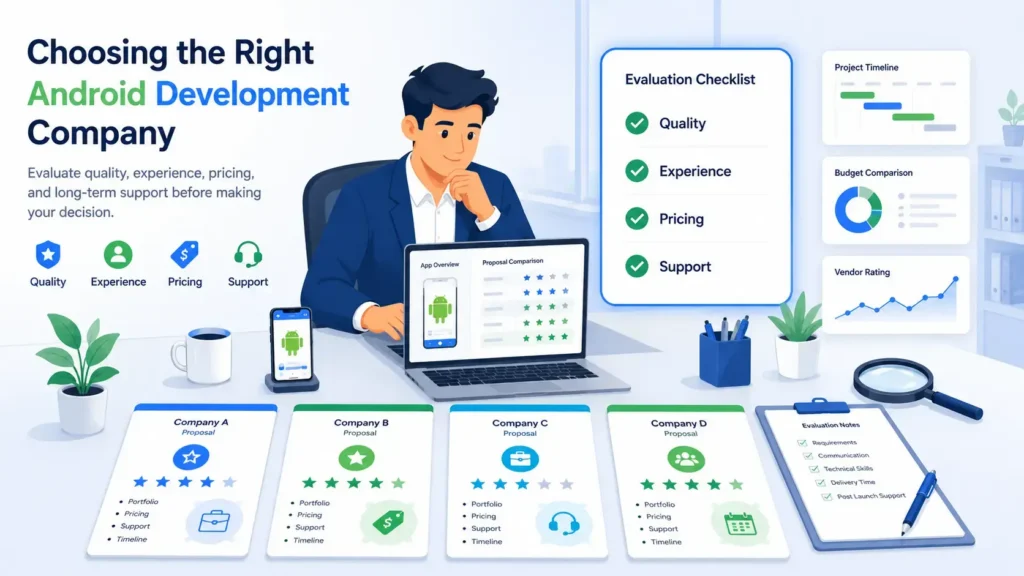
Choosing the right technology partner can determine whether your mobile app becomes a success or an expensive lesson. If you want to choose the right Android app development company, you need more than an attractive portfolio. You should evaluate technical expertise, communication, development practices, and long-term support. A reliable Android app development company delivers quality code, transparent processes, and scalable solutions that match your business goals.
This guide explains every important factor to help you make a confident decision and reduce development risks.
Factors to Consider While Choosing an Android App Development Company
Selecting a development partner requires careful evaluation. The lowest quote rarely delivers the best value. Instead, focus on expertise, transparency, and long-term collaboration.
1. Understand Their Technical Expertise
A capable company should offer custom Android app development instead of relying on one-size-fits-all templates. Every business has unique workflows, customer expectations, and integration requirements.
Review the technologies the team uses. Modern developers should understand Android SDK, Kotlin app development, and Java Android development. These technologies remain essential for building reliable Android applications. Ask how they stay updated with evolving Android app development technologies. Companies that invest in continuous learning usually deliver better products with fewer technical issues.
2. Evaluate Their Development Process
Every professional company should explain its Android application development process before starting a project. The process should include planning, wireframing, development, testing, deployment, and ongoing improvements. A structured workflow reduces delays and keeps every stakeholder informed.
You should also understand how the company manages milestones, approvals, and project communication throughout development.
3. Review Design Capabilities
A great app is easy to use from the first interaction. Ask about their experience in UI/UX design for Android apps. Good design improves user engagement and reduces abandonment rates. Request design samples from different industries instead of reviewing only screenshots. Interactive prototypes reveal far more about their design quality.
4. Check Development Approach
Some projects require native Android development, while others benefit from cross-platform vs native apps discussions. A trustworthy company explains both approaches objectively. They recommend the solution that matches your budget, business goals, and future expansion plans instead of promoting one technology for every project.
5. Focus on Performance and Scalability
Fast applications improve customer satisfaction and retention. Discuss their strategy for app performance optimization. Performance should remain consistent even when thousands of users access the application simultaneously.
Similarly, ask how they plan for future app scalability. Building scalable architecture from the beginning prevents expensive redevelopment later.
Explore more: Why businesses choose Android apps
How to Research and Shortlist the Right Android App Development Companies
Finding the right partner requires proper research. Avoid selecting the first company that appears in search results.
1. Review Portfolio and Industry Experience
Examine completed projects carefully. Look for applications similar to your business model. Industry experience often reduces development time because the team already understands common challenges. Pay attention to app quality, interface consistency, and user reviews on Google Play.
2. Read Independent Client Reviews
Testimonials on company websites are useful, but independent review platforms provide more balanced feedback. Look for comments about communication, delivery timelines, and after-launch support. Consistent positive feedback usually indicates dependable service.
3. Explore Service Expertise
Many businesses searching for the best Android app development services UK also evaluate companies based on technical specialization rather than location alone. Review whether the company provides consulting, architecture planning, testing, deployment, and long-term maintenance. Comprehensive services simplify project management and improve accountability.
4. Compare Communication Practices
Communication problems often cause project delays. During initial conversations, observe how quickly the team responds. Notice whether they explain technical concepts clearly instead of using unnecessary jargon. A dependable Android app development partner should provide realistic timelines and honest recommendations rather than making unrealistic promises.
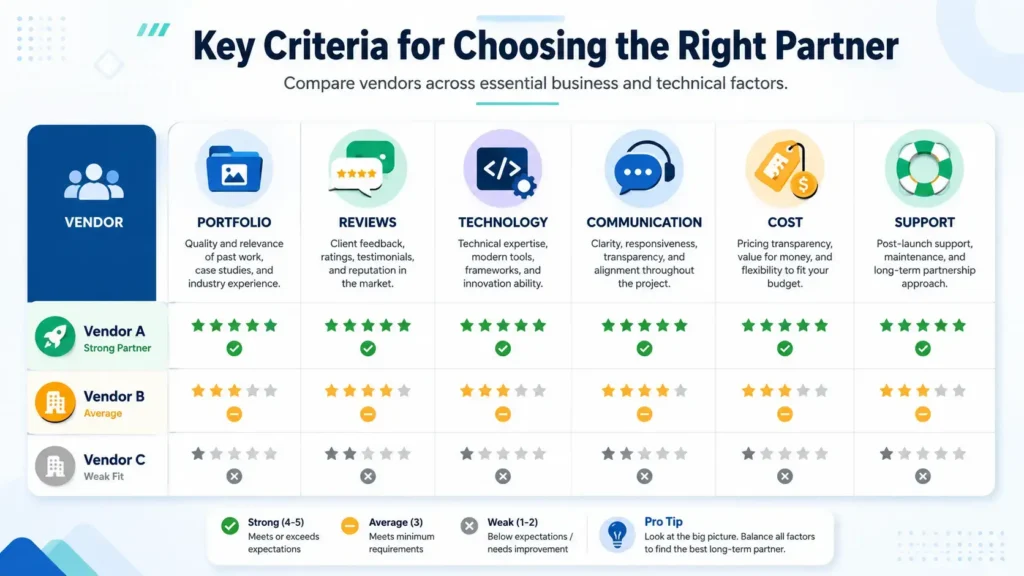
5. Compare Pricing Carefully
Do not compare quotes without understanding the scope. The total Android app development cost depends on app complexity, integrations, features, security requirements, testing, and maintenance. Extremely low estimates often exclude important services that later increase the project budget.
6. Evaluate Business Reputation
Many businesses searching for the best mobile app development company compare years of experience, client retention, technical certifications, and successful project delivery. Instead of focusing only on company size, evaluate consistency, transparency, and long-term customer relationships.
Questions to Ask During Initial Consultations
The first consultation helps you understand whether the company is a suitable partner.
1. Who Will Build My App?
Ask whether the work is handled internally or outsourced. If you plan to hire Android app developers, understand their experience, certifications, and responsibilities before signing any agreement. Knowing the actual development team prevents misunderstandings later.
2. How Will You Handle Integrations?
Modern applications rarely work independently. Ask how they manage API integration with payment gateways, CRM systems, analytics tools, and third-party services. If your business stores online data, discuss their experience with cloud integration to ensure secure and reliable synchronization.
3. What Is Your Testing Strategy?
Quality should never depend on luck. Professional teams perform detailed app testing and quality assurance throughout development instead of waiting until the final week. Testing should include functionality, performance, compatibility, usability, and security validation.
4. How Do You Manage Enterprise Projects?
If your application supports multiple departments or large user volumes, ask about their experience in enterprise Android app development. Enterprise applications require stronger architecture, higher security, and better scalability than consumer-focused apps.
5. What Happens After Launch?
Application development does not end after publication. Ask whether the company provides app maintenance and support, bug fixes, feature enhancements, operating system updates, and performance monitoring. Long-term support protects your investment and improves customer satisfaction.
Explore more: Android app development cost breakdown
Red Flags to Watch Out For
Some warning signs become obvious during early conversations.
1. Unrealistic Promises
Be cautious if a company guarantees impossible delivery dates or unusually low pricing. Experienced professionals explain project risks instead of making unrealistic commitments.
2. No Focus on Security
Every application should protect user information. Ask how the company approaches mobile app security, including secure authentication, encrypted communication, secure coding, and vulnerability testing. If security receives little attention, consider another provider.
3. Ignoring Google Play Requirements
Publishing involves more than uploading an application. Professional developers understand Google Play Store guidelines, privacy requirements, app permissions, and policy compliance. Ignoring these requirements may delay or even prevent app approval.
4. Limited Technical Discussion
Reliable companies explain architecture decisions confidently. If they cannot discuss deployment methods, testing, or scalability, they may lack sufficient experience.
5. Lack of Dedicated Resources
Some businesses prefer to hire dedicated mobile app developers for better communication, faster development, and improved project ownership. Ask whether dedicated resources remain assigned throughout the project or frequently change.
Several global companies also evaluate a top Android app development agency USA when comparing international development partners. Regardless of location, technical capability and communication should remain your primary selection criteria.
6. Importance of Signing a Legally Binding Contract
A written agreement protects both parties and reduces misunderstandings. The contract should define project scope, milestones, payment schedules, ownership rights, delivery timelines, confidentiality clauses, and dispute resolution. It should also specify the complete app deployment process, including production release responsibilities and post-launch monitoring.
Ownership of source code, design assets, documentation, and intellectual property should transfer according to agreed terms. If future enhancements are expected, define support timelines and maintenance costs clearly before development begins.
A professional agreement also outlines quality expectations, acceptance criteria, change request procedures, and communication responsibilities. Legal clarity creates trust and allows both parties to focus on successful project delivery instead of resolving avoidable conflicts.
Conclusion
Finding the ideal development partner requires careful planning rather than quick decisions. When you choose the right Android app development company, you reduce technical risks, improve product quality, and create a stronger foundation for long-term growth.
Evaluate technical expertise, communication practices, development methodology, security standards, and post-launch support before making your final decision. A dependable Android app development company acts as a strategic partner instead of simply delivering code. Investing time in careful evaluation today can save significant cost, effort, and frustration throughout your application’s lifecycle.