


The cost to build a food delivery app like Deliveroo depends on several factors, including features, technology, design, and the development approach. Understanding the cost of Deliveroo-like app development helps businesses plan budgets and avoid unnecessary expenses before starting development. Whether you own a restaurant or want to launch a delivery platform, knowing where your money goes makes the process easier. A clear budget also helps you prioritize features that deliver the highest value.
Food delivery has become part of everyday life. Customers expect quick ordering, secure payments, and fast deliveries through mobile apps. Businesses that invest in a reliable platform can reach more customers while improving operational efficiency. However, every project differs in complexity, making proper planning essential before development begins.
Overview of Deliveroo and Its Success in the Food Delivery Market
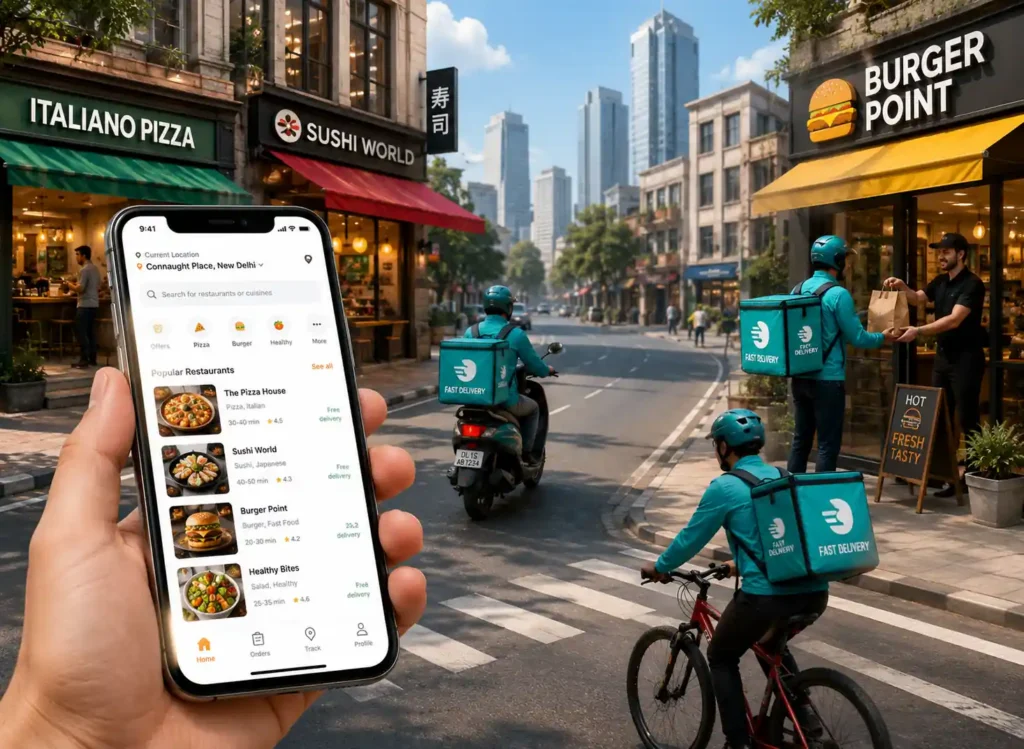
Deliveroo has transformed how people order meals by connecting restaurants, customers, and delivery riders through one digital ecosystem. What started as a local delivery service has grown into one of the leading platforms across several countries. Its focus on convenience, fast delivery, and technology has helped it remain competitive.
A modern Deliveroo-like app offers much more than food ordering. It creates a complete digital experience where customers can discover restaurants, compare menus, place orders, and monitor deliveries in real time. Restaurants receive new business opportunities, while delivery partners earn income through flexible schedules.
One reason behind Deliveroo’s success is its ability to manage thousands of orders simultaneously. The platform combines smart logistics with an efficient delivery management system that assigns drivers based on location and availability. This improves delivery speed and customer satisfaction.
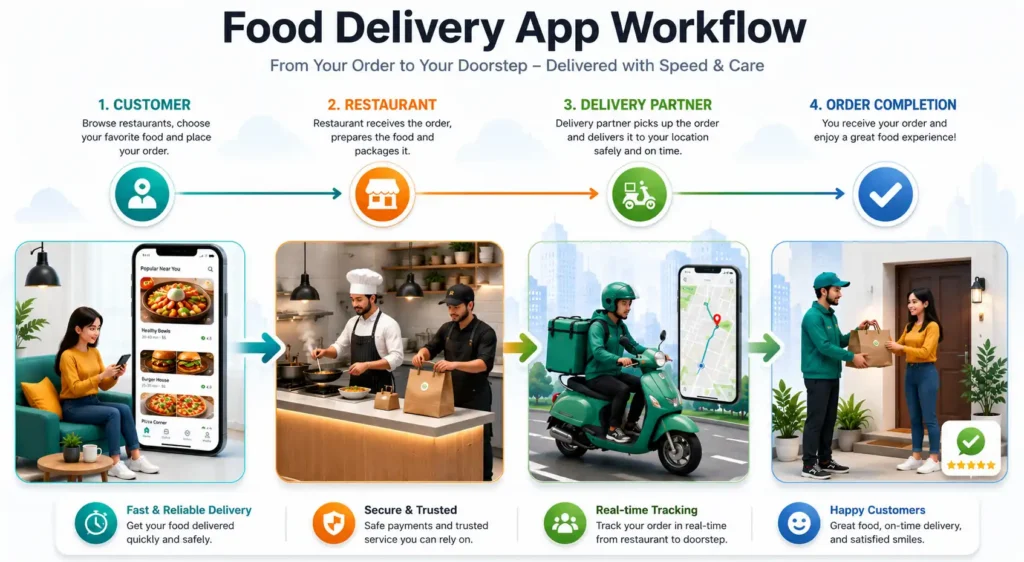
The platform also supports seamless online food ordering, allowing customers to browse restaurants, customise meals, and complete secure payments within minutes. These conveniences encourage repeat purchases and strengthen customer loyalty.
Many entrepreneurs now choose Deliveroo clone app development to enter the growing food delivery industry. Instead of building every feature from scratch, businesses can start with proven functionality and customize it according to their goals. This approach often reduces development time while maintaining flexibility for future expansion.
As competition increases, companies focus on creating unique experiences rather than copying existing platforms. Personalized recommendations, loyalty programs, and AI-powered suggestions help businesses stand out while delivering greater value to users.
Market Analysis and Demand for Food Delivery Apps
The online food delivery industry continues to grow because consumers value convenience more than ever. Busy professionals, students, and families increasingly rely on mobile applications to order meals without visiting restaurants. Changing customer habits have encouraged restaurants to invest in digital platforms.
Many restaurants now treat mobile ordering as an important revenue channel rather than an additional service. This shift creates strong opportunities for entrepreneurs planning a food delivery business. Businesses entering this market often evaluate the overall food delivery app development cost before making investment decisions.
Development expenses vary depending on app complexity, platform selection, and required integrations. Careful planning prevents budget overruns later. Another growing trend is the demand for a multi-restaurant delivery app. Customers prefer one application that offers multiple cuisines instead of downloading separate apps for each restaurant. This business model attracts more users while increasing order volume.
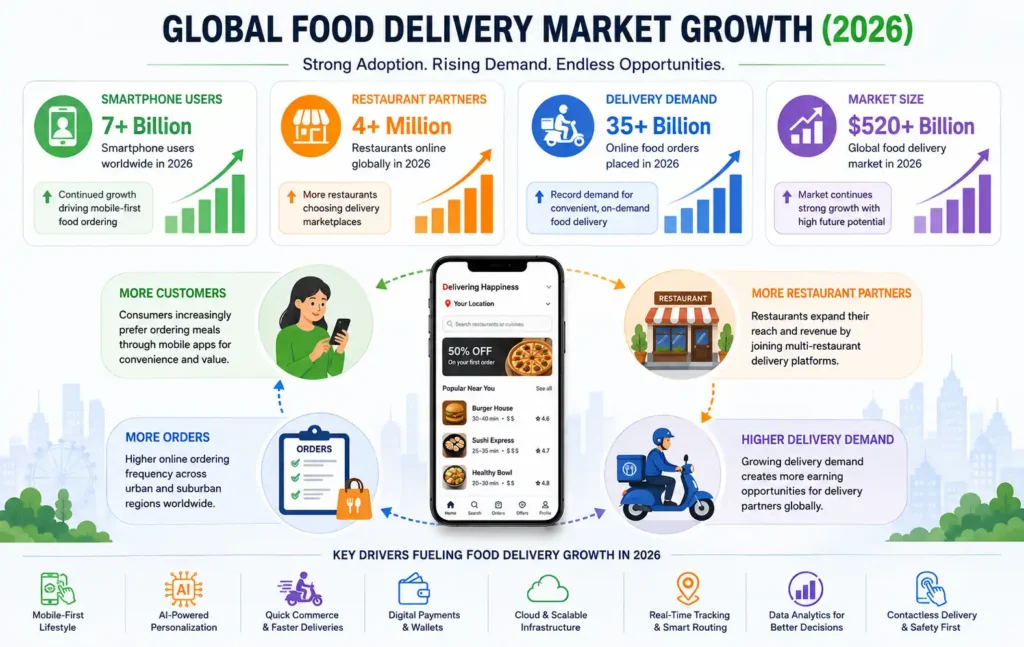
Modern platforms also function as a complete food delivery marketplace, connecting restaurants, delivery partners, and customers within a single ecosystem. Marketplace models generate revenue through commissions, delivery charges, subscriptions, and promotional listings. Many startups also focus on niche markets, including healthy meals, organic food, local restaurants, or corporate lunch deliveries.
These specialized services help businesses compete without directly challenging larger brands. Companies planning Deliveroo clone app development often begin by identifying underserved customer segments. Offering better customer support, faster delivery, or exclusive restaurant partnerships creates a stronger market position.
Businesses looking for experienced technical partners often explore a leading food delivery app development company UK to build scalable platforms that meet modern performance and security standards. Choosing experienced developers helps avoid costly technical issues later.
Key Features and Functionalities of Deliveroo
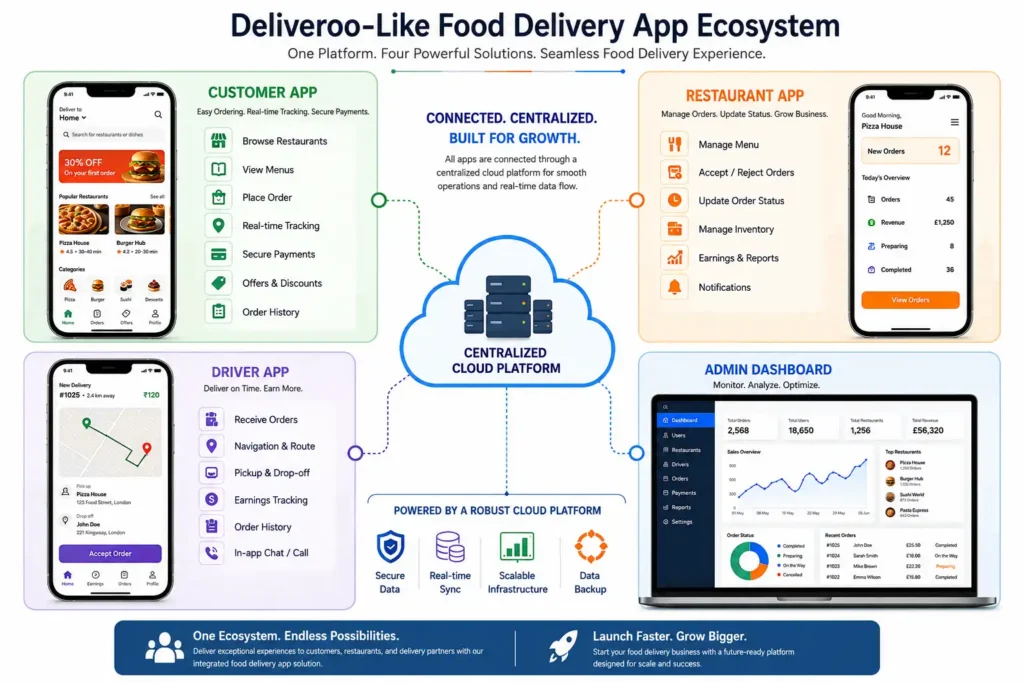
Building a successful Deliveroo-like app requires much more than attractive design. Every feature should improve convenience for customers while simplifying operations for restaurants and delivery partners. A typical platform consists of several connected applications that work together seamlessly.
1. Customer Application
The customer mobile app acts as the primary interface for ordering food. Users can search restaurants, browse menus, save favorite meals, apply discount codes, and place orders within minutes. An intuitive ordering process reduces abandoned carts and increases completed purchases. Smart search filters, personalized recommendations, and order history further improve customer satisfaction.
2. Restaurant Management
The restaurant partner app enables restaurants to receive incoming orders, update menus, manage inventory, and monitor preparation times. Restaurants can also track sales performance and respond quickly to customer requests. An integrated restaurant ordering system ensures accurate communication between restaurants and delivery personnel, reducing order mistakes and delays.
3. Delivery Partner Application
The driver delivery app helps delivery executives receive delivery requests instantly and navigate efficiently. Smart route optimization reduces travel time while improving overall delivery performance. Integrated GPS tracking allows customers and restaurants to monitor delivery progress throughout the journey. Accurate location tracking increases transparency and builds customer trust.
4. Administrative Control Panel
The admin dashboard gives business owners complete visibility over platform performance. Administrators can manage restaurants, customers, drivers, commissions, offers, disputes, and business analytics from one centralized interface. Real-time reporting helps businesses identify popular restaurants, peak ordering hours, and customer behavior, supporting better business decisions.
5. Core Features That Improve User Experience
Several modern capabilities define successful food delivery app features today.
These include:
- Secure user registration and authentication
- Restaurant search with smart filters
- Menu browsing and customization
- Real-time order tracking
- Multiple payment methods
- Ratings and reviews
- Push notifications
- Loyalty programs
- Order history
- Customer support chat
Behind these capabilities, reliable payment gateway integration ensures secure online transactions while supporting multiple payment options. Many platforms also depend on third-party API integration for maps, notifications, payment services, SMS verification, and analytics. These integrations reduce development time while adding reliable functionality.
Explore more: How much does a food delivery app cost?
Cost Breakdown of Building a Food Delivery App Like Deliveroo
Understanding the cost to build a food delivery app like Deliveroo starts with identifying the major development components. Every feature, integration, and technology choice affects the final budget. A well-planned project balances functionality with long-term scalability.
Below is a typical app development cost breakdown based on current market rates.
| Development Component | Estimated Cost (USD) |
|---|---|
| Discovery and Planning | $3,000–$8,000 |
| UI/UX design cost | $5,000–$15,000 |
| Customer Application | $15,000–$35,000 |
| Restaurant Application | $10,000–$25,000 |
| Driver Application | $10,000–$25,000 |
| Admin Panel | $8,000–$20,000 |
| API Integrations | $5,000–$12,000 |
| Testing and Quality Assurance | $6,000–$15,000 |
| Deployment and Launch | $2,000–$5,000 |
Overall, the cost to build a food delivery app like Deliveroo generally ranges from $50,000 to $180,000+. The final investment depends on feature complexity, supported platforms, and customization requirements.
Technology also influences the cost to develop a food delivery app. Businesses launching quickly often choose cross-platform app development to support Android and iOS with one codebase. This approach lowers development effort while maintaining a consistent user experience. Companies requiring maximum device performance may select native app development instead.
Although it increases the initial budget, native apps often deliver smoother performance and deeper platform integration. Infrastructure expenses continue after launch. Reliable servers, storage, monitoring, and backups contribute to the overall cloud hosting cost. These recurring expenses increase as the platform attracts more users and restaurant partners.
Long-term success also depends on regular updates, security improvements, bug fixes, and compatibility upgrades. These ongoing activities contribute to the mobile app maintenance cost, which businesses should include in annual budgets. Many businesses compare food delivery app pricing from different vendors before choosing a development partner.
Comparing experience, technical expertise, and post-launch support often provides better value than selecting the lowest quotation. Businesses seeking premium engineering expertise often work with the best food delivery app development services London to build secure, scalable platforms tailored to growing customer demands. An experienced team also helps reduce technical risks throughout the project.
Explore more: Cost to build a food delivery app like Uber Eats
Tips on How to Reduce Development Costs
Reducing costs does not mean sacrificing quality. Smart planning helps businesses launch faster while keeping development expenses under control.
Start with a Minimum Viable Product (MVP). Include only the essential features customers need during the first release. Additional functionality can be introduced after receiving real user feedback.
Choose reusable technologies whenever possible. Modern frameworks simplify development and reduce maintenance work over time. This approach is especially useful for a food delivery mobile app targeting multiple platforms.
Avoid unnecessary customization during the initial launch. Standard payment, notification, and mapping services reduce implementation effort while delivering reliable performance.
If your goal is to build a food delivery app for long-term growth, prioritize scalable architecture from the beginning. Expanding later becomes much easier when the technical foundation is strong.
Businesses with unique operational needs may later invest in bespoke food delivery app development. Starting with core functionality first helps validate market demand before making larger investments.
Working with an experienced development team also reduces expensive mistakes. Many businesses prefer to hire offshore dedicated developers because they provide technical guidance, transparent communication, and structured development processes from planning through launch.
Similarly, choosing a bespoke mobile app development agency often results in better project management, improved code quality, and reliable post-launch support. An experienced partner can identify risks early and recommend practical solutions before they become costly.
For restaurant-focused platforms, experienced teams understand the challenges of restaurant delivery app development and can recommend proven workflows that improve efficiency. They also build an on-demand food delivery app that supports future growth without requiring major redevelopment.
Conclusion
Building a successful food delivery platform requires more than an attractive interface. Success depends on thoughtful planning, scalable technology, and a feature set that delivers value to customers, restaurants, and delivery partners.
Understanding the cost of Deliveroo-like app development allows businesses to allocate budgets wisely and avoid unexpected expenses during development. Whether you are launching a startup or expanding an existing restaurant brand, investing in quality development creates a stronger foundation for long-term growth. With the right strategy and experienced development partner, your platform can compete confidently in today’s fast-growing digital food delivery market.