


Modern enterprises face constant pressure to improve efficiency, reduce costs, and deliver better customer experiences. Investing in b2b app development helps businesses streamline operations while staying competitive in a fast-changing market. Choosing the best b2b app development company allows organizations to build reliable digital platforms that support long-term growth. Instead of relying on disconnected systems, companies can create smarter workflows that connect employees, partners, and customers through one secure application.
Digital expectations continue to grow across every industry. Businesses now need technology that supports faster communication, accurate reporting, and seamless collaboration. A well-designed B2B application creates a connected environment where teams work efficiently and make better decisions. It also prepares enterprises for future expansion without disrupting daily operations.
The Need for Digital Transformation for Enterprises
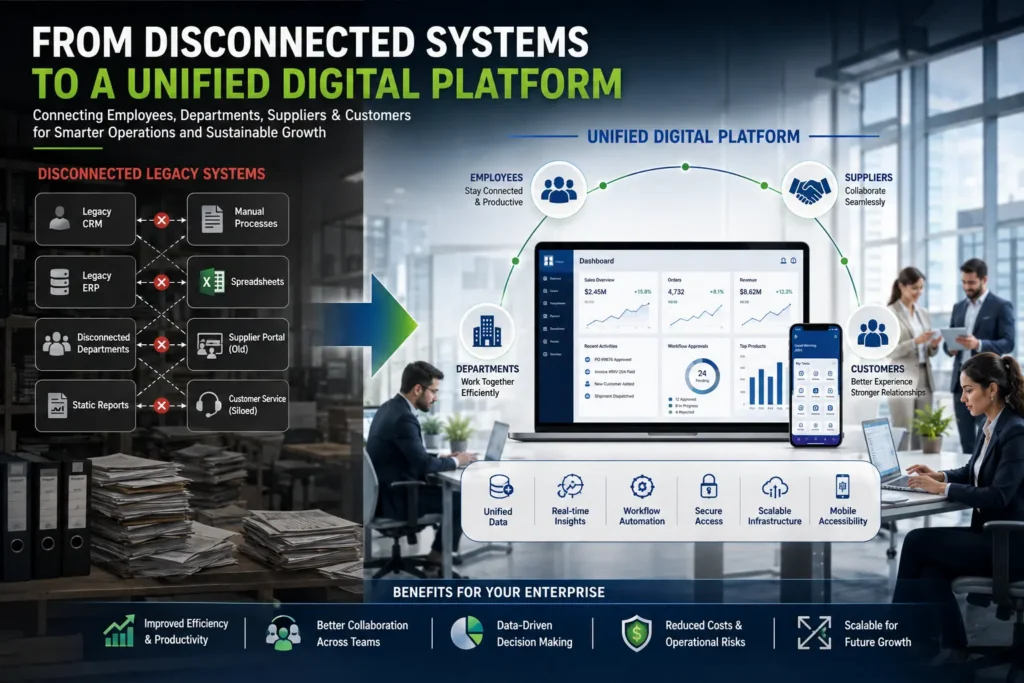
Digital business models have become essential for enterprises that want sustainable growth. Manual processes, disconnected software, and outdated systems often create delays that affect productivity and customer satisfaction. Organizations need modern technology that simplifies operations while supporting future innovation.
Successful digital transformation is not simply about replacing paper-based work with software. It focuses on redesigning business processes to improve performance, increase visibility, and create better experiences for employees and customers alike.
Why traditional systems no longer meet business needs
Many enterprises still depend on legacy software that lacks flexibility. These systems make it difficult to exchange information between departments. Teams often spend valuable time entering the same data across multiple platforms. As businesses expand, these limitations become more noticeable. Slow workflows reduce productivity and increase operational costs.
Decision-makers also struggle to access accurate information quickly, affecting strategic planning. Modern enterprises require connected platforms that provide real-time insights and simplify everyday operations.
Building a connected digital ecosystem
Modern organizations invest in digital transformation solutions to connect departments, partners, suppliers, and customers through one unified platform. This approach reduces communication gaps while improving business visibility. Integrated applications help organizations automate repetitive work, improve reporting accuracy, and support faster decision-making.
Employees spend less time managing administrative tasks and more time focusing on business growth. Businesses also gain better control over data, helping leaders respond quickly to market changes and customer expectations.
Supporting long-term enterprise growth
Growing companies require technology that evolves alongside their operations. Flexible applications allow organizations to introduce new services without replacing existing infrastructure. Modern systems also improve collaboration between different business units.
Managers gain better oversight, while employees access the information they need without unnecessary delays. This level of connectivity strengthens daily operations and creates a solid foundation for future innovation.
The Growing Importance of B2B App Development
Enterprises increasingly rely on b2b app development to improve communication, simplify operations, and create stronger relationships with business partners. Unlike consumer applications, B2B platforms focus on solving complex operational challenges while supporting multiple users, departments, and workflows.
As organizations continue expanding, mobile-first business solutions become essential for maintaining productivity across distributed teams.
1. Meeting evolving business expectations
Today’s enterprises expect applications to support multiple business functions from a single interface. Employees want instant access to reports, approvals, customer information, and operational data regardless of their location. Modern enterprise app development enables organizations to replace fragmented software with centralized business platforms that improve speed, accuracy, and collaboration.
These applications also reduce manual work while supporting better decision-making through real-time business information.
2. Enhancing operational performance
Business leaders constantly look for opportunities to improve operational efficiency without increasing overhead costs. Digital applications automate repetitive activities and eliminate unnecessary manual intervention.
Processes such as approvals, inventory updates, document management, and reporting become significantly faster when handled through intelligent mobile platforms. This structured approach improves consistency while reducing human error across departments.
3. Connecting critical business systems
Modern enterprise applications deliver greater value when connected with existing software. Features like CRM integration help sales teams access customer information instantly, improving communication and service quality. Similarly, ERP integration connects finance, inventory, procurement, and operations into one streamlined ecosystem.
Employees no longer switch between multiple systems to complete everyday tasks. This centralized access improves accuracy and enables faster collaboration across the organization.
4. Supporting remote and hybrid workforces
Flexible work environments have changed how enterprises operate. Employees expect secure access to business resources from offices, homes, and client locations. Modern enterprise mobility solutions provide seamless access to business applications across smartphones and tablets.
Teams remain productive regardless of their location while maintaining consistent communication. Mobile accessibility also improves response times and allows managers to monitor operations more effectively.
5. Automating routine operations
Organizations lose significant time performing repetitive administrative work. Intelligent applications simplify these activities through business process automation, reducing manual effort across multiple departments. Routine approvals, notifications, scheduling, document sharing, and reporting become faster and more accurate.
Businesses achieve greater consistency while allowing employees to focus on higher-value responsibilities. Automation also improves compliance by ensuring standardized processes throughout the organization.
6. Delivering secure and scalable business platforms
Enterprise applications manage valuable company information every day. Security therefore becomes a critical requirement during development. A professional b2b mobile app development company builds secure business applications that protect confidential business data while maintaining smooth performance.
Strong authentication, encrypted communication, and controlled user permissions reduce business risks. These platforms also support future expansion through scalable mobile solutions, allowing organizations to grow without major system redesigns.
Explore more: Why businesses need custom mobile apps
The Role of B2B App Development Partner in Enterprise Success
Selecting the right technology partner directly influences the outcome of an enterprise application. The best enterprise app development firm understands business objectives before writing a single line of code. It evaluates existing workflows, identifies gaps, and recommends practical solutions that deliver measurable value.
A strategic development partner also plans for scalability, security, and future upgrades. This approach ensures the application continues supporting business goals as the organization grows.
Delivering tailored business applications
Every enterprise has different processes, approval systems, and reporting requirements. A generic application rarely addresses these unique needs. Professional teams focus on custom b2b app development that aligns with specific business goals. They create user-friendly interfaces, optimize workflows, and build features that solve real operational challenges. Businesses gain applications designed around their processes instead of changing processes to fit software.
Creating intelligent enterprise platforms
Modern enterprises depend on technology that simplifies daily work while supporting long-term growth. Developers build custom enterprise applications that connect departments through one centralized platform. These solutions reduce duplicated work, improve communication, and provide real-time visibility across operations.
Employees access accurate information faster, helping them complete tasks more efficiently. Organizations also gain flexibility to introduce new features as business requirements evolve.
Improving collaboration across teams
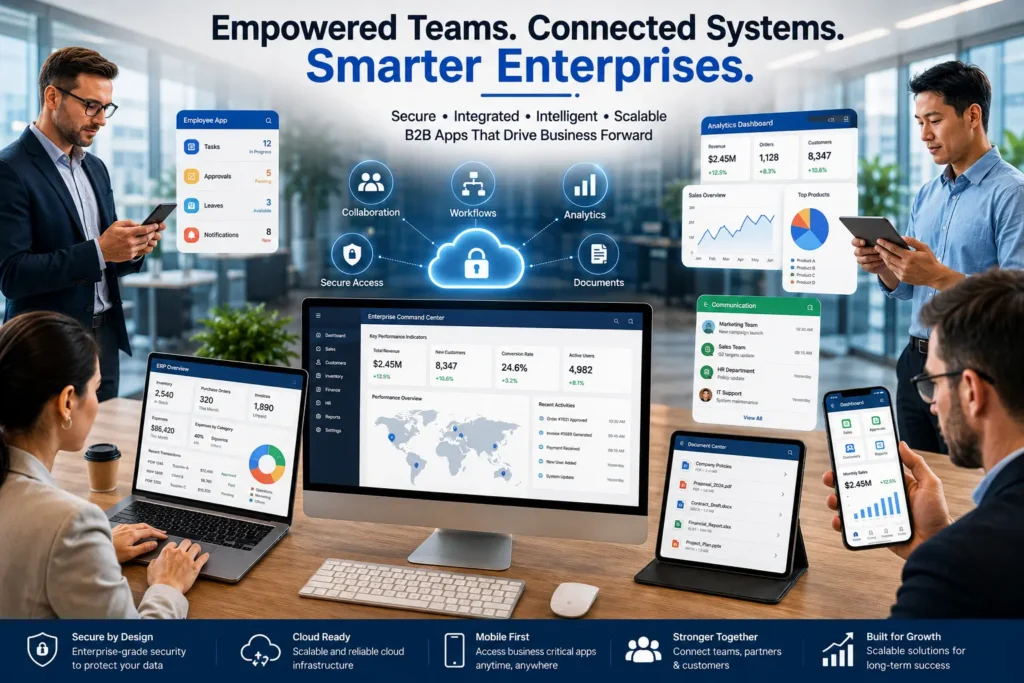
Internal communication often becomes difficult as businesses expand. Dedicated applications simplify collaboration by providing shared workspaces, instant notifications, and centralized document management. Well-designed employee collaboration apps help teams coordinate projects, approve requests, and exchange information without relying on lengthy email chains. This connected environment improves productivity while reducing communication delays.
Turning data into better decisions
Enterprise leaders depend on accurate information when making strategic decisions. Advanced business intelligence apps collect and present meaningful insights through interactive dashboards and reports. Managers monitor performance, identify trends, and measure operational improvements in real time.
Reliable reporting helps organizations respond quickly to changing market conditions. Data-driven decisions reduce uncertainty and support sustainable business growth.
Choosing the right technology partner
Finding the right development partner requires more than comparing prices. Businesses should evaluate technical expertise, industry experience, security standards, and post-launch support. Organizations looking for expert business app development services should choose companies with proven experience in enterprise projects.
Strong communication, transparent development processes, and ongoing maintenance contribute to successful outcomes. The right partner becomes a long-term technology advisor rather than simply a software vendor.
Advantages of B2B App Development for Enterprises
Investing in b2b app development provides measurable business benefits beyond digital convenience. Enterprise applications improve efficiency, strengthen communication, and create consistent business experiences across departments. Companies also position themselves for long-term innovation by adopting technology that adapts to future business needs.
1. Faster operations through automation
Enterprises manage hundreds of daily activities across multiple departments. Intelligent applications simplify repetitive work through workflow automation, reducing delays and minimizing manual errors. Businesses also improve business automation by digitizing approvals, reporting, scheduling, and task management.
Employees spend more time solving customer challenges instead of performing repetitive administrative work. This efficiency creates better experiences for both internal teams and business partners.
2. Supporting mobile workforces
Modern organizations require reliable access to business applications from any location. Effective enterprise mobility allows employees to stay connected while traveling, working remotely, or visiting clients.
Businesses adopting enterprise mobile app development improve communication and accelerate decision-making across distributed teams. Mobile accessibility ensures critical information remains available whenever employees need it.
3. Better integration with cloud technologies
Cloud platforms simplify application management while improving availability and scalability. Businesses increasingly adopt cloud-based business apps because they reduce infrastructure costs and support remote access.
Successful cloud integration connects enterprise applications with existing business systems, enabling seamless data exchange across departments. This centralized environment improves collaboration while simplifying software maintenance.
4. Stronger security and compliance
Enterprise applications process confidential business information every day. Organizations must therefore prioritize data security in mobile apps throughout the development lifecycle. Secure authentication, encrypted communication, and role-based access controls help protect sensitive information.
Regular security updates also reduce vulnerabilities and support industry compliance requirements. A secure platform builds trust among employees, partners, and customers.
5. Driving sustainable business growth
Digital platforms create opportunities for continuous improvement. Organizations gain better visibility into operations, customer interactions, and employee performance. Customer relationship management applications improve partner communication while strengthening long-term business relationships.
Businesses also achieve greater digital business growth by responding faster to customer needs and market opportunities. Modern enterprise digital solutions create a strong foundation for future innovation.
6. Planning future technology investments
Many organizations eventually expand their digital ecosystem with advanced capabilities and new integrations. Features such as cross-platform app development allow businesses to serve multiple devices while reducing development costs. Companies planning large enterprise initiatives often hire mobile app development company specialists with experience in complex digital ecosystems.
Some enterprises also hire remote dedicated developers to access specialized expertise while maintaining development flexibility. Choosing the right strategy helps businesses maximize long-term technology investments.
Explore more: How much does a business app cost
Conclusion
Digital success depends on more than adopting new technology. Enterprises need solutions that simplify operations, improve collaboration, and support future growth. Investing in b2b app development helps organizations build connected systems that increase productivity while delivering better experiences for employees and business partners.
Choosing the top b2b app development company ensures your application aligns with business goals, integrates with existing systems, and remains secure as your organization grows. A strategic technology partner creates solutions that deliver lasting business value rather than short-term results.