


Understanding the recruitment app development cost helps businesses plan realistic budgets and avoid unexpected expenses. The cost to develop a recruitment app depends on several factors, including features, platform selection, design complexity, and technology stack. Every company has unique hiring needs, so development costs vary from one project to another.
Modern businesses rely on digital hiring tools to simplify recruitment and improve candidate experiences. Whether you need a simple application or an advanced hiring solution, knowing the key pricing factors helps you make better decisions. This guide explains the major elements that influence development costs and what businesses should expect before investing in a recruitment application.
The Demand for Recruitment Apps and Their Benefits
The hiring landscape has changed significantly during the past few years. Companies now prefer digital solutions because they reduce manual work and speed up recruitment. Mobile technology also allows recruiters and job seekers to stay connected from anywhere.
A well-designed recruitment application creates a smooth experience for employers and candidates. Instead of handling spreadsheets and emails, businesses can manage every hiring stage from a single platform.
1. Faster Hiring Process
Recruiters often receive hundreds of applications for a single position. Managing them manually takes time and increases the chance of missing qualified candidates. A recruitment app organizes applications automatically. It allows recruiters to filter candidates, review profiles, and communicate without switching between multiple systems. This approach improves productivity while reducing hiring delays.
2. Better Candidate Experience
Job seekers expect a simple and mobile-friendly application process. An easy-to-use job search app lets candidates browse vacancies, upload resumes, and track application status with minimal effort. When candidates enjoy a seamless experience, businesses strengthen their employer brand and attract better talent.
3. Improved Business Efficiency
Modern recruitment platforms reduce repetitive tasks through recruitment automation. Recruiters spend less time on administrative work and more time evaluating qualified applicants. Automation also minimizes human errors and creates consistent hiring workflows.
4. Centralized Candidate Management
Growing companies often recruit for several departments simultaneously. A centralized platform simplifies candidate management by storing applicant profiles, interview notes, communication history, and hiring progress in one secure location. This organized approach helps recruitment teams collaborate more effectively.
5. Easier Resume Handling
Handling thousands of resumes manually becomes difficult as organizations expand. Built-in resume management tools allow recruiters to search, categorize, and review applications quickly. These features reduce paperwork while improving recruitment efficiency.
6. Streamlined Interview Coordination
Scheduling interviews through emails can create confusion. Integrated interview scheduling features allow recruiters and candidates to choose suitable time slots automatically. This saves valuable time for HR teams and improves communication throughout the hiring process.
7. Stronger Hiring Decisions
Many businesses now use digital platforms as a complete talent acquisition platform instead of relying on disconnected HR tools. Recruiters gain better visibility into hiring pipelines, application trends, and candidate performance. These insights support smarter recruitment decisions.
8. Growing Adoption Across Industries
Recruitment apps are no longer limited to large enterprises. Startups, staffing agencies, educational institutions, healthcare providers, and retail businesses all benefit from mobile hiring solutions. As competition for skilled professionals increases, companies continue investing in smarter recruitment technology to stay ahead.
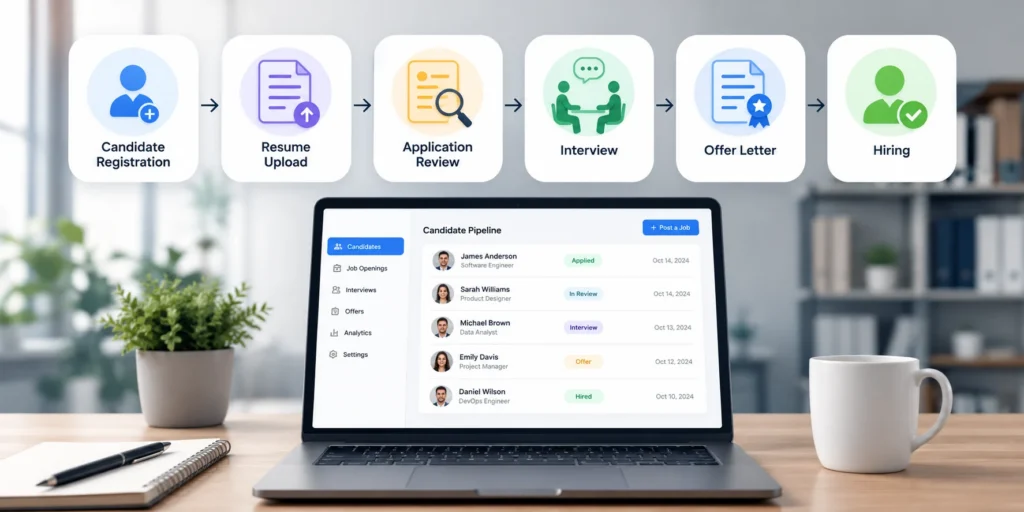
Factors That Affect the Cost of Recruitment App Development
No two recruitment apps have identical requirements. The overall recruitment app development cost depends on technical complexity, business objectives, and long-term scalability. Understanding these factors helps businesses estimate budgets more accurately.
1. Feature Requirements
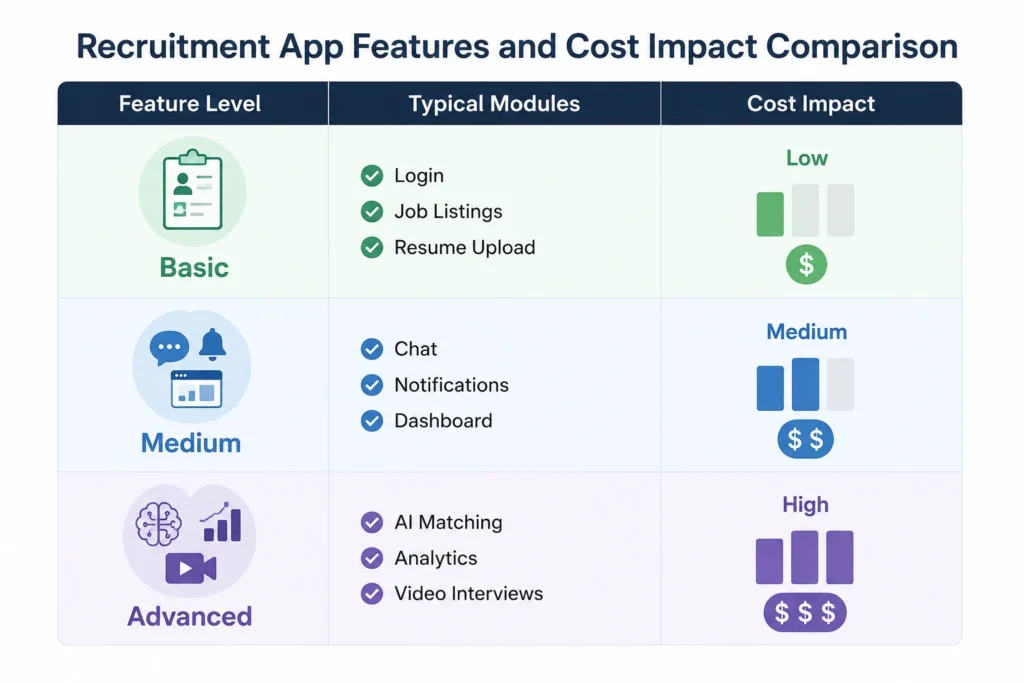
Features have the greatest impact on development costs. Basic applications usually include registration, profile creation, job listings, notifications, and messaging. Advanced platforms include AI recommendations, analytics dashboards, video interviews, and automation tools. More functionality requires additional development time.
Common recruitment app features include:
- User registration
- Job search
- Resume upload
- Application tracking
- Push notifications
- Employer dashboard
- Chat system
- Interview scheduling
- Analytics
- Payment integration
Adding premium features increases both development effort and testing requirements.
2. Platform Selection
Businesses must decide whether to build apps for Android, iOS, or both platforms. Native development delivers excellent performance but increases overall investment because each platform requires separate development. Cross-platform frameworks reduce costs by allowing developers to share much of the codebase across platforms. The selected platform directly affects project timelines and maintenance expenses.
3. User Roles and Permissions
Recruitment apps typically support multiple user types. These include candidates, recruiters, administrators, and employers. Each role requires unique permissions and workflows. For example, an employer app needs job creation tools, while candidates require profile management and application tracking. Supporting multiple user roles increases development complexity.
4. Design and User Experience
Simple interfaces cost less than highly customized designs. A professional interface improves usability and encourages higher user engagement. Interactive animations, custom illustrations, and personalized dashboards require additional design and front-end development. Businesses should balance attractive design with practical functionality.
5. Backend Infrastructure
The backend handles authentication, databases, notifications, messaging, and integrations. As user traffic grows, the backend must support higher workloads without affecting performance. Scalable cloud infrastructure often increases initial investment but reduces future performance issues.
6. Third-Party Integrations
Many recruitment platforms integrate external services.
Examples include:
- Email providers
- Video interview platforms
- Calendar applications
- Payment gateways
- Cloud storage
- HR software
Each integration requires development, testing, and ongoing maintenance.
Explore more: Recruitment website development cost guide
7. Security Requirements
Recruitment platforms process sensitive personal information. Developers must implement secure authentication, encrypted communication, secure databases, and role-based access controls. Additional compliance requirements may also increase development costs.
8. Artificial Intelligence Features
Businesses increasingly invest in AI recruitment app development to improve hiring efficiency. Artificial intelligence can screen resumes, recommend candidates, rank applications, and automate repetitive tasks. These advanced capabilities require additional machine learning models, data processing, and testing, making them more expensive than traditional features.
9. Analytics and Reporting
Recruiters often require detailed hiring reports. Interactive dashboards provide insights into application numbers, hiring performance, recruiter productivity, and recruitment trends. A comprehensive recruiter dashboard supports better decision-making while adding development complexity.
10. Scalability Requirements
A startup recruiting ten employees annually has different requirements than an enterprise hiring thousands. Future scalability affects architecture decisions from the beginning. Building for growth may increase the initial budget but prevents costly redevelopment later.
11. Choosing the Right Development Partner
Selecting the best recruitment app development company can significantly improve project outcomes. An experienced team recommends suitable technologies, realistic timelines, and scalable architecture. Businesses should evaluate technical expertise, communication, industry experience, and post-launch support before making a final decision.
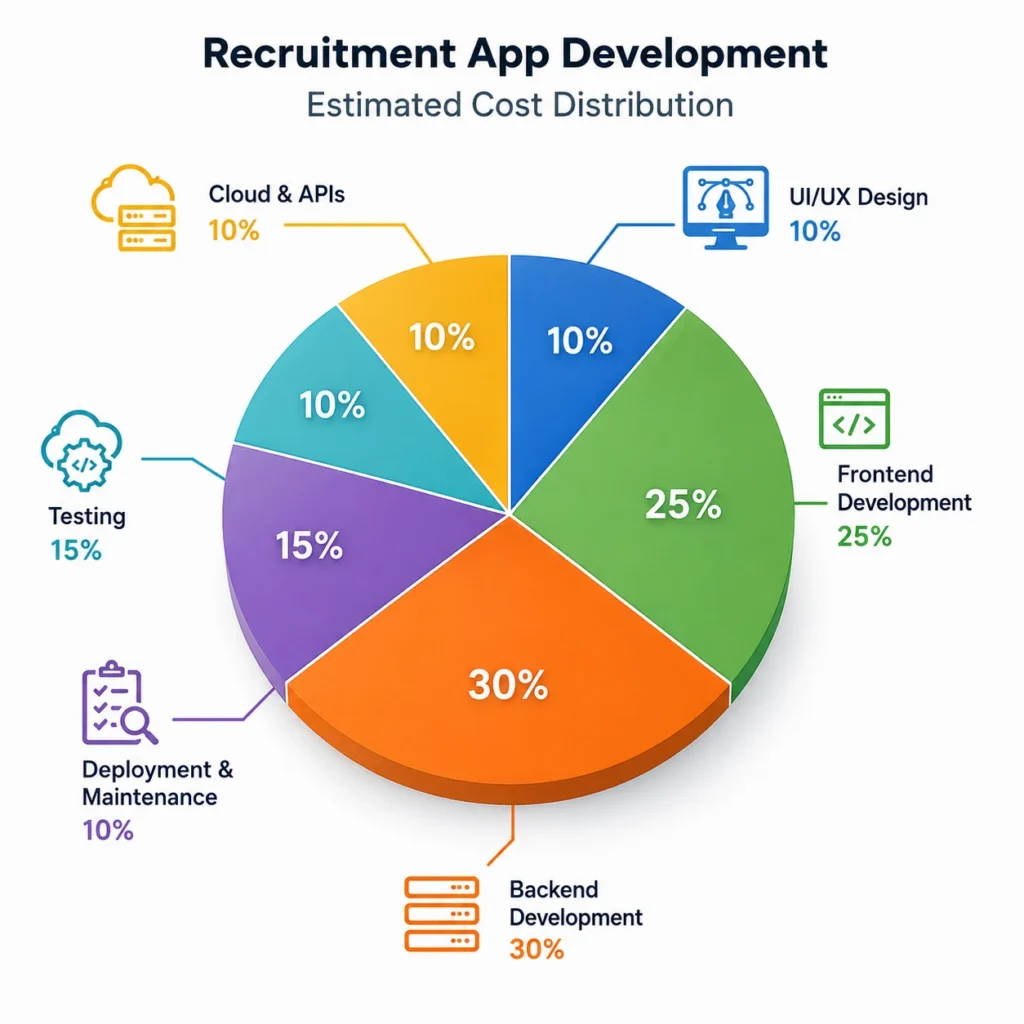
Breakdown of Cost Components
Every recruitment project includes several cost categories. Understanding each one helps businesses estimate the overall cost to develop a recruitment app more accurately.
1. UI/UX Design
A clean interface improves usability and keeps users engaged. Designers create wireframes, user journeys, and visual layouts before development begins. Better design often increases user satisfaction and reduces future redesign costs.
2. Frontend Development
Frontend development builds the screens users interact with daily. Developers create responsive interfaces for candidates, recruiters, and employers. Smooth navigation improves the overall user experience.
3. Backend Development
The backend powers user authentication, databases, APIs, notifications, and business logic. It also stores application records securely and supports future scalability.
4. Database and Cloud Infrastructure
Cloud hosting ensures reliable performance as user traffic grows. Businesses should also budget for database management, backups, monitoring, and server maintenance.
5. API Integration
Most recruitment apps connect with third-party services. Common integrations include payment gateways, video interviews, email services, calendars, and cloud storage. These integrations improve functionality while adding development effort.
6. Testing and Quality Assurance
Testing ensures every feature performs correctly across devices and operating systems. A dedicated quality assurance process reduces bugs before launch and improves user satisfaction.
7. Deployment and Maintenance
Publishing the application on app stores is only the beginning. Regular updates, bug fixes, security improvements, and feature enhancements require an ongoing maintenance budget.
Average Cost of Developing a Recruitment App
The actual recruitment app development cost varies according to project complexity, business goals, and feature requirements. Current market pricing generally falls into three categories.
| App Type | Estimated Cost (USD) | Development Timeline |
|---|---|---|
| Basic Recruitment App | $20,000–$40,000 | 3–5 Months |
| Medium Complexity App | $40,000–$80,000 | 5–8 Months |
| Enterprise-Level Solution | $80,000–$180,000+ | 8–13+ Months |
A basic application usually includes user registration, job listings, profile management, notifications, and application submission. A medium-level platform adds messaging, analytics, advanced search filters, and applicant tracking capabilities.
Enterprise solutions support complex workflows, multiple user roles, automation, AI features, and integrations with HR systems. Many businesses also include an applicant tracking system app to manage applications from submission through onboarding.
Businesses planning long-term growth often invest in recruitment platform development instead of launching a limited application. A scalable platform supports future expansion without major redevelopment.
Some organizations also require custom recruitment app development because standard solutions cannot meet industry-specific hiring processes. Although custom development costs more initially, it provides greater flexibility and long-term value.
Tips for Cost-Effective Recruitment App Development
Reducing development expenses does not mean sacrificing quality. Careful planning helps businesses achieve better results within budget.
1. Start with an MVP
Launch essential features first. Gather user feedback before adding advanced functionality. This approach lowers risk and shortens the initial development timeline.
2. Prioritize Business Goals
Avoid adding unnecessary features during the first release. Focus on tools that directly improve recruitment efficiency and user experience.
3. Choose the Right Technology Stack
Selecting proven technologies reduces development challenges and future maintenance costs. Experienced developers can recommend scalable frameworks based on business needs. More importantly, choose the right partner. Businesses looking to hire mobile app development company professionals should evaluate portfolios, technical expertise, communication, and ongoing support instead of selecting solely by price.
Around 100 words later in your planning process, organizations expanding rapidly may also prefer to hire best dedicated developers to access experienced talent while controlling overall project costs. This approach works well for long-term product development and continuous feature upgrades.
4. Use Cross-Platform Development
Cross-platform frameworks reduce coding effort by sharing a large portion of the codebase. This strategy lowers development costs while maintaining consistent functionality across Android and iOS devices.
5. Plan for Future Growth
Building a scalable architecture from the beginning reduces expensive redevelopment later. A flexible foundation supports new features and higher user volumes as the business grows.
Other Expenses to Consider
Development is only one part of the overall investment. Businesses should also budget for ongoing operational costs.
Cloud hosting remains a recurring expense because applications require reliable infrastructure and secure data storage.
App store publishing fees also contribute to the total recruitment app pricing over time.
Regular maintenance typically costs around 15–20% of the original development budget each year. This covers bug fixes, operating system updates, security improvements, and performance optimization.
Marketing expenses should also be considered. Even the best application needs promotion to attract recruiters and job seekers.
Organizations planning AI-powered recruitment capabilities should budget separately for AI model training, cloud computing resources, and continuous optimization.
Additional features such as a job matching app, intelligent recommendations, and predictive analytics also increase operational costs after launch.
Companies building a complete online recruitment platform often invest in advanced analytics, reporting tools, and hiring process automation to improve efficiency.
Recruitment agencies may require a dedicated staffing app that supports multiple clients, job categories, and recruiter teams. These specialized requirements increase both development and maintenance costs.
Conclusion
Understanding the recruitment app development cost requires more than estimating coding expenses. Businesses should evaluate design, features, infrastructure, integrations, maintenance, and future scalability before setting a budget. Every recruitment platform has different requirements. A carefully planned investment delivers better hiring efficiency, improved candidate experiences, and long-term business value.
Before starting your project, compare feature priorities, choose an experienced development partner, and estimate ongoing operational expenses. A thoughtful strategy helps control the cost to develop a recruitment app while building a scalable solution that supports future growth.