


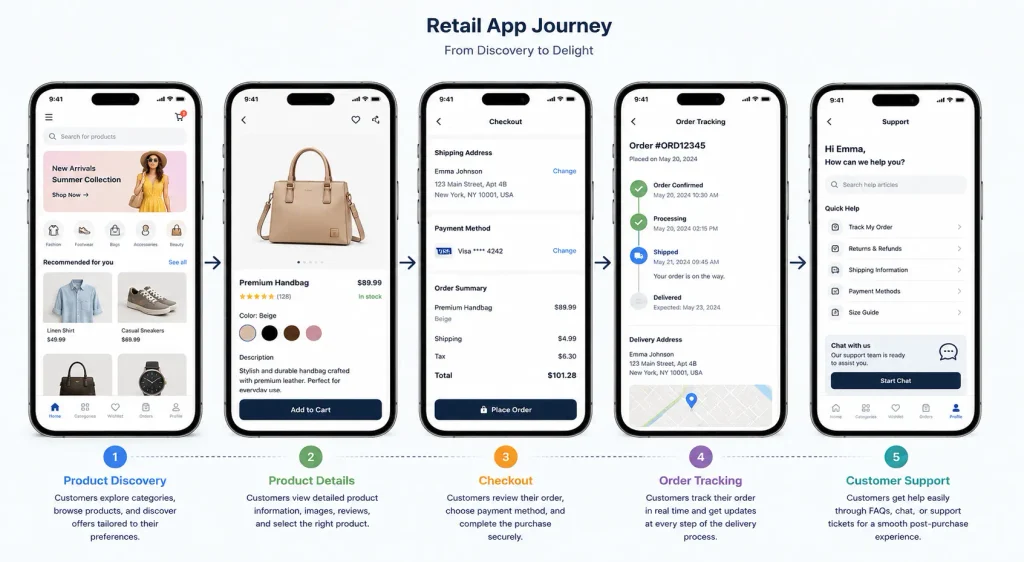
Retail customers expect convenient shopping, relevant offers, quick payments, and consistent service across channels. A custom mobile app for a retail business can help retailers meet these expectations while building stronger customer relationships. A Custom Mobile App also gives businesses more control over the shopping journey, from product discovery to post-purchase support.
Unlike a generic shopping platform, a tailored application can reflect your products, business processes, customer needs, and growth plans. It can connect online shopping with physical stores and support everyday operations.
However, an app only creates value when it solves real customer problems. Retailers should focus on practical features, easy navigation, reliable integrations, and measurable business goals before investing in development.
What Is a Custom Mobile App for Retail Business?
A custom retail application is a mobile solution designed around a retailer’s specific products, customers, and operations. It can support product browsing, ordering, payments, loyalty schemes, store information, and customer support within one convenient interface.
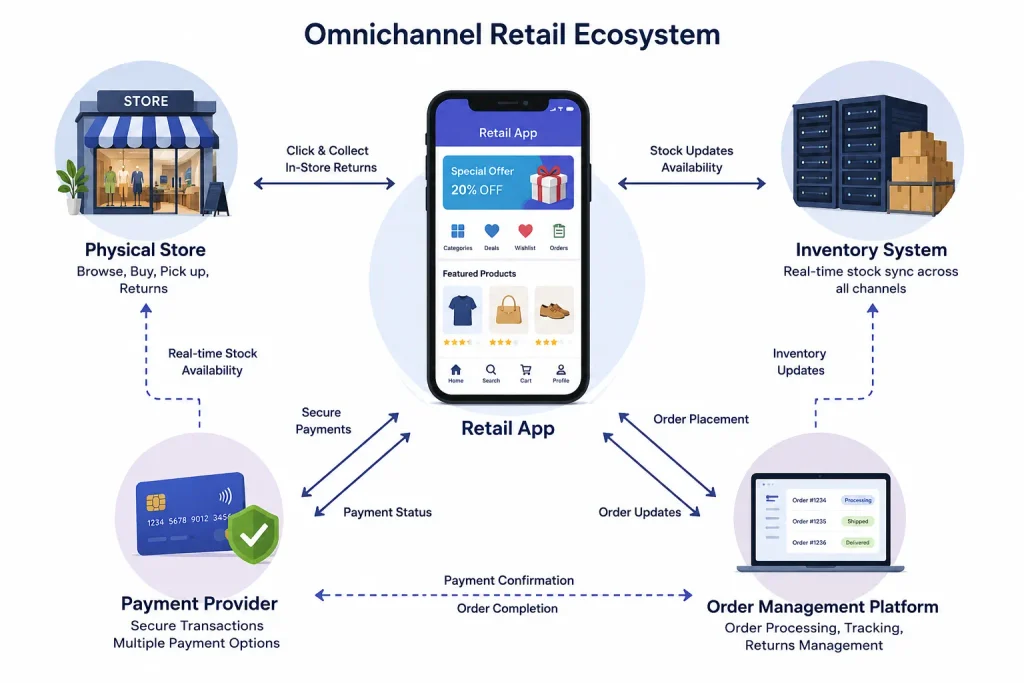
Unlike a basic online store, a tailored application can connect with existing business systems. For example, a retailer could synchronise product availability, customer accounts, order information, and promotions across digital and physical channels.
The right solution depends on the business model. A fashion retailer might prioritise product recommendations and wish lists. A grocery store might need scheduled collection, delivery tracking, and stock updates. A specialist electronics retailer could offer product comparisons and warranty information.
Explore more: Mobile app development for retail businesses
Why Your Retail Business Needs a Custom Mobile App
1. Create a More Convenient Shopping Experience
Customers value shopping journeys that save time and reduce effort. A retail business mobile app can give shoppers quick access to product categories, prices, availability, and order details. For example, customers could browse products before visiting a store, reserve items, or place orders for home delivery. Clear product information and simple navigation can help shoppers make informed decisions.
A well-planned mobile app for retail stores can also support click-and-collect services. Customers order online and collect purchases at a convenient location, combining digital convenience with physical retail service.
2. Strengthen Customer Engagement
Retailers often struggle to maintain meaningful communication after a customer leaves the store. An app provides another channel for sharing relevant updates, product information, and service messages.
Useful push notifications can inform customers about order status, back-in-stock products, or promotions they have chosen to receive. Retailers should make these messages relevant and respect notification preferences.
Personalised product suggestions can also support a personalised shopping experience. For example, a homeware retailer could highlight matching accessories based on products a customer previously viewed. Personalisation should always serve a clear purpose. Irrelevant messages and excessive notifications can frustrate shoppers rather than encourage interaction.
3. Encourage Repeat Purchases and Loyalty
Acquiring new customers requires time and marketing investment. Retailers can support customer retention by making returning to the store easier and more rewarding. Digital customer loyalty programs can let shoppers collect points, view membership benefits, and redeem rewards without carrying physical cards. Customers can also track progress towards specific benefits.
A retail shopping app can present loyalty rewards alongside relevant products or offers. For example, a coffee retailer might show a customer’s available reward before checkout. Retailers should assess whether these features encourage meaningful participation. Useful rewards, transparent terms, and straightforward redemption often matter more than complicated point systems.
4. Support Sales Opportunities Across Channels
A well-designed app can create additional ways for customers to discover products and complete purchases. It can also connect browsing behaviour with relevant offers and convenient checkout options.
A retailer may use a mobile commerce app to support product searches, wish lists, saved baskets, and order tracking. These features can reduce friction when customers return to complete a purchase.
Retailers should track conversion rates, abandoned baskets, average order value, and repeat orders. These measures help identify where the app supports retail sales growth and where the shopping journey needs improvement.
An app cannot guarantee higher revenue. Its contribution depends on product demand, pricing, usability, fulfilment, and customer adoption.
5. Connect Online and In-Store Operations
Customers increasingly expect a consistent experience when switching between online and physical shopping. A thoughtful app strategy can support omnichannel retail by connecting customer-facing services with store operations.
For example, shoppers could check local stock, access digital receipts, review collection details, or return eligible online purchases in-store. Staff could also use connected systems to answer product availability questions more accurately.
Integrating inventory management helps retailers maintain more consistent stock information across channels. The quality of this experience depends on reliable data, well-maintained integrations, and clear operational processes.
6. Build a Foundation for Long-Term Growth
A retailer’s needs can change as its product range, customer base, and operations expand. A tailored application can accommodate new services when the business plans for them from the beginning.
For instance, a retailer might launch with product browsing and loyalty features, then add subscriptions, delivery scheduling, or additional payment methods later. This flexibility can support retail business growth, but it requires sensible planning. Businesses should prioritise features that solve current problems instead of paying for speculative functionality.
Explore more: Custom app development for businesses
Essential Retail Mobile App Features
The most effective feature set depends on customer needs and how the retailer operates. These core retail mobile app features provide a useful starting point.
1. Product discovery and customer accounts
Include searchable product categories, useful filters, clear descriptions, quality images, and accurate availability. Customer accounts can store preferences, addresses, and order details where appropriate. Access to customer purchase history can help shoppers review previous orders and find products they bought earlier. Retailers must handle this information responsibly and explain relevant privacy practices.
2. Easy checkout and secure payments
A smooth shopping cart and checkout process should show prices, delivery charges, discounts, and order totals clearly. Reduce unnecessary steps and explain errors in plain language.
Integrate a trusted, secure payment gateway that supports the payment methods your customers prefer. Depending on your market, mobile payments may include digital wallets, cards, or locally supported payment options. The app should protect sensitive information and follow applicable payment and privacy requirements.
3. Relevant offers and notifications
Use in-app offers and discounts to highlight promotions that match customer interests. Clear eligibility rules help customers understand how offers work. Retailers should also provide notification controls. Customers need a straightforward way to manage marketing preferences and distinguish promotional messages from essential order updates.
4. Integration with existing retail systems
The app should connect with relevant point-of-sale, stock, order, and customer management systems where the business requires it. Reliable integration reduces manual work and helps keep information consistent. For retailers serving shoppers through several channels, online and in-store shopping should feel connected. Customers should receive accurate information about stock, collection, delivery, and returns.
5. Analytics and performance tracking
Track meaningful measures such as product views, checkout completion, search activity, and repeat orders. These insights can reveal usability problems and opportunities to improve the shopping journey. Retailers should collect only the information they need and manage it responsibly.
Is a Custom Retail App Right for Small Businesses?
A tailored app is not automatically the best investment for every retailer. Small businesses should first assess customer demand, available budget, operational needs, and the limitations of their existing website or eCommerce platform.
A mobile app for small retail businesses can make sense when customers order frequently, benefit from loyalty rewards, or need services that a standard website cannot support effectively. However, a responsive website or established eCommerce platform may be sufficient for businesses with limited repeat purchases. These options can help retailers test demand before committing to a larger project.
Retailers should compare development, maintenance, integration, marketing, and support costs. They should also estimate how many customers might install and regularly use the app. Custom retail app development becomes more attractive when the business needs specialised workflows, deeper system integration, or a distinctive customer experience.
How to Get Started with Retail Mobile App Development
A structured process helps retailers control costs and keep development focused on customer needs.
1. Define the business problem
Identify the main challenge. It might involve low repeat purchases, difficult product discovery, fragmented ordering, or limited visibility into store inventory. Set measurable goals before choosing features. Examples include improving checkout completion, increasing loyalty programme participation, or reducing customer support queries.
2. Research your customers
Ask customers about their shopping habits and common frustrations. Review support requests, website analytics, store feedback, and competitor experiences. Use these findings to decide whether an app offers enough value beyond your current digital channels.
3. Prioritise the first release
Start with the features customers need most. A first release might include product browsing, accounts, checkout, order tracking, and loyalty benefits. Avoid adding complex features without evidence of demand. A smaller, well-tested release can provide useful feedback before further investment.
4. Choose a suitable development partner
Look for a retail app development company with relevant eCommerce experience, integration knowledge, and a clear testing process. Ask how the team handles security, accessibility, performance, and post-launch maintenance.
An experienced partner should explain technical choices in business terms. It should also provide realistic timelines, transparent costs, and a plan for measuring results. If your business needs wider integration or tailored functionality, explore custom mobile app development solutions that fit your existing systems and future priorities.
5. Test, launch, and improve
Test the app on supported devices and across important customer journeys. Check product information, payments, stock updates, accessibility, and error handling before release. After launch, review customer feedback and analytics regularly. Use these findings to fix friction points and prioritise improvements based on actual behaviour.
This measured approach supports retail digital transformation without forcing the business to change every process at once.
Conclusion
Retailers need digital experiences that make shopping easier, connect sales channels, and support lasting customer relationships. A custom mobile app for a retail business can help achieve these goals when its features address genuine customer and operational needs.
The best approach starts with clear objectives, useful functionality, reliable integrations, and a realistic budget. Retailers should also plan for maintenance, security, customer adoption, and ongoing improvement.
A Custom Mobile App is not a guaranteed shortcut to higher sales. It is a business investment that can strengthen the customer journey when thoughtful design, sound execution, and measurable goals guide development.