


Understanding the salon website development cost helps salon owners plan a smarter digital investment. Whether you run a small beauty studio or a growing chain, salon website development plays a key role in attracting new clients and keeping existing ones engaged. A well-built website builds trust, increases online visibility, and simplifies appointment management. Before investing, it is important to understand what affects pricing and which features deliver the best value.
Today, more than 80% of consumers research a business online before making a purchase or booking a service. This trend also applies to salons. Clients expect to browse services, compare prices, and book appointments without making a phone call. A modern website helps meet those expectations while giving your business a competitive edge.
However, every salon has different goals. A simple information website costs less than a feature-rich booking platform. The final salon website development cost depends on design, functionality, technology, and long-term support. Knowing these factors helps you avoid unexpected expenses and choose the right solution for your business.
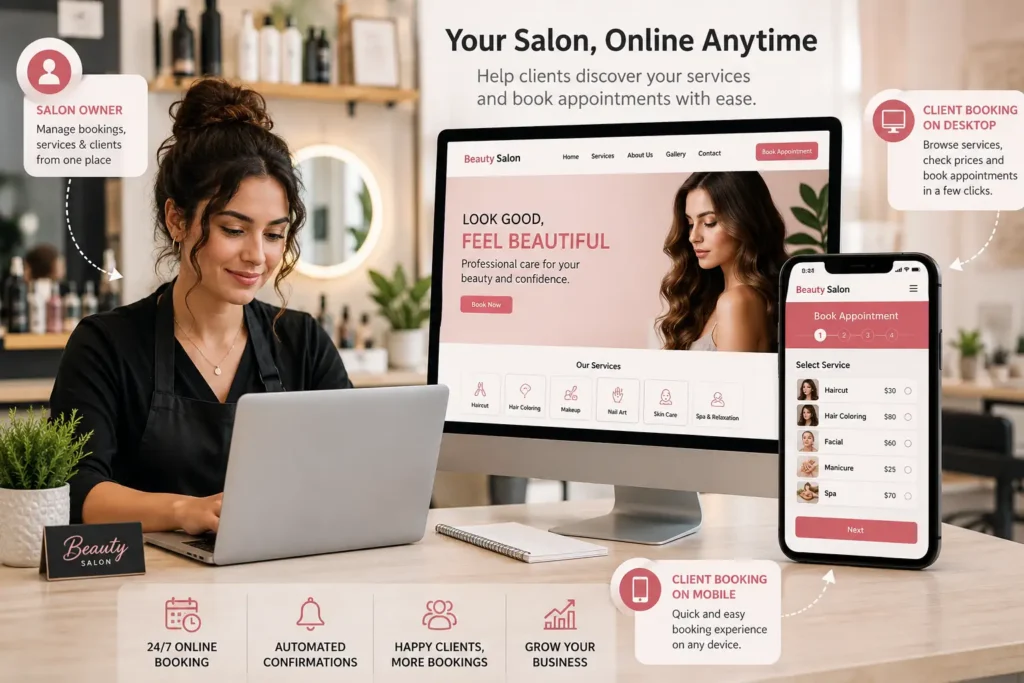
Why Does Your Salon Need a Website?
A professional website acts as your digital storefront. It stays available around the clock, allowing customers to explore services whenever they want. Unlike social media pages, a website gives you complete control over branding, content, and customer experience. A well-designed salon business website also improves your credibility.
Clients often trust businesses with a professional online presence more than those relying only on social platforms. High-quality images, customer testimonials, pricing, and contact details help visitors make quicker decisions. Many customers prefer online appointment booking for salons because it saves time. Instead of calling during business hours, they can reserve appointments within minutes. This convenience often leads to higher booking rates and fewer missed opportunities.
A salon website with online booking also reduces manual scheduling work. Staff members spend less time answering calls and more time serving customers. Automated confirmations and reminders help reduce no-shows, improving overall efficiency. Mobile browsing now accounts for most local service searches. A mobile-friendly salon website ensures visitors enjoy a smooth experience on every device. Faster-loading pages and responsive layouts also improve search engine rankings.
Your website becomes more valuable when integrated with customer reviews, loyalty programs, service galleries, and contact forms. These features encourage repeat visits while helping potential clients trust your brand before their first appointment. Real-life example: Imagine a neighbourhood salon receiving frequent booking calls during busy hours.
After launching an online booking website, appointments become automated, staff answer fewer calls, and customers appreciate the convenience. The business gains better customer satisfaction while increasing daily bookings.

Factors Affecting Website Development Costs
No two salon websites have the same budget. Several technical and business factors determine the final price. Understanding each one helps you invest wisely.
1. Website Design Complexity
Design has one of the biggest impacts on pricing. A basic layout with standard pages costs less than a premium interface featuring custom graphics, animations, and interactive elements. Businesses seeking a unique digital identity often choose custom salon website development. Although custom work requires a higher investment, it delivers stronger branding, better performance, and greater flexibility for future growth.
2. Features and Functionality
The more functionality your website offers, the higher the development cost. Essential tools include booking systems, payment gateways, customer accounts, service management, reviews, and promotional offers. Many salon owners also invest in salon booking website development to simplify appointment scheduling. Integrated booking software saves administrative time while improving customer convenience.
Common advanced features include:
- Appointment scheduling
- Online payments
- Gift card purchases
- Membership plans
- Customer login
- Service galleries
- Reviews and ratings
- Email notifications
- Loyalty rewards
3. Responsive Development
Today’s customers browse websites using smartphones, tablets, and desktops. A responsive salon website automatically adjusts to different screen sizes while maintaining usability. Responsive development requires additional testing and optimization, but it significantly improves user experience and search visibility.
4. Content Creation
Professional photography, service descriptions, blogs, videos, and testimonials add value to your website. High-quality content requires planning, writing, editing, and optimization, increasing the overall project budget.
5. SEO and Performance
Search engine optimization helps potential clients discover your salon through Google searches. Technical SEO includes optimized page speed, structured data, image compression, and keyword optimization. Faster websites usually achieve lower bounce rates and better customer engagement.
6. CMS Selection
Many salons choose WordPress because it balances flexibility with affordability. Larger businesses may require custom content management systems that support advanced integrations and multiple locations.
7. Third-Party Integrations
Modern salons often connect their websites with booking software, CRM systems, payment processors, email marketing platforms, and social media channels. Each integration adds development time but improves automation and customer experience.
8. Development Team Experience
Freelancers generally charge less than established agencies. However, experienced developers often provide stronger quality assurance, better security, and ongoing support. If your project requires advanced functionality, partnering with a top website development company often reduces long-term maintenance issues and delivers a more reliable product.

Types of Salon Websites
Different salon businesses require different website solutions. Choosing the right type directly affects your investment and long-term growth.
1. Basic Informational Website
This option works well for newly established salons. It usually includes:
- Home page
- About page
- Services
- Gallery
- Contact page
- Google Maps integration
This type offers the lowest salon website pricing because it focuses on essential business information.
2. Booking-Focused Website
Many growing salons prefer websites designed around appointment management. These platforms integrate booking calendars, customer notifications, and payment processing. A reliable salon booking system improves operational efficiency while offering customers a seamless booking experience.
3. Beauty Salon Website
Businesses offering skincare, makeup, nail care, and spa services often require specialized beauty salon website development. These websites highlight visual portfolios, treatment packages, customer testimonials, and promotional campaigns. They frequently include gift card sales, seasonal offers, and customer memberships to increase recurring revenue.
4. Hair Salon Website
Stylists and barbers often benefit from dedicated hair salon website development. These websites emphasize hairstyle galleries, stylist profiles, before-and-after images, and appointment scheduling. Customers appreciate browsing stylists’ portfolios before making booking decisions.
5. Multi-Service Salon Platform
Large salon chains often need a complete salon management website supporting multiple branches, employee scheduling, customer accounts, inventory tracking, reporting, and centralized administration. These enterprise-level solutions require greater planning but significantly improve business efficiency.
6. Premium Custom Website
Businesses looking for maximum flexibility usually invest in a custom beauty website tailored to their branding and customer journey. Unlike template-based solutions, custom platforms support unique layouts, personalized booking experiences, advanced integrations, and scalable architecture. They also make future feature expansion much easier.
As your business grows, working with experienced providers offering salon website development services ensures your website evolves alongside customer expectations and changing technology.
Explore more: Salon app development pricing guide
Cost Breakdown for Salon Website Development
Understanding the cost to build a salon website starts with knowing what each development stage includes. Every project has unique requirements, but most professional websites follow a similar pricing structure. The figures below reflect current market rates for 2026 and may vary based on project complexity and developer experience.
1. Planning and Discovery
Every successful project begins with planning. This phase defines business goals, target customers, page structure, and required features. Careful planning reduces revisions later and keeps the project on schedule.
Typical cost: $300–$1,000
2. UI/UX Design
Design creates the first impression. A clean interface, attractive colors, and easy navigation encourage visitors to explore services and complete bookings. The salon website design cost usually ranges between $800 and $3,000 for a professionally designed website. Highly customized interfaces cost more because they require additional research and design work.
3. Front-End and Back-End Development
Development transforms approved designs into a working website. Developers build pages, forms, booking systems, dashboards, and customer-facing features. For many businesses, this represents the largest portion of the salon website development cost because functionality directly affects development hours.
Typical cost:
| Development Stage | Estimated Cost |
|---|---|
| Front-end development | $1,000–$3,000 |
| Back-end development | $1,500–$4,500 |
| Database integration | $500–$1,500 |
4. Booking and Payment Integration
Many salons prefer integrated appointment scheduling instead of third-party booking pages. Secure payment gateways also improve customer convenience. A complete booking solution increases the salon website development price, but it also reduces manual work and improves customer satisfaction.
Typical cost:
- Appointment calendar
- Staff availability
- Online payments
- Email confirmations
- SMS reminders
Estimated investment: $800–$2,500
5. Content and Images
Professional content helps convert visitors into customers. Service descriptions, FAQs, pricing tables, testimonials, and quality photography improve trust and search visibility. Businesses investing in beauty business website development often combine content writing with SEO optimization to attract more local customers over time.
6. Testing and Launch
Before launch, developers test every page, button, form, and booking feature. Performance, security, responsiveness, and browser compatibility also receive careful attention. Testing typically costs $300–$1,000, depending on website complexity.
Additional Costs to Consider
Development is only one part of your investment. Ongoing expenses keep your website secure, fast, and competitive.
1. Domain and Hosting
Every website needs a domain name and reliable hosting.
Typical annual costs:
- Domain: $10–$30
- Shared hosting: $80–$250
- Premium hosting: $300–$1,000
Better hosting improves speed and reliability, especially during busy booking periods.
2. SSL Certificate and Security
Security protects customer information and online payments. Most hosting providers include basic SSL certificates, while premium security solutions cost extra. Businesses handling online payments should never compromise on website security.
3. Content Updates
Menus, pricing, offers, seasonal campaigns, and new services require regular updates. Fresh content keeps visitors engaged while improving search performance. Many businesses choose a trusted salon website development agency to handle these updates through monthly support plans.
4. Marketing and SEO
Launching a website does not automatically generate traffic. Ongoing SEO, local optimization, blog publishing, and paid advertising help attract new customers. Marketing budgets vary widely, but many salons invest $300–$2,000 per month depending on competition.
5. Maintenance and Technical Support
Software updates, plugin management, backups, bug fixes, and security monitoring require continuous attention. Some businesses manage these tasks internally, while others hire skilled dedicated developers for long-term technical support. This approach ensures faster issue resolution and smoother website performance.
Conclusion
A salon website is more than an online brochure. It supports customer acquisition, strengthens your brand, and simplifies daily operations. The right investment depends on your business goals, required features, and long-term growth plans. Whether you choose a simple booking website or a fully customized platform, understanding development costs helps you budget confidently.
Compare experience, technical expertise, support services, and delivered value before selecting a development partner. Investing in professional salon website development creates lasting value for your business. A well-planned website continues attracting customers, increasing bookings, and supporting growth for years.