


The digital wellness market is growing faster than ever. If you are wondering why invest in health & fitness app development, the answer lies in changing consumer habits and rising demand for personalized healthcare. Modern health & fitness app development helps businesses deliver engaging digital experiences while creating long-term revenue opportunities. From startups to established healthcare providers, companies are using innovative mobile solutions to improve customer satisfaction and build stronger relationships.
People no longer rely only on gyms or clinics for health guidance. They expect expert advice, workout plans, nutrition support, and progress tracking from their smartphones. This shift has created a profitable market for businesses that want to launch innovative health and wellness applications.
Consumers are also becoming more proactive about their health. Instead of waiting until problems arise, they prefer digital tools that help them stay active and maintain healthier lifestyles. This trend continues to increase demand for smart, user-friendly fitness applications.
Businesses that enter this market today gain access to recurring revenue models, loyal customers, and opportunities for continuous innovation. A well-planned application can become a valuable digital asset that supports long-term business growth.
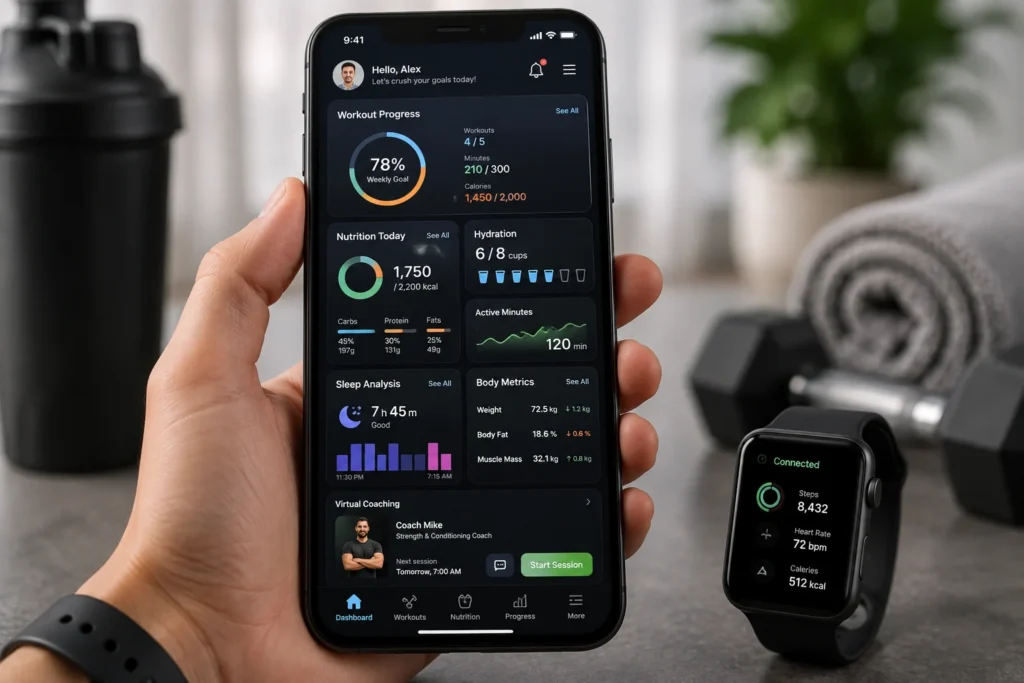
The Current State of the Health & Fitness App Market
The health and fitness app market has evolved beyond simple workout guides. Today’s users expect personalized experiences supported by artificial intelligence, connected devices, and real-time analytics.
Global smartphone adoption has played a major role in this transformation. Users now manage daily wellness activities from one device instead of relying on multiple tools. Businesses across healthcare, insurance, fitness, and corporate wellness continue investing in digital products because customer demand keeps increasing.
Consumers Want Personalized Experiences
Every user has different fitness goals. Some focus on weight loss, while others want muscle building, stress management, or healthier daily habits. Modern applications deliver customized recommendations that improve motivation and long-term retention.
This demand continues driving innovation in fitness mobile app development across different industries. Users appreciate applications that understand their routines instead of offering identical plans for everyone.
Explore more: Fitness app development guide
Wearables Continue Driving Growth
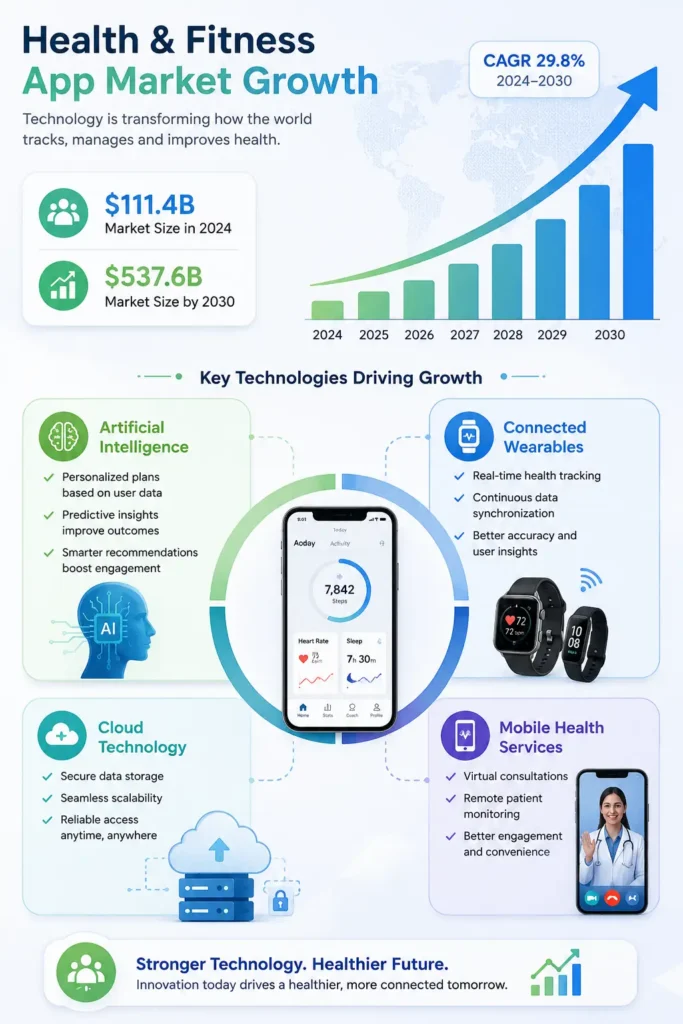
Connected devices have changed how people monitor their health. Smartwatches automatically record steps, heart rate, sleep quality, calories burned, and workout performance. Businesses investing in health-tracking app development can deliver better user experiences by synchronising data across multiple connected devices. The growing popularity of wearable ecosystems has made accurate health insights more accessible than ever.
Artificial Intelligence Improves Personalization
Artificial intelligence helps applications understand user behaviour and recommend smarter decisions. Instead of static workout schedules, users receive dynamic recommendations based on performance, recovery, and activity history. This technology allows applications to become intelligent health companions rather than simple tracking tools.
Digital Healthcare Is Expanding
Healthcare providers increasingly combine wellness services with digital technology. Many organizations now invest in healthcare mobile app development to improve patient engagement, simplify communication, and encourage healthier lifestyles between medical visits. This approach supports better health outcomes while reducing unnecessary hospital visits.
Explore more: Healthcare app development cost guide
Why Investing in Health & Fitness App Development Makes Sense
Digital health is no longer a temporary trend. It has become an essential part of modern lifestyles. Businesses that understand why invest in health & fitness app development can create scalable products with strong long-term demand. Unlike many mobile applications, fitness platforms encourage daily interaction. Frequent usage creates stronger customer loyalty and higher lifetime value.
1. Multiple Revenue Opportunities
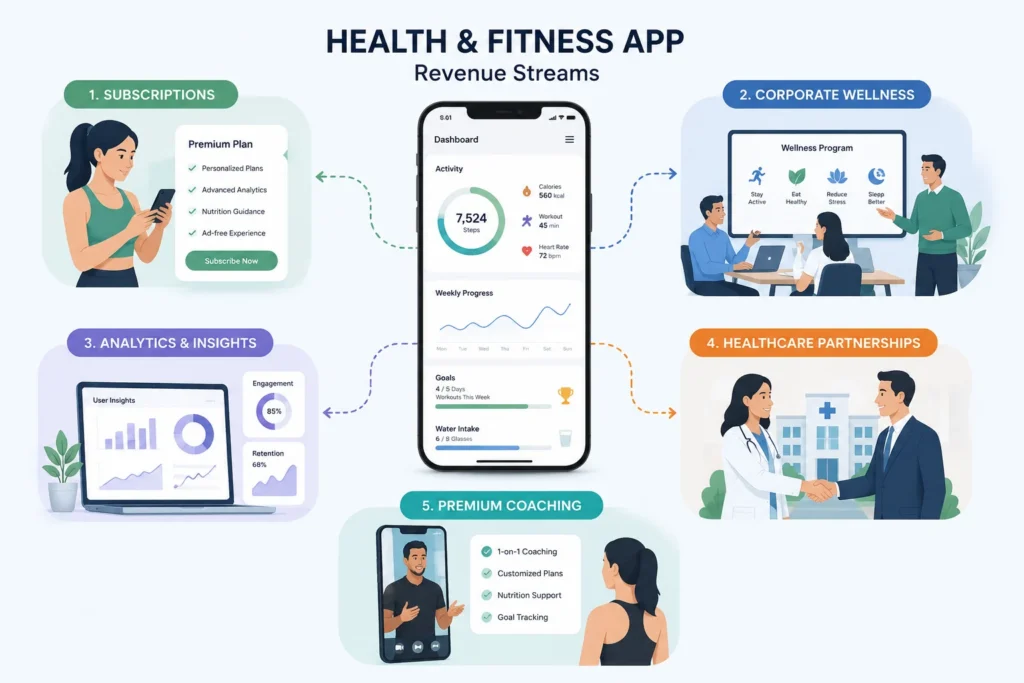
Health applications offer several monetization options beyond one-time downloads. Businesses can generate income through premium memberships, coaching sessions, advertisements, wellness programs, and digital courses.
A subscription-based fitness app creates predictable recurring revenue while allowing continuous product improvements. Well-designed app monetization strategies also help businesses invest in future innovation without compromising user experience.
2. Preventive Healthcare Is Becoming a Priority
Consumers increasingly focus on staying healthy instead of treating illnesses later. Digital platforms encourage regular exercise, healthier eating, better sleep, and stress management. This shift supports preventive healthcare, benefiting both users and healthcare providers through healthier long-term habits. Governments and insurance providers also encourage digital wellness initiatives because healthier populations reduce healthcare costs.
3. Data Creates Better Business Decisions
Modern applications generate valuable insights into customer behaviour. Businesses use health data analytics to understand feature usage, customer preferences, and long-term engagement patterns. These insights support smarter product decisions while improving customer satisfaction through continuous optimization.
4. Corporate Wellness Continues Growing
Organizations increasingly invest in employee wellbeing. A modern wellness platform helps employers encourage healthier lifestyles through fitness challenges, educational resources, and progress tracking. Corporate wellness initiatives improve productivity while strengthening employee satisfaction.
5. Choosing the Right Technology Partner
Launching a successful application requires technical expertise and long-term planning. Businesses searching for the best health and fitness app development company should evaluate industry experience, scalable architecture, security practices, and post-launch support instead of comparing only development costs.
A reliable technology partner helps reduce development risks while building a product that can grow with customer demand.
6. Fitness Supports Modern Healthcare
Digital fitness is becoming an important part of broader healthcare strategies. Many organizations now combine fitness coaching with remote patient monitoring to help doctors observe health progress between appointments.
This combination improves continuity of care while encouraging healthier everyday habits. Healthcare providers are also exploring digital healthcare solutions that connect patients, fitness professionals, and medical experts through integrated mobile platforms.
Explore more: How much does fitness app development cost?
The Benefits of Health & Fitness App Development for Users
People expect more than simple workout guides. They want digital experiences that support their health goals every day. This growing demand explains why investing in health & fitness app development continues to be an important question for businesses planning their next digital product.
1. Personalized Fitness Experiences
Every user follows a different health journey. Some aim to lose weight, while others want to improve strength, flexibility, or endurance. Modern applications create personalized fitness plans using individual goals, activity levels, and workout history.
Customized recommendations keep users motivated because they receive guidance that matches their progress. This personalized approach also improves user engagement by encouraging users to return regularly and complete their daily goals.
2. Smarter Workout Tracking
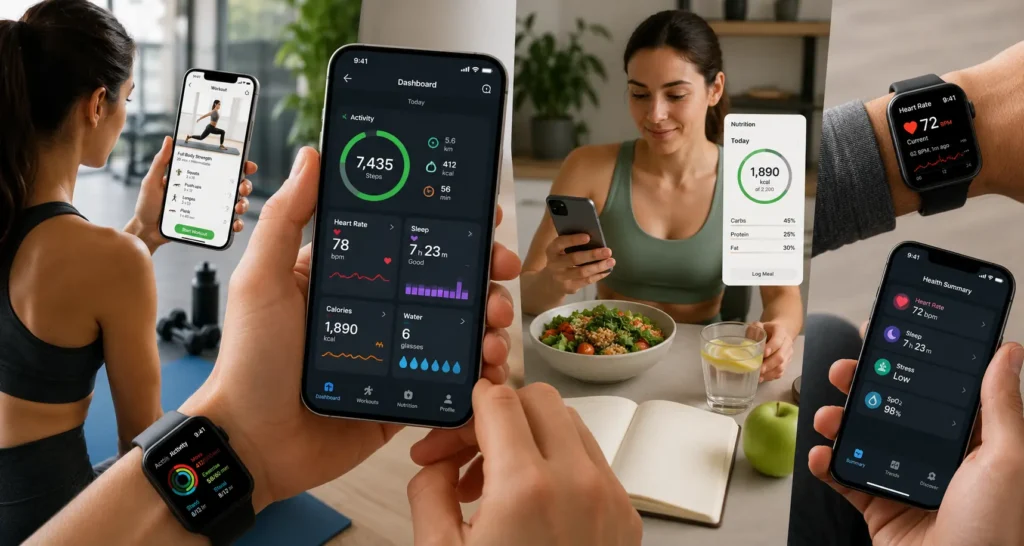
A modern workout tracking app helps users monitor exercise sessions, workout duration, calories burned, and personal records. Applications also support exercise tracking for walking, cycling, strength training, yoga, swimming, and other physical activities. Continuous activity monitoring allows users to understand their daily movement patterns and make healthier lifestyle choices with confidence.
3. Better Nutrition Management
Healthy eating is an important part of every fitness journey. An integrated calorie tracking app allows users to record meals quickly while monitoring daily calorie intake. A smart nutrition app can recommend balanced meal plans, hydration reminders, and healthier food choices based on individual fitness goals. These features simplify healthy living without requiring users to manage multiple applications.
4. Complete Health Monitoring
Today’s users expect fitness applications to support overall wellness rather than workouts alone. A reliable health monitoring app helps users monitor heart rate, sleep quality, hydration, recovery, and stress levels from one dashboard.
Many applications also include wearable device integration, allowing health information to synchronize automatically from smartwatches and connected fitness devices. The growing popularity of wearable technology has made real-time health insights more accurate and convenient.
5. Virtual Coaching and Connected Care
Digital fitness platforms now offer much more than recorded workout videos. A built-in personal trainer app allows certified trainers to guide users through personalized workout programs while reviewing progress remotely.
Many businesses also add telehealth integration so users can connect with healthcare professionals whenever expert medical guidance is needed. These features create a seamless experience that combines wellness, fitness, and healthcare in one application.
Read also: Fitness website development cost: a complete guide to design
Tips for Successful Health & Fitness App Development
Developing a successful application requires careful planning, continuous improvement, and a strong understanding of user expectations.
1. Understand Your Target Audience
Every successful application begins with user research. Identify your target audience before development starts. Your users may include athletes, gym members, beginners, elders, healthcare providers, or corporate employees. Clear audience research helps businesses build features that solve real problems instead of unnecessary ones.
2. Prioritize Useful Features
Keep the application simple and practical during the first release. Businesses planning to build a fitness app should focus on features that users need most, including workout plans, nutrition guidance, reminders, dashboards, and secure user profiles. Additional features can be introduced gradually based on customer feedback.
3. Invest in Scalable Development
Every business has unique goals and customer expectations. Choosing custom fitness app development gives businesses complete control over features, branding, integrations, and future scalability. As the product evolves, experienced partners can also deliver custom fitness app development services that support long-term growth without affecting existing users.
4. Use Modern Technologies
The latest technologies improve performance and user satisfaction. Businesses increasingly develop intelligent applications using cloud infrastructure, AI, secure APIs, and real-time synchronization. An advanced AI fitness app can recommend workouts, analyze progress, and provide personalized coaching based on user behaviour.
5. Support Business Operations
Health and fitness applications are valuable for businesses as well as consumers. For example, a gym management app helps fitness centers manage memberships, trainer schedules, attendance, payments, and customer communication from one platform. These operational improvements increase efficiency while delivering a better customer experience.
6. Work with Experienced Professionals
Building a scalable digital product requires technical expertise across design, development, testing, and deployment. Many startups and growing businesses hire mobile app development firm specialists to accelerate product development while maintaining quality, security, and long-term scalability. Choosing an experienced technology partner also reduces development risks and improves overall project success.
7. Keep Improving After Launch
The work does not end after launching the application. Regular updates, customer feedback, security improvements, and feature enhancements help businesses stay ahead of changing fitness industry trends. Continuous improvement supports stronger customer loyalty and sustainable fitness business growth over time.
Explore more: How to choose a fitness app development company
Conclusion
The digital health industry offers tremendous opportunities for businesses that want to create meaningful customer experiences. Growing demand for personalized wellness, connected devices, and intelligent health solutions continues driving investment across every segment of the market.
Businesses evaluating why invest in health & fitness app development should focus on long-term customer value rather than short-term trends. A successful health & fitness app development strategy combines user-focused design, scalable technology, and continuous innovation to create sustainable business growth.
As applications attract more users, expanding development capacity becomes essential. Many growing companies hire offshore dedicated developers to accelerate feature development, strengthen product quality, and support future business expansion without compromising delivery timelines.