


Today, people increasingly want personalised fitness solutions tailored to their individual exercise programmes. Customised workouts, diet tracking, wearable integration, and AI-powered dietary recommendations are key features of modern digital fitness solutions. Fitness app development services offer significant opportunities for fitness app development companies as demand for digital health and wellness solutions continues to grow.
According to Grand View Research, the global fitness app market was valued at USD 12.12 billion in 2025 and is projected to reach USD 33.58 billion by 2033. As people become more health-conscious, demand is rising for AI-powered fitness apps that provide personalised and engaging experiences.
For organisations looking to enter this growing market, understanding the product development process and technologies is essential. This fitness app development guide covers health and fitness app development, including how to choose a top fitness app development company UK for your project.
Why Businesses Should Invest in Fitness App Development
Investing in custom fitness app development can be a valuable business opportunity as demand for digital health and wellness solutions continues to grow. This trend reflects the growing need for businesses to offer solutions tailored to their customers’ preferences, business models, and long-term goals.
- Generate recurring revenue from subscriptions and premium memberships.
- Boost customer engagement with the help of personalised workout plans.
- Increase premium membership sales by improving customer retention.
- Collect customers’ fitness data, which can be used to improve products and services.
- Scale the business beyond the limitations of a bricks-and-mortar gym by offering an on-demand fitness app.
- Provide long-term value to customers and encourage continued use of the app to help them achieve their health and fitness goals.
Explore more: Why invest in health and fitness app development
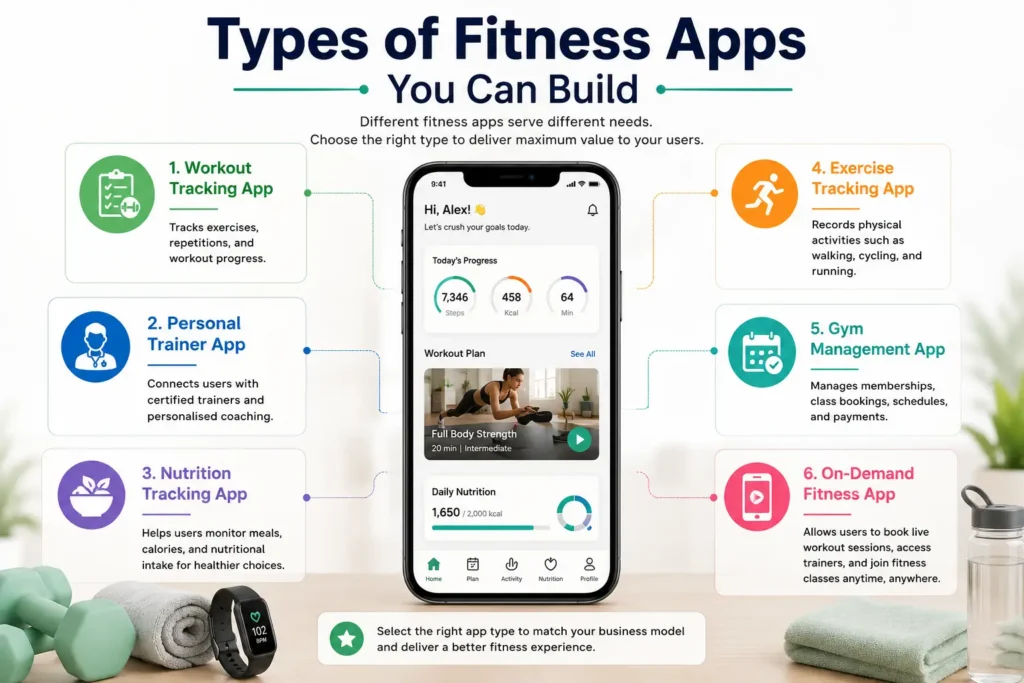
Types of Fitness Apps You Can Build
Every fitness business serves a different audience, so selecting the right application type is an important first step before development.
| Type of application | Ideal Use Case |
| Workout Tracking App | Tracks exercises, repetitions, and workout progress. |
| Personal Trainer App | Connects users with certified trainers and personalised coaching. |
| Nutrition Tracking App | Helps users monitor their daily meals and nutritional intake while providing calorie-tracking functionality to support healthier eating habits and fitness goals. |
| Exercise Tracking App | Records physical activities such as walking, cycling, and running. |
| Gym Management App | Manages memberships, class bookings, schedules, and payments. |
| On-Demand Fitness App | More businesses are investing in on-demand app development solutions that allow users to book live workout sessions, access virtual personal trainers, and join fitness classes anytime, anywhere. |
Latest Trends Shaping the Future of Fitness Apps
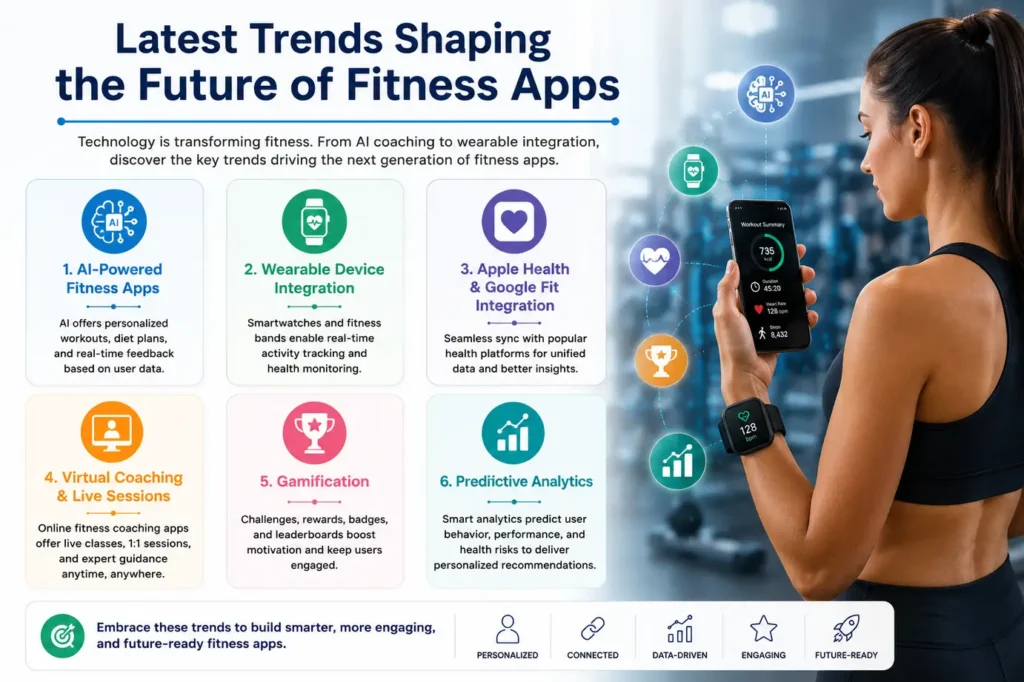
The fitness industry is evolving rapidly as users expect smarter, more personalised, and connected digital services. Businesses are now using the latest technologies to increase engagement and provide real-time insights. As a result, fitness tracking app development is becoming more sophisticated, incorporating AI, wearable devices, predictive analytics, and personalised coaching to create highly interactive and data-driven fitness experiences.
Some of the biggest trends shaping the industry include:
- AI-powered fitness apps that give personal exercise and diet suggestions.
- Wearable device integration with smartwatches and fitness bands to track activities in real time.
- Apple Health integration and Google Fit integration for easy health data synchronisation.
- Virtual coaching through an online fitness coaching app that provides live sessions and personalised guidance.
- Gamification through challenges, rewards, badges, and other interactive features.
- Predictive analytics that provide intelligent health insights and personalised recommendations.
Must-Have Fitness Application Features for a Better User Experience
Delivering value is key to the success of any fitness app. During fitness mobile app development, companies should focus on features that improve user engagement and personalise the fitness journey.
Some of the essential app features include:
- User Profiles: This feature allows users to create profiles, set fitness goals, and track their progress.
- Exercise Tracking: Allows users to monitor their workouts and track progress over time.
- Customised Workout Plans: Provides personalised workout plans based on the user’s fitness level and goals.
- Nutrition Tracking: Allows users to monitor their daily food intake and nutritional information.
- Calorie Tracking: Helps users monitor their daily calorie intake.
- Wearable Compatibility: Supports integration with a range of wearable devices.
- Apple Health Integration: Allows iOS users to synchronise relevant health and fitness data in one place.
- Google Fit Integration: Allows Android users to synchronise relevant health and fitness data.
- Reminders and Notifications: Provides users with workout reminders, notifications, and motivational suggestions.
- Subscription & Payment System: Supports premium memberships, recurring subscriptions, and in-app purchases while creating multiple fitness app monetisation opportunities, including paid plans, exclusive content, and personalised coaching.
However, despite all these benefits, users still expect fitness apps to be easy to use. A user-friendly fitness app UI/UX design will help any business establish an intuitive platform that will keep users engaged and motivated.
How to Build a Fitness App: Step-by-Step Guide
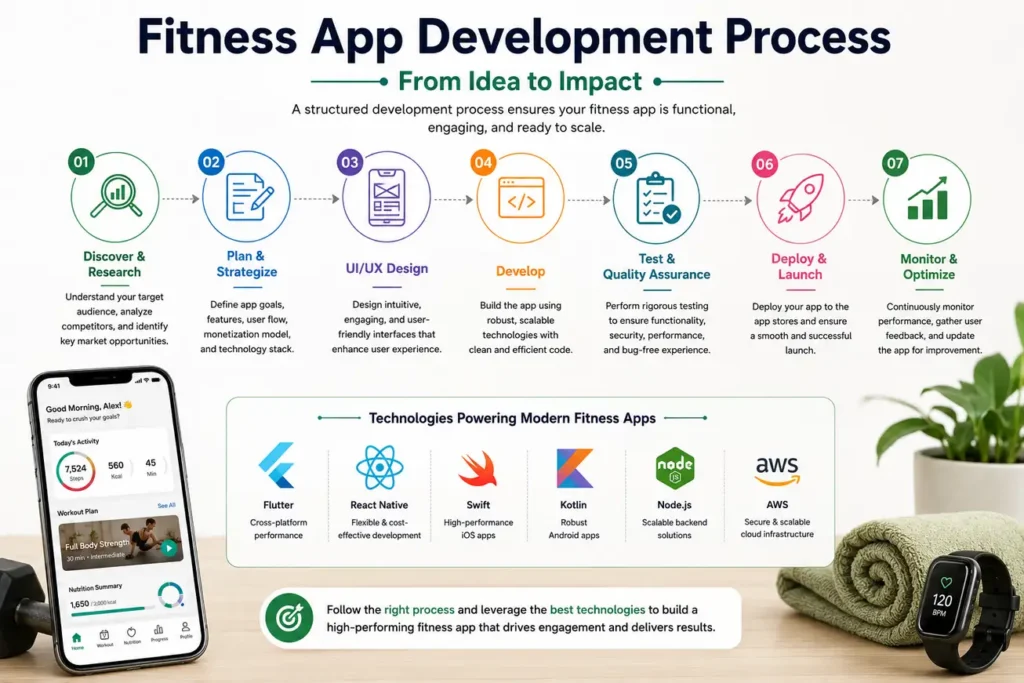
In this fitness app development guide, we will discuss the essential steps of the development process every company should consider. Following a structured fitness app development process can help mitigate development risks, control costs, and build a high-quality product that meets user expectations and business goals.
Step 1: Define Goals and Target Audience
Identify your target users, business goals, and the problem your fitness app will solve.
Step 2: Prioritise Core Features
Select essential features such as workout tracking, diet tracking, wearables, subscriptions, and personalised recommendations. Start with an MVP fitness app and expand based on user feedback.
Step 3: Design and Prototype
Create user flows, wireframes, and prototypes to establish a simple and intuitive user experience.
Step 4: Develop and Integrate
Choose the right technology stack and integrate APIs, payment gateways, Apple Health, Google Fit, and wearable devices. A cross-platform fitness app can help reduce development time and costs.
Step 5: Test, Launch and Improve
Test the app across devices, fix issues, launch it, and continuously improve performance, security, and features based on user feedback.
How Much Does It Cost to Create a Fitness App?
The fitness app development cost depends on several factors, including app complexity, selected platforms, third-party integrations, AI capabilities, security requirements, and overall project scale. An MVP is generally less expensive than a full-scale enterprise-level application due to its reduced feature set.
Small project: £5,000–£10,000
Ideal for basic fitness apps with essential features such as workout plans, exercise tracking, user profiles, and basic progress tracking.
Mid-scale project: £10,000–£20,000
Suitable for apps with more advanced features, multiple integrations, personalised workout plans, payment functionality, and enhanced engagement features.
Large or enterprise project: £20,000–£40,000+
Designed for complex fitness platforms with advanced AI capabilities, wearable integration, real-time tracking, and extensive third-party integrations.
Explore more: How much does fitness app development cost
Factors That Influence The Cost of Fitness App Development
There are a number of things that affect the final budget for the project.
- Feature Complexity – AI-based suggestions, social features, and live coaching involve more development time.
- Platform Selection – The platform you choose, whether native or cross-platform, influences the total project cost.
- Third-Party Integrations – Payment gateways, Apple and Google Fit connectivity, and other wearable devices require additional development.
- Security & Compliance – Ensuring the security of users’ health data requires appropriate security measures and compliance with applicable regulations.
- UI/UX Design – Good user experience is always important, but it takes extra work to make it happen.
- Maintenance & Updates – After the release, regular updates and enhancements are vital for success.
Starting with an MVP fitness app helps firms test their concept, gather user feedback, and add features based on market demand while keeping development costs under control.
How to Choose the Right Fitness App Development Partner
Developing a successful fitness app involves more than technical expertise alone. Businesses should partner with a top mobile app development firm that understands their industry, business objectives, and the type of fitness solution they want to build.
Before making a decision, evaluate the following:
- Industry Experience: Choose a team with proven experience in custom fitness application development and healthcare applications.
- Technical Expertise: Check for proficiency in AI, cloud architecture, wearables, and scalable mobile development technologies.
- Approach to Development: Confirm that they develop with a structured development process, from strategising to deployment.
- Security and Compliance: Check their track record in security, authentication, encryption, and healthcare compliance.
- Post-Launch Support: Pick a partner who will continue to develop your app through maintenance, new features, and performance optimisation.
Explore more: How to choose the best fitness app development company
Ending Note
The fitness industry is evolving rapidly, and businesses that adopt digital health solutions now can strengthen customer relationships, generate new revenue, and remain competitive. The key to creating a successful fitness application is not just uniqueness but also the right strategy, technology, and user experience.
As demand for digital fitness solutions continues to grow, many organisations look for the best fitness app development agency USA to build secure, scalable, and future-ready applications. Selecting a partner with strong industry knowledge and proven development processes can improve product quality and support long-term business growth.
At IIH Global, we help startups, healthcare organisations, fitness companies, and enterprises develop high-performing digital fitness applications. From product strategy and UI/UX design to development and deployment, we build solutions that align with your business objectives. Contact our experts today and find out how we can help you develop a successful fitness application.