


The cost to build a food delivery app like DoorDash depends on your business goals, feature requirements, technology stack, and development approach. Understanding the food delivery app development cost helps you plan a realistic budget before starting your project. Whether you want a startup-friendly MVP or a large-scale platform, every decision affects development expenses. This guide explains the cost to build a food delivery app like DoorDash, the features you need, and the factors that influence pricing, helping you make informed business decisions.
The food delivery industry continues to grow as consumers expect fast, convenient, and reliable service. Businesses are investing in digital platforms to meet this demand and create new revenue opportunities. A well-planned application can connect restaurants, delivery partners, and customers through one seamless platform.
Building a successful delivery platform involves much more than designing attractive screens. You need scalable architecture, secure payment processing, reliable logistics, and an excellent customer experience. Careful planning reduces unnecessary spending and improves long-term profitability.
Overview of DoorDash and Its Success
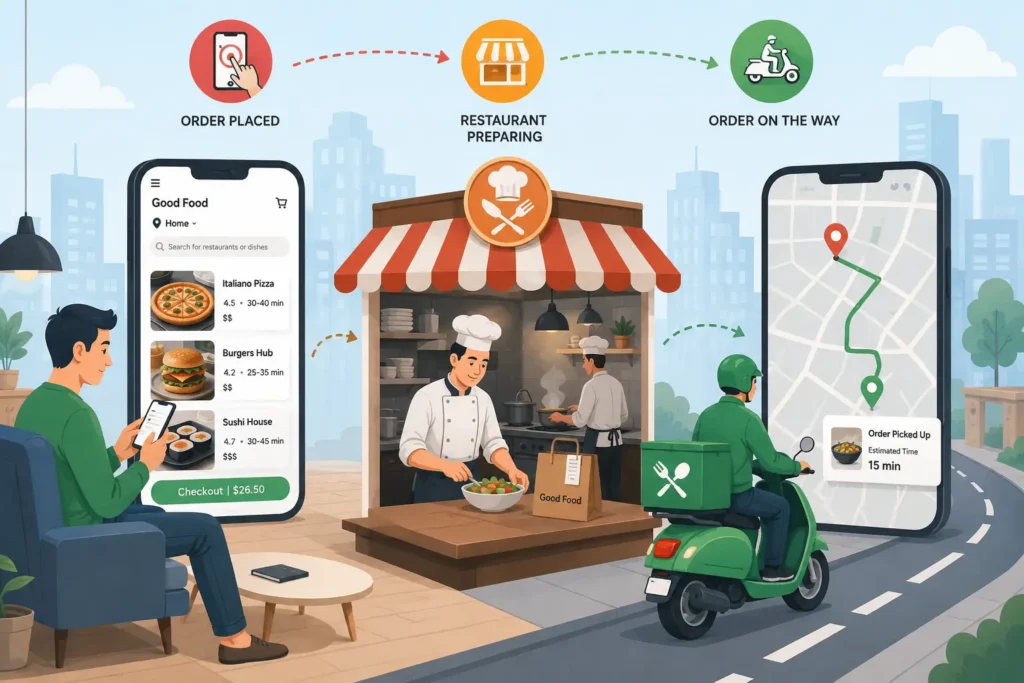
DoorDash has become one of the world’s leading food delivery platforms by simplifying restaurant ordering and delivery management. The platform serves millions of customers while supporting restaurants of every size through advanced technology and logistics. Its success comes from creating value for three different user groups at the same time. Customers receive convenient ordering, restaurants expand their reach, and drivers earn flexible income. This balanced ecosystem has helped DoorDash build strong market recognition.
Many entrepreneurs study the DoorDash app development cost because they want to launch similar digital marketplaces. However, copying features alone is not enough. Success depends on solving local business challenges while delivering an outstanding user experience. Instead of building a replica, many startups develop a platform that addresses specific markets, cuisines, or customer preferences. This strategy helps reduce competition while creating stronger customer loyalty.
Businesses often begin with a DoorDash clone app to shorten development time. They later introduce unique features that differentiate their platform from competitors and improve customer retention. Modern customers also expect a complete online food ordering app experience that works smoothly across smartphones and tablets. Fast loading times, simple navigation, and secure payments all contribute to higher satisfaction.
A growing number of businesses now prefer a multi-restaurant food delivery app because it attracts more users while giving restaurants greater visibility. Supporting multiple vendors also creates stronger revenue opportunities than single-restaurant platforms. As the platform expands, an efficient delivery management system becomes essential. It helps assign drivers, optimize routes, monitor deliveries, and improve operational efficiency without increasing administrative work.
Food Delivery App Development Cost: Key Features Every Platform Needs
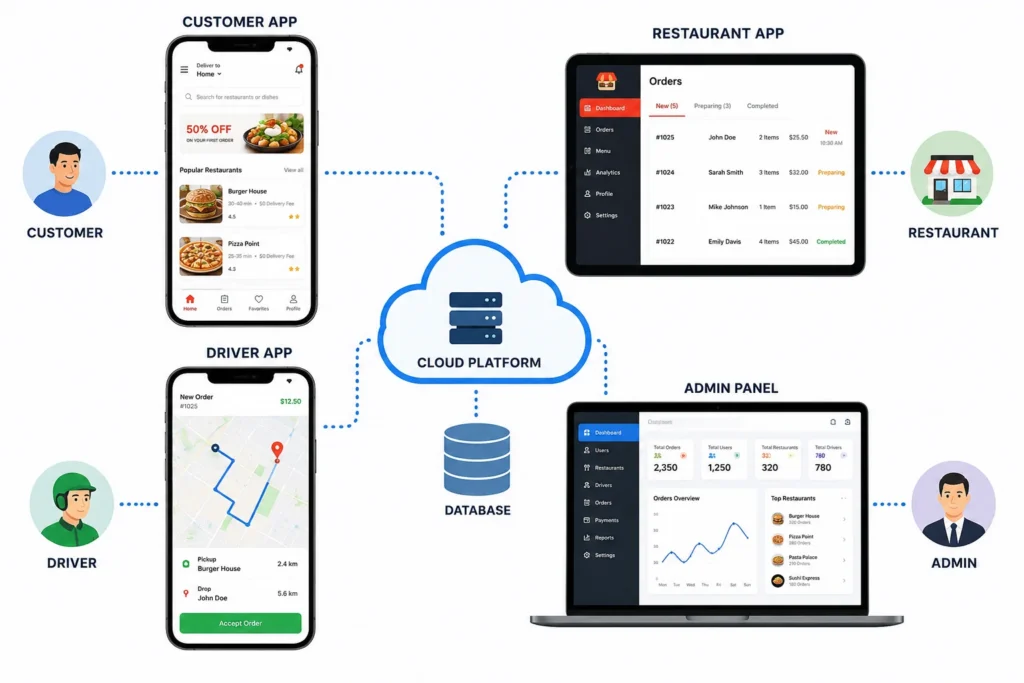
The food delivery app development cost largely depends on the number and complexity of features you include. Modern delivery platforms usually consist of several connected applications that work together in real time.
1. Customer Application
The customer food ordering app acts as the main interface for users. It should offer a simple experience from browsing restaurants to completing payments.
Essential capabilities include:
- User registration and login
- Restaurant search and filters
- Menu browsing
- Secure checkout
- Multiple payment methods
- Ratings and reviews
- Push notifications
- Order history
- Favorite restaurants
One of the most valuable food delivery app features is real-time order tracking. Customers appreciate knowing exactly where their orders are throughout the delivery journey. A clean food delivery app UI/UX also improves engagement. Simple navigation, attractive layouts, and fewer checkout steps increase conversion rates and reduce abandoned orders.
2. Restaurant Application
Restaurants need dedicated tools to manage incoming orders and daily operations efficiently.
A professional restaurant partner app should include:
- Order management
- Menu updates
- Inventory availability
- Business analytics
- Customer communication
- Delivery status monitoring
Businesses investing in restaurant app development should prioritize speed and simplicity. Restaurant staff must process orders quickly during busy hours without unnecessary complexity. Many businesses also expand into cloud kitchen app development because virtual kitchens reduce operating costs while increasing delivery coverage.
3. Driver Application
Delivery efficiency directly affects customer satisfaction.
A reliable driver delivery app typically includes:
- Driver registration
- Route optimization
- Navigation support
- Delivery confirmation
- Earnings dashboard
- Availability controls
- Customer communication
These features reduce delivery delays while improving driver productivity.
4. Admin Panel
Business owners require complete control over the entire platform.
An effective admin dashboard for food delivery helps administrators:
- Manage users
- Approve restaurants
- Assign drivers
- Monitor transactions
- Handle disputes
- Track platform performance
- Generate business reports
The admin panel also supports business growth by providing valuable operational insights.
5. Integrations That Improve Performance
Modern delivery platforms rarely operate in isolation. They rely on external services for payments, maps, notifications, analytics, and communication. Many businesses also implement third-party delivery integration when expanding delivery capacity without building a larger internal fleet. This approach improves flexibility during peak demand.
Explore more: How mobile apps are transforming the food industry
Factors Affecting the Cost of Building a Food Delivery App
No two food delivery platforms have identical budgets. Several technical and business decisions influence overall investment.
1. Project Scope and Complexity
A basic MVP requires fewer resources than a large enterprise platform.
Simple applications often include:
- User registration
- Restaurant listings
- Ordering
- Payments
- Delivery tracking
Advanced platforms add:
- AI recommendations
- Loyalty programs
- Subscription plans
- Dynamic pricing
- Multi-city support
- Advanced analytics
Every additional feature increases development time and testing requirements.
2. Platform Selection
Choosing Android, iOS, or cross-platform development affects both timeline and budget. Native applications deliver excellent performance but usually require separate development teams. Cross-platform technologies reduce development costs while maintaining consistent user experiences across devices. Your technology decision directly influences the overall food delivery app cost and future maintenance expenses.
3. Design Quality
Professional design creates a stronger first impression. A well-designed application improves usability and customer retention. Custom animations, branding elements, and interactive interfaces require additional design effort but often increase long-term engagement.
4. Technology Stack
The technology stack determines performance, scalability, and security. Modern food delivery mobile app development typically includes cloud infrastructure, secure APIs, real-time databases, payment gateways, mapping services, and notification systems. Selecting proven technologies reduces technical risks and simplifies future expansion.
5. Development Team
Your development partner significantly impacts quality and project success. Many businesses choose experienced specialists instead of hiring large in-house teams. A top food delivery app development company USA can help define project requirements, reduce technical risks, and recommend scalable architecture for future growth. Selecting the right partner also improves communication, testing quality, and long-term support.
6. Customization Requirements
Businesses that require unique workflows usually invest in custom food delivery app development instead of using ready-made templates. Custom solutions offer better flexibility, stronger branding, and easier integration with existing business systems. However, greater customization naturally increases development effort.
7. Security and Compliance
Food delivery platforms process customer information, addresses, and payment details. Strong authentication, encrypted payments, secure APIs, and compliance with privacy regulations should never be optional investments. Ignoring security early often leads to much higher expenses later.
8. Testing and Quality Assurance
Comprehensive testing ensures reliable performance across different devices and operating systems.
Testing includes:
- Functional testing
- Performance testing
- Security testing
- Device compatibility
- User acceptance testing
Thorough quality assurance minimizes launch issues and improves customer satisfaction.
9. Estimated Development Costs
Current U.S. market pricing varies depending on application complexity.
| Project Type | Estimated Cost (USD) | Timeline |
|---|---|---|
| MVP | $30,000–$60,000 | 3–5 months |
| Mid-Level Platform | $60,000–$120,000 | 5–8 months |
| Enterprise Platform | $120,000–$250,000+ | 8–14 months |
This app development cost breakdown serves as a planning estimate. Actual budgets depend on features, integrations, design complexity, scalability requirements, and the experience of your development team.
Explore more: Cost to build a food delivery app like Uber Eats
Step-by-Step Guide to Building a Food Delivery App Like DoorDash
Building a successful delivery platform requires careful planning. Each stage contributes to the overall cost to build a food delivery app like DoorDash. Following a structured process helps reduce risks and improves your chances of launching a scalable product.
1. Define Your Business Model
Start by identifying your target market and revenue strategy. Decide whether your platform will focus on local restaurants, grocery delivery, cloud kitchens, or speciality food providers. You should also determine how your platform will generate income. Popular revenue sources include delivery fees, restaurant commissions, subscription plans, featured listings, and advertising. A clear business model helps estimate the cost to develop a food delivery app more accurately and prevents unnecessary feature additions.
2. Research Your Market and Competitors
Study customer expectations and competing delivery platforms before development begins. Understand what users appreciate and where existing platforms fall short. This research helps you prioritize features that deliver real business value instead of copying every competitor. Market validation also reduces development risks and supports better investment decisions.
3. Plan Features for an MVP
Avoid launching with every possible feature. Build a Minimum Viable Product first and expand later.
An MVP typically includes:
- Customer registration
- Restaurant listings
- Menu browsing
- Cart and checkout
- Online payments
- Order notifications
- Delivery tracking
- Reviews and ratings
Starting small allows businesses to collect user feedback before making larger investments.
4. Choose the Right Development Partner
Selecting experienced developers influences both quality and project timelines. Many growing businesses evaluate on-demand app development solutions USA because experienced teams understand marketplace applications, cloud infrastructure, and scalable architecture. Review previous projects, communication practices, and technical expertise before making your final decision.
5. Design an Excellent User Experience
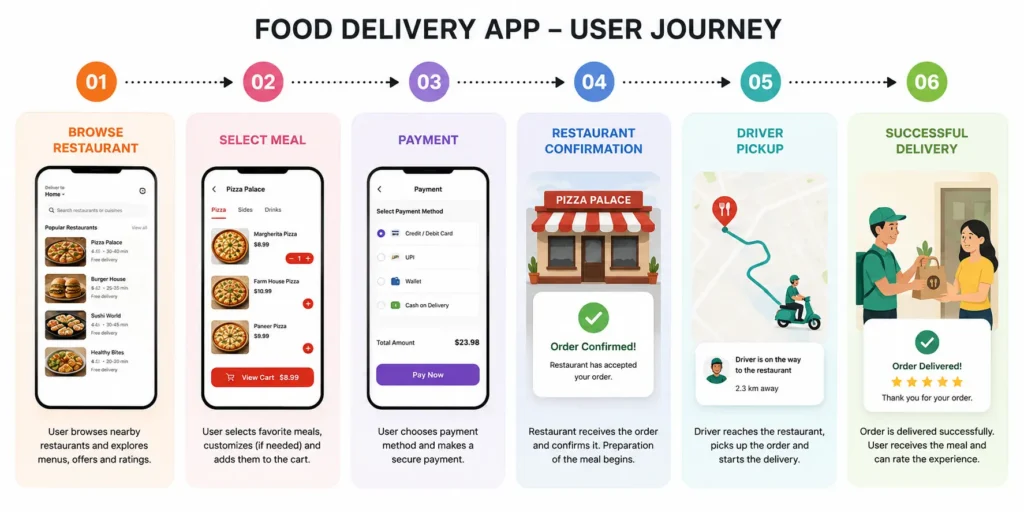
Simple design often performs better than complicated interfaces. Customers should place orders within a few taps. Restaurants should process orders quickly. Drivers should access delivery details without confusion. Investing in intuitive navigation reduces user frustration and improves customer retention.
6. Build a Scalable Backend
The backend connects every part of the platform.
It manages:
- User accounts
- Restaurant information
- Orders
- Payments
- Notifications
- Driver assignments
- Analytics
Strong backend architecture supports future expansion without affecting application performance. Businesses planning long-term growth should also consider food delivery platform development with cloud-based infrastructure that supports increasing user traffic.
Explore more: Food delivery app development cost: a complete guide
7. Develop and Integrate Essential Services
Development should follow agile milestones with continuous testing.
Important integrations include:
- Payment gateways
- GPS mapping
- Push notifications
- SMS services
- Analytics tools
- Customer support systems
If restaurants already use existing POS software, integration can improve operational efficiency while reducing manual work.
8. Test Before Launch
Testing should cover every user journey.
Verify:
- Order placement
- Payments
- Restaurant notifications
- Driver assignments
- Delivery tracking
- Login security
- Performance under heavy traffic
Fixing issues before launch protects customer trust and reduces expensive post-release updates.
9. Launch and Improve Continuously
Launching your application is only the beginning. Monitor customer feedback, application analytics, and operational performance. Regular improvements help increase customer satisfaction and encourage repeat orders. Many businesses gradually expand features instead of rebuilding the entire platform. Around this stage, companies often explore custom food delivery app development services USA when they need advanced capabilities such as AI recommendations, loyalty programs, or enterprise integrations.
Additional Tips for a Successful Food Delivery App
Success depends on much more than launching an application. Continuous improvement helps businesses stay competitive in a rapidly growing market.
Focus on customer convenience at every stage. Fast search, simple checkout, reliable delivery, and responsive support encourage repeat purchases.
Build strong restaurant partnerships. Reliable vendors improve customer satisfaction while expanding menu choices.
Optimize driver operations through smart route planning and balanced order assignments. Efficient logistics reduce delivery delays and operating expenses.
Develop a long-term food delivery app monetization strategy instead of relying only on delivery fees. Membership programs, premium listings, promotions, and advertising create additional revenue streams.
Keep security updated with regular monitoring and software upgrades. Customer trust remains one of the most valuable business assets.
As your platform grows, review the food delivery app maintenance cost carefully. Maintenance typically ranges from 15% to 20% of the original development budget each year. It covers server infrastructure, security updates, bug fixes, operating system compatibility, and performance improvements.
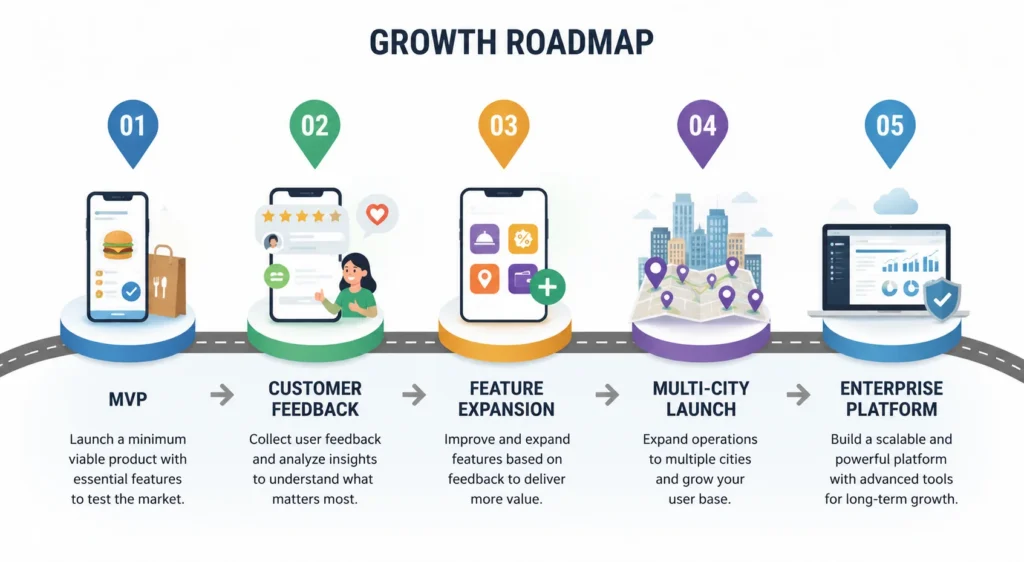
Businesses planning expansion should also evaluate future mobile app development costs for adding new features, supporting additional cities, and integrating emerging technologies.
Organizations seeking long-term technical support often hire dedicated mobile app developers in USA to accelerate product updates and maintain consistent application quality.
Eventually, many businesses expand beyond basic ordering into complete food delivery business app ecosystems that include loyalty programs, marketing automation, business intelligence, and customer engagement tools.
Companies planning larger digital transformation projects frequently combine food ordering app development with inventory systems, restaurant management software, and customer relationship platforms to improve overall efficiency.
Similarly, businesses investing in restaurant delivery app development should prioritize scalability from the beginning. A flexible architecture makes future expansion faster and more affordable.
For businesses searching for reliable technology partners, working with the best mobile app development agency USA can simplify planning, reduce technical challenges, and improve long-term return on investment.
Conclusion
Understanding the cost to build a food delivery app like DoorDash requires evaluating features, design, technology, scalability, and ongoing support. Most businesses invest between $30,000 and $250,000+ depending on project complexity and long-term goals. Launching with an MVP, validating customer demand, and expanding gradually often delivers better results than building every feature at once.
Choosing experienced developers and focusing on user experience also improves your chances of success. Careful planning helps control expenses while creating a reliable platform that supports future growth. A well-designed solution becomes a valuable business asset instead of just another mobile application.
By understanding the food delivery app development cost, you can make smarter investment decisions, prioritize essential features, and build a scalable platform that competes effectively in today’s growing food delivery market.