


The cost to build a real estate app like Rightmove depends on your business goals, feature set, technology stack, and development approach. Understanding the real estate app development cost helps you plan a realistic budget before starting your project. Whether you need a simple property platform or a feature-rich marketplace, development costs vary based on complexity. Businesses that invest in the right features and scalable architecture often achieve better long-term returns while keeping future upgrades manageable.
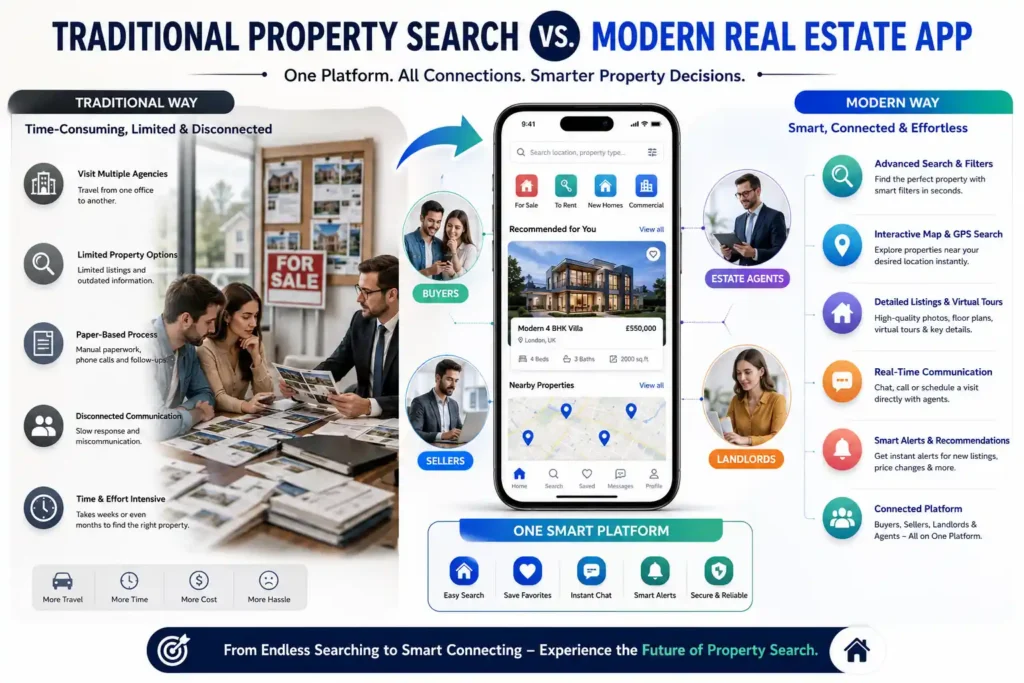
Today, digital property platforms have changed how buyers, sellers, landlords, and agents connect. Instead of visiting multiple agencies, users can search thousands of listings from one application. This convenience has increased demand for modern real estate platforms across different markets.
A successful platform combines user-friendly navigation, reliable search tools, secure communication, and intelligent recommendations. Building such an application requires careful planning and experienced developers. Understanding the cost to build a real estate app like Rightmove helps businesses avoid unnecessary expenses while delivering a competitive product.
Understanding the Features of Rightmove
Rightmove has become one of the most recognized property platforms because it simplifies property discovery while providing useful information for buyers, renters, landlords, and estate agents. Businesses planning real estate app development should understand which features create the best user experience before estimating development costs.
1. User Registration and Profile Management
Users should register using email, mobile number, or social login. Personal profiles allow users to save searches, manage preferences, receive alerts, and communicate with property agents. Role-based access is equally important. Buyers, sellers, landlords, and agencies need different dashboards to manage their activities efficiently.
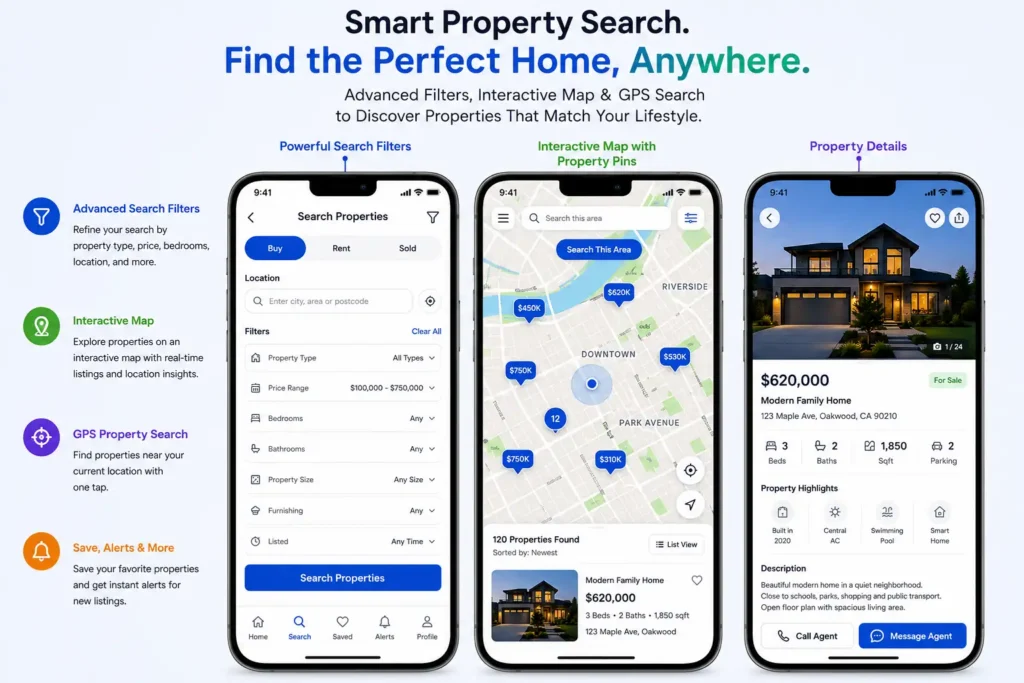
2. Advanced Property Search
Search functionality defines the success of any property platform. Users expect quick and accurate search results.
Essential search filters include:
- Property type
- Price range
- Bedrooms
- Location
- Property size
- Newly listed properties
- Furnished or unfurnished options
An intelligent property search application should deliver fast results with multiple filtering options.
3. Interactive Maps
Many users prefer exploring neighbourhoods before contacting agents. Modern apps include interactive property maps that display nearby schools, transport, hospitals, restaurants, and shopping areas. Location intelligence improves decision-making while reducing search time. Another popular feature is GPS property search, allowing users to discover available properties near their current location without entering an address manually.
4. Map-Based Navigation
Many successful platforms also include map-based property search. Instead of browsing long lists, users interact directly with maps to discover available homes within specific neighbourhoods. This visual experience increases engagement and makes property discovery much easier.
5. Detailed Property Listings
Each property page should provide enough information for buyers to make informed decisions.
Typical listing information includes:
- High-quality images
- Property description
- Amenities
- Floor plans
- Agent information
- Nearby facilities
- Pricing history
- Contact options
This creates a comprehensive property listing platform that builds user trust.
6. Virtual Tours
Modern buyers prefer exploring properties remotely before arranging visits. Adding virtual property tours allows users to inspect interiors from anywhere. This feature improves engagement and reduces unnecessary site visits for both buyers and agents.
7. AI-Based Recommendations
Personalization increases user retention. Many platforms now offer AI-powered property recommendations based on previous searches, saved properties, preferred locations, and budget. This improves search relevance and encourages users to spend more time within the application. Growing adoption of AI in real estate apps also enables predictive search suggestions and smarter customer experiences.
8. Property Valuation Tools
Buyers and sellers appreciate market insights before making decisions. A built-in property valuation feature estimates market prices using historical sales data, neighbourhood trends, and comparable listings. Although estimates are not final valuations, they help users understand pricing expectations.
9. Mortgage Calculator
Many buyers calculate affordability while browsing listings. Adding mortgage calculator integration helps users estimate monthly payments instantly without leaving the application. This feature increases engagement and supports faster purchasing decisions.
10. Notifications and Saved Searches
Push notifications keep users informed about:
- New listings
- Price changes
- Saved searches
- Viewing reminders
- Agent responses
Timely notifications encourage repeat engagement and improve customer retention.
11. Communication Features
Users should communicate directly with estate agents through secure messaging, inquiry forms, phone calls, or appointment scheduling. Fast communication shortens the buying journey and increases conversion opportunities.
12. Admin Dashboard
Administrators require complete control over platform operations.
An effective dashboard manages:
- User accounts
- Listings
- Payments
- Reports
- Analytics
- Content moderation
- Advertisement management
This centralized system supports smooth business operations. Businesses planning rightmove clone app development often prioritize scalable administration features to simplify long-term management.
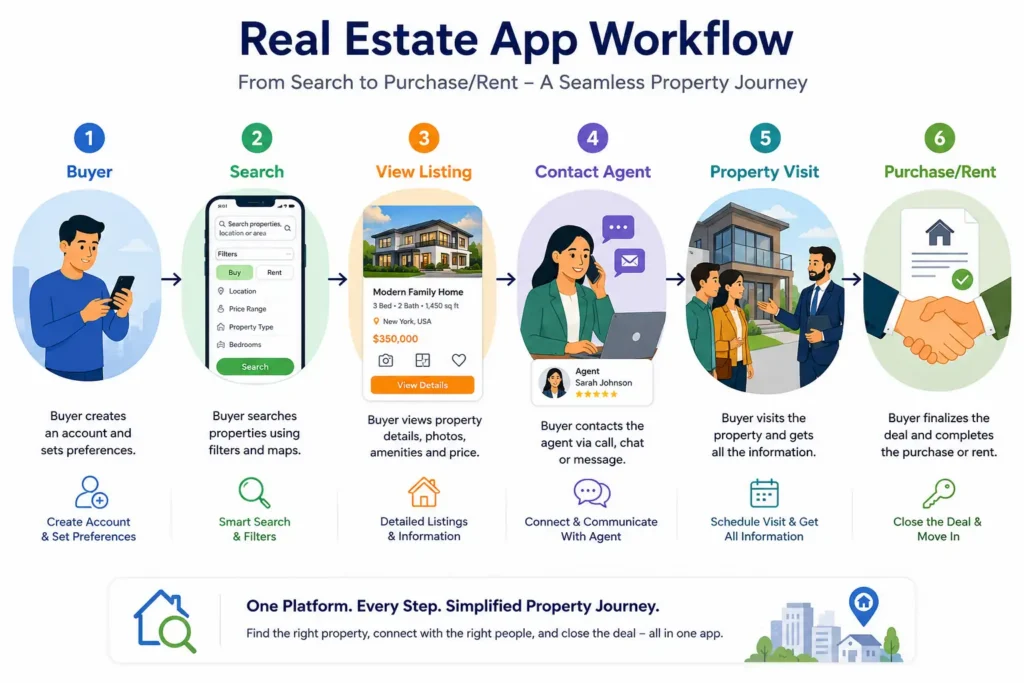
Explore more: Custom real estate app development benefits
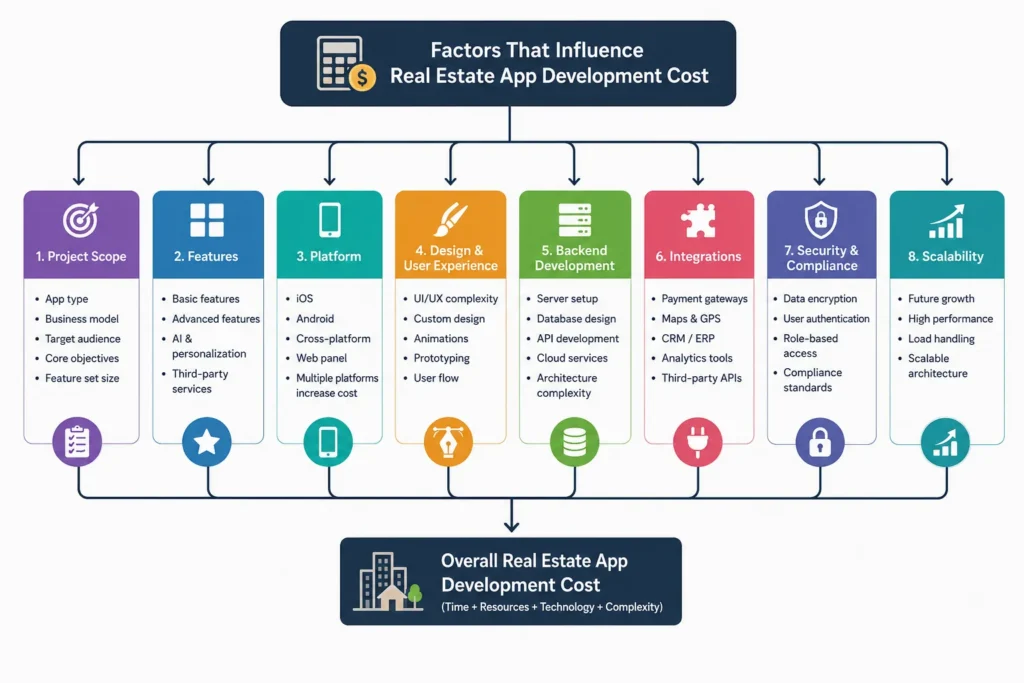
Factors Influencing the Real Estate App Development Cost
Several technical and business decisions determine the final real estate app development cost. Understanding these variables helps businesses allocate budgets wisely while avoiding unexpected expenses.
1. Project Scope
The first pricing factor is application complexity. A simple listing platform costs much less than a complete real estate marketplace app supporting buyers, renters, sellers, agencies, and advertisers. The number of user roles directly affects development time.
2. Feature Complexity
Basic features include registration, search, and property listings.
Advanced capabilities increase development effort considerably, including:
- Smart recommendations
- Chat systems
- Appointment booking
- Payment gateways
- Analytics
- AI search
- Document uploads
- Multi-language support
Every additional feature requires planning, development, testing, and maintenance.
3. Platform Selection
Businesses must decide whether to launch:
- Android
- iOS
- Both platforms
- Cross-platform application
Choosing the right platform influences timelines and development budgets. Companies planning UK property app development often begin with cross-platform frameworks to reach more users while controlling costs.
4. UI and UX Design
A clean interface improves usability and customer satisfaction. Custom animations, interactive maps, responsive layouts, and accessibility features increase design effort but provide better user experiences. Poor design frequently leads to higher user abandonment rates.
5. Backend Infrastructure
The backend stores listings, user accounts, media files, analytics, and communication data. A scalable cloud-based real estate app handles growing traffic efficiently while maintaining application performance. Cloud infrastructure also simplifies future feature expansion.
6. Third-Party Integrations
Most applications rely on external services.
Common integrations include:
- Maps
- Payment gateways
- CRM systems
- Property databases
- Analytics
- Email services
- SMS notifications
Adding real estate CRM integration improves lead management by connecting customer inquiries directly with sales teams.
7. Security Requirements
Property platforms manage sensitive customer information. Strong real estate app security includes encrypted communication, secure authentication, data backups, fraud monitoring, and compliance with privacy regulations. Security investments reduce long-term operational risks.
8. Development Team
The experience of your development partner significantly affects project quality. Working with a top real estate app development company UK can reduce technical risks through better planning, proven workflows, and scalable architecture. Experienced teams also recommend suitable technologies that improve long-term performance.
9. Future Scalability
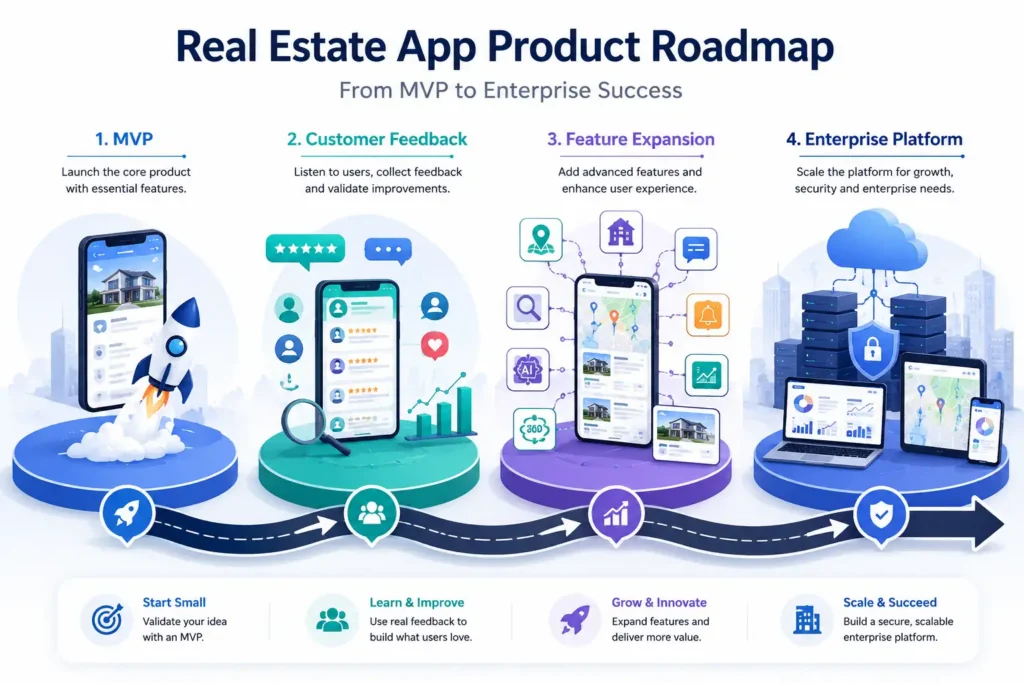
Many businesses start with an MVP real estate app to validate market demand before investing in advanced functionality. This approach reduces initial investment while allowing future expansion based on real customer feedback.
The overall budget also depends on several app development cost factors, including feature complexity, design quality, integrations, testing requirements, cloud infrastructure, and post-launch support. Planning these elements early helps businesses control spending without compromising quality.
Explore more: Real estate app development cost guide
Cost Breakdown of Creating a Real Estate App
Estimating the cost to build a real estate app like Rightmove requires balancing features, design quality, integrations, and long-term business goals. Current market pricing varies depending on the scope and the experience of your development partner.
The table below provides a realistic estimate for different project sizes.
| App Type | Estimated Cost (USD) | Development Timeline |
|---|---|---|
| Basic MVP | $25,000–$45,000 | 3–4 Months |
| Medium Complexity | $45,000–$90,000 | 5–7 Months |
| Enterprise Platform | $90,000–$180,000+ | 8–13+ Months |
A basic version focuses on core property discovery and listing management. Medium-sized projects include advanced search, chat, notifications, and analytics. Enterprise platforms introduce AI, large databases, integrations, and advanced administration tools.
Estimated Module-Wise Development Cost
Different modules contribute differently to the overall budget.
| Feature Module | Estimated Cost (USD) |
|---|---|
| User Registration & Profiles | $2,000–$5,000 |
| Property Listings | $5,000–$10,000 |
| Search & Filters | $4,000–$8,000 |
| Maps & Location Services | $4,000–$9,000 |
| Chat & Notifications | $4,000–$8,000 |
| Admin Dashboard | $7,000–$15,000 |
| AI Recommendation Engine | $8,000–$20,000 |
| Analytics & Reports | $4,000–$10,000 |
These figures vary according to customization requirements and third-party integrations.
Cost Based on App Type
Not every business builds the same platform. Your business model directly affects development costs. For example, a buy-rent-sell property app needs multiple user roles, listing verification, saved searches, and communication features. A rental property app requires lease management, availability calendars, tenant communication, and rent-related functionality. A commercial property app usually supports larger property catalogs, investment insights, and advanced search filters.
Many investors also request a property investment app with portfolio tracking, ROI calculators, and market trend analysis. Businesses offering reservation services may need a property booking app that manages viewing appointments and booking confirmations. Each business model adds different development requirements and influences the overall cost to develop a property listing app.
Explore more: How to choose the best real estate app development partner
Technology Stack Also Impacts Budget
Choosing the right technology affects both development time and scalability.
Common technologies include:
- Flutter or React Native for cross-platform apps
- Swift for iOS
- Kotlin for Android
- Node.js or Laravel for backend services
- PostgreSQL or MongoDB databases
- AWS, Azure, or Google Cloud hosting
A scalable real estate mobile solution should support growing user traffic without sacrificing performance. Around this stage, businesses often compare global platforms, including the popular Zillow vs Rightmove app comparison, to identify features that best match their target audience instead of copying every function.
Explore more: Cost to build an app like Zillow
Tips for Cost-Effective App Development
Building a successful application does not always require the highest budget. Smart planning often delivers better returns than adding unnecessary features.
1. Start with an MVP
Launching an MVP helps validate your business idea before investing heavily.
Focus on essential functions such as:
- User registration
- Property listings
- Search filters
- Maps
- Contact forms
Additional features can follow after gathering customer feedback.
2. Prioritize Business Goals
Avoid building every feature at launch. Instead, identify which capabilities solve your users’ biggest problems. This approach shortens development time and controls spending. Many businesses begin with a property finder app before expanding into a complete marketplace.
3. Choose Scalable Architecture
Future growth should influence today’s technical decisions. A scalable architecture supports additional users, listings, and integrations without requiring major redevelopment. Businesses investing in custom real estate app development often save money over time because the platform grows with their requirements.
4. Select an Experienced Development Partner
Working with the best mobile app development agency UK gives businesses access to experienced designers, developers, testers, and project managers. An experienced team reduces technical risks and delivers better product quality through proven development practices.
Several months later, when development enters the implementation phase, many businesses also prefer to hire dedicated mobile app developers in the UK for long-term product enhancement and faster feature delivery.
5. Build Only What Users Need
Adding every possible feature increases costs unnecessarily. Study customer behavior before introducing advanced functionality. Analytics often reveal which features users actually value. For example, a growing property management app may benefit more from automation than from adding dozens of new search filters.
6. Plan Maintenance Early
Development is only the beginning.
Businesses should also budget for real estate app maintenance costs, including:
- Security updates
- Cloud hosting
- Bug fixes
- Performance optimization
- Feature enhancements
- API updates
Ignoring maintenance often leads to higher expenses later.
7. Think Long-Term
Your application should evolve alongside changing customer expectations. Whether you build a Rightmove app clone or an innovative marketplace, continuous improvements help maintain competitiveness in the fast-changing real estate technology industry. Companies searching for expert on-demand app development solutions UK often benefit from partners capable of supporting both launch and future product growth.
Conclusion
Understanding the cost to build a real estate app like Rightmove involves much more than estimating development hours. Features, design quality, integrations, scalability, security, and long-term maintenance all contribute to the final investment. Businesses that define clear goals and launch strategically often achieve better returns while reducing unnecessary expenses.
Starting with an MVP and expanding gradually helps validate the market before committing to enterprise-level functionality. Whether you plan a listing portal, marketplace, or investment platform, careful planning remains the best way to control real estate app development costs while delivering an application users trust and enjoy.