


Building an eCommerce app is no longer optional for businesses that want to stay competitive. However, understanding the eCommerce app development cost before starting a project helps you plan wisely. The cost to develop an eCommerce app depends on your business goals, app complexity, features, technology stack, and development approach. Whether you need a simple shopping application or an enterprise-grade solution, knowing the pricing factors helps you avoid surprises and make informed decisions from day one.
Importance of eCommerce App Development
The growth of mobile shopping has changed how customers discover and buy products. Consumers now expect fast, secure, and personalized shopping experiences on their smartphones. As a result, businesses invest in eCommerce application development to improve customer engagement, increase sales, and strengthen brand loyalty.
A modern online store app offers convenience that websites alone cannot match. Customers receive instant notifications, faster checkout, personalized recommendations, and easy order tracking. These features encourage repeat purchases and improve customer satisfaction.
Companies of every size now invest in a mobile commerce application to reach wider audiences. A well-designed application also helps businesses collect customer insights and optimize marketing campaigns using real-time data.
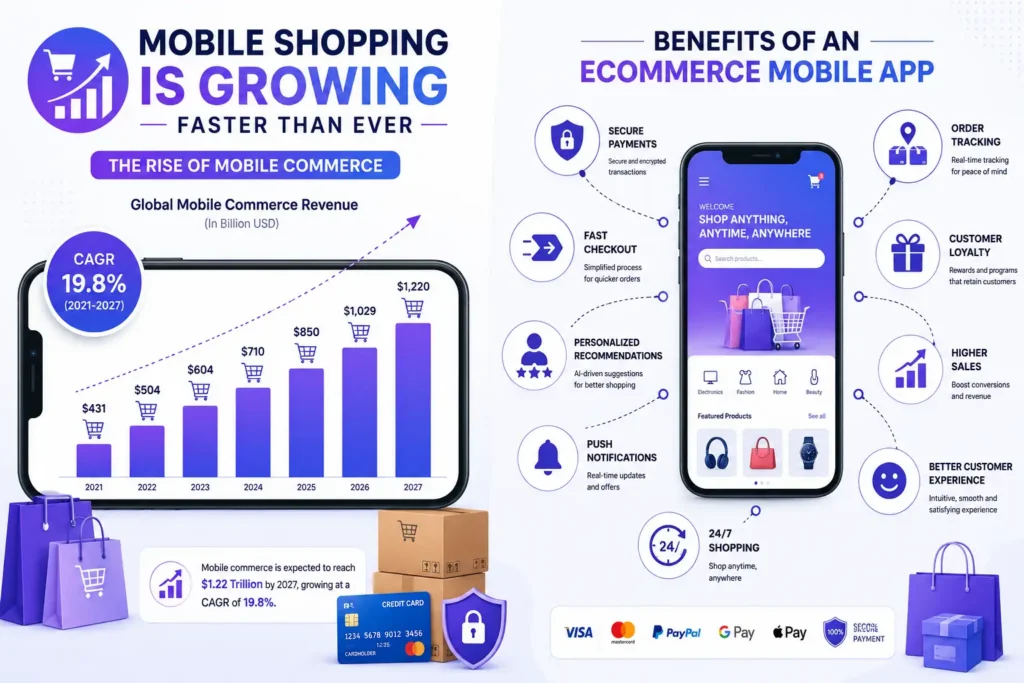
Beyond customer experience, mobile apps create new revenue opportunities. Businesses can launch loyalty programs, offer exclusive discounts, and introduce subscription services through their applications. For startups, a mobile app builds credibility and improves customer retention. For established brands, it creates a direct communication channel without depending entirely on search engines or social media platforms.
Factors that Influence the Cost to Develop an eCommerce App
Several elements determine the cost to develop an eCommerce app. Every project has unique requirements, making pricing different from one business to another.
1. App Complexity
The biggest pricing factor is application complexity. A basic app includes product listings, user registration, a shopping cart, and payment processing. A medium-sized application adds wishlists, customer reviews, order tracking, and analytics.
Large enterprise solutions include AI recommendations, multilingual support, advanced dashboards, loyalty programs, and multiple integrations. These additions significantly increase the eCommerce app development cost.
2. Platform Selection
Choosing the right development approach also impacts your budget. Businesses often choose between Android, iOS, or both platforms. Developing separate applications increases investment, while cross-platform eCommerce app development helps reduce development time by sharing a large portion of the codebase. Your audience, business goals, and long-term growth strategy should guide this decision.
Explore more: Shopify vs Magento vs WooCommerce: Which is best?
3. Features and Functionalities
The number and complexity of features directly affect development time.
Common shopping app features include:
- User registration
- Product search and filters
- Shopping cart
- Secure checkout
- Order history
- Wishlist
- Push notifications
- Customer reviews
- Live chat
- Product recommendations
Advanced features increase development effort but also improve customer experience.
4. Design Requirements
An attractive interface encourages users to complete purchases. Businesses that invest in custom branding, animations, and seamless navigation usually spend more during development. Design quality often becomes a competitive advantage in crowded markets.
5. Backend Infrastructure
The application backend manages products, users, orders, inventory, and analytics. The backend development cost increases when businesses require scalable architecture, advanced security, large databases, or cloud-based services capable of supporting thousands of simultaneous users.
6. Third-Party Integrations
Modern eCommerce apps rarely work in isolation. Developers integrate payment providers, shipping platforms, CRM systems, marketing tools, and analytics platforms. Every third-party API integration requires planning, testing, and maintenance. For example, payment gateway integration enables secure online transactions, while inventory management integration keeps stock information synchronized across multiple sales channels.
7. Development Team Location
Development rates vary across countries and regions. Businesses looking for the best eCommerce development company should compare experience, communication, technical expertise, and project delivery rather than choosing solely based on hourly rates.
Experienced development partners often reduce long-term costs by writing better code and avoiding expensive mistakes. Around this stage of project planning, many businesses also compare providers before selecting a top eCommerce app development company for projects requiring enterprise expertise, scalable architecture, and long-term support.
8. Technology Stack
Technology choices influence performance, security, and maintenance. Popular technologies include React Native, Flutter, Swift, Kotlin, Node.js, Laravel, and cloud platforms. Selecting proven technologies improves future scalability and reduces technical debt. Businesses planning long-term growth should also allocate a realistic app development budget for future enhancements instead of focusing only on initial development expenses.
Breakdown of eCommerce App Development Costs
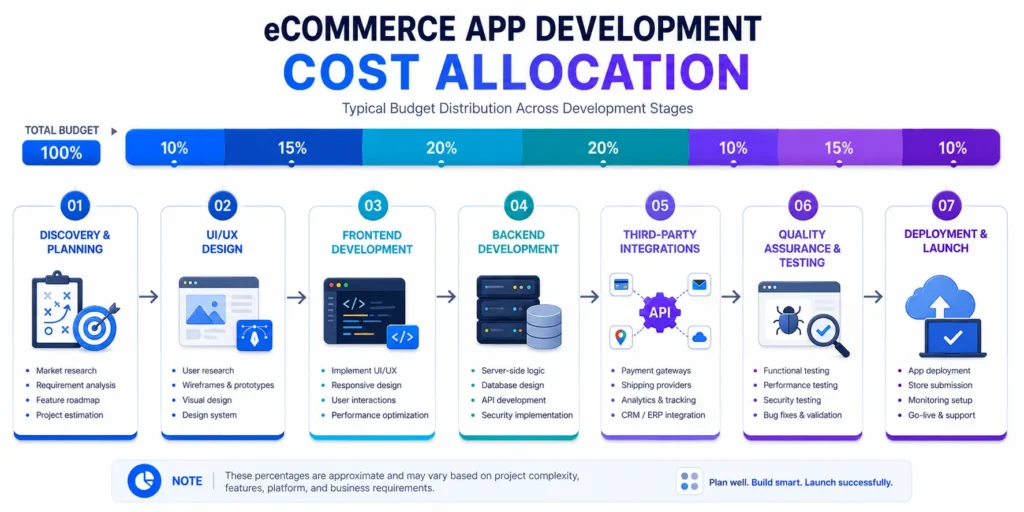
Understanding the eCommerce app development cost breakdown helps businesses see where their investment goes. Instead of viewing development as a single expense, consider every phase separately.
1. Discovery and Planning
Every successful project starts with business analysis. During this phase, developers define project goals, user journeys, technical requirements, timelines, and architecture. A detailed discovery process reduces project risks and prevents unnecessary development changes later. Many companies request an eCommerce app development estimate after completing this planning stage because requirements become much clearer.
2. UI Design and User Experience
Design transforms business ideas into an intuitive shopping experience. Designers create wireframes, prototypes, product pages, checkout flows, and navigation systems that simplify shopping. Better user experience often increases conversion rates and customer retention.
3. Frontend Development
Frontend developers build everything customers interact with. This includes product pages, shopping carts, user accounts, checkout screens, search functionality, and responsive layouts across different devices. Performance optimization also plays an important role because slow applications often experience higher cart abandonment rates.
4. Backend Development
Backend systems power the entire application. Developers build user authentication, databases, order processing, product management, reporting dashboards, and API services. Strong backend architecture supports a scalable eCommerce application that continues performing efficiently as customer numbers grow.
5. Feature Development
Custom functionality requires additional development effort. Projects involving b2b eCommerce app development usually include customer-specific pricing, quotation systems, approval workflows, and account management. Meanwhile, b2c eCommerce app development focuses more on customer engagement, personalized recommendations, loyalty programs, and simplified purchasing journeys.
Marketplace platforms require additional modules for vendor management, commission handling, and dispute resolution, making the marketplace app development cost higher than traditional online shopping applications.
6. Platform Development Choices
Businesses often choose technologies based on existing infrastructure. Some companies extend existing stores through Shopify development, while others prefer WooCommerce development for WordPress-based online businesses. Custom platforms provide greater flexibility but usually require larger development investments.
7. Choosing the Right Development Partner
Selecting experienced developers influences both quality and project cost. Many growing businesses prefer custom eCommerce app development services when they require tailored enterprise solutions, advanced integrations, and dedicated project management throughout the development lifecycle.
Before finalizing a project, businesses should evaluate portfolios, communication practices, technical expertise, and post-launch support instead of comparing hourly rates alone. Organizations with ongoing development needs often hire best dedicated developers to ensure faster feature delivery, consistent quality, and long-term product improvements.
Average Cost of eCommerce App Development
The final eCommerce app development cost depends on project scope, technology choices, and business requirements. While every project differs, the following ranges reflect today’s market.
| App Type | Estimated Cost (USD) | Development Time |
|---|---|---|
| Basic eCommerce app | $15,000–$35,000 | 2–4 months |
| Medium-complexity app | $35,000–$80,000 | 4–7 months |
| Advanced enterprise app | $80,000–$200,000+ | 7–13+ months |
A basic application supports product browsing, secure checkout, user accounts, and order management. Mid-level projects add loyalty programs, advanced search, customer reviews, and analytics. Enterprise solutions include AI recommendations, multiple integrations, and automation features.
Businesses often ask, how much does an eCommerce app cost before defining requirements. The answer depends on features, scalability, security, and customization rather than a fixed price. The eCommerce mobile app development cost also varies depending on whether you build for Android, iOS, or both platforms. Development becomes more expensive as custom functionality increases.
Companies requesting a custom eCommerce app development cost usually need tailored workflows, unique branding, advanced reporting, or enterprise integrations. These projects require more planning and development hours than template-based solutions.
Explore more: eCommerce website development cost guide
Tips for Managing eCommerce App Development Costs
Reducing costs should never mean sacrificing quality. Smart planning helps control expenses while delivering a reliable application.
1. Prioritize Essential Features
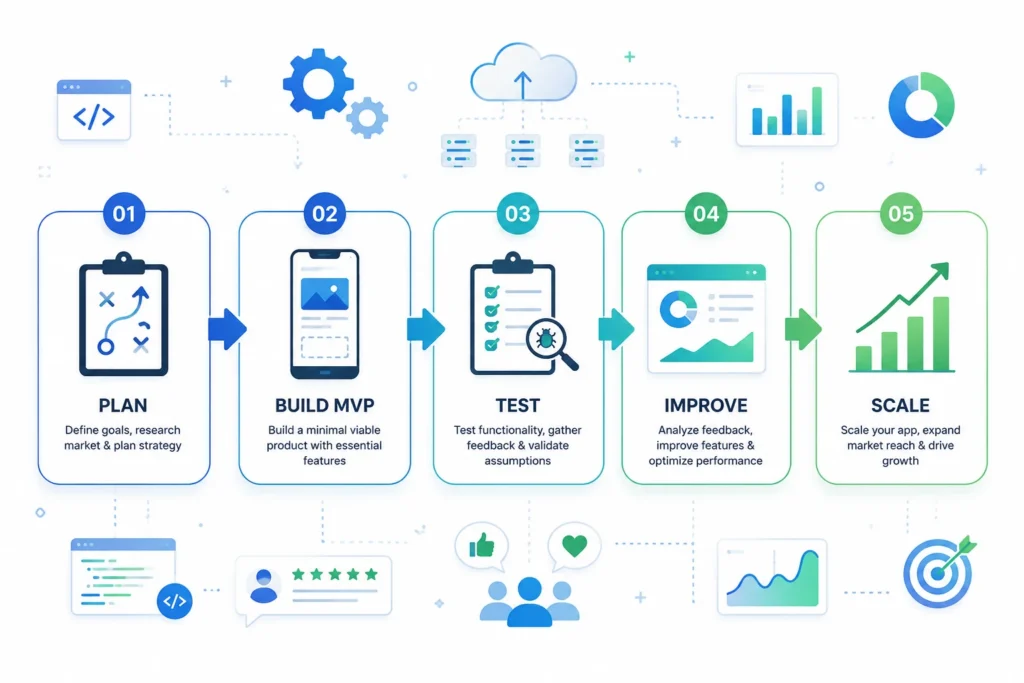
Start with the features customers actually need. Launch with the core shopping experience and add advanced functionality after gathering user feedback. This approach reduces initial investment and shortens development time. Understanding the features affecting eCommerce app cost helps businesses separate essential requirements from optional enhancements.
2. Build an MVP First
A Minimum Viable Product allows businesses to validate ideas before making larger investments. Early customer feedback identifies valuable improvements and prevents spending money on features users may never use.
3. Choose the Right Development Partner
An experienced development company can identify risks early and recommend practical solutions. Instead of choosing the lowest quote, compare technical expertise, industry experience, communication, and post-launch support. Better planning usually results in lower overall project costs.
4. Select the Appropriate Technology
Choose technologies that align with long-term business goals. Using modern frameworks and proven architecture reduces future maintenance work while improving scalability and performance.
5. Plan Future Growth
Think beyond the first release. Designing for expansion prevents expensive redevelopment later. A flexible architecture supports new products, markets, payment methods, and customer growth without rebuilding the application.
Explore more: Custom eCommerce website development guide
Additional Considerations
Development does not end after launching the application. Several ongoing expenses should become part of your long-term planning. Cloud infrastructure supports application performance, backups, and security. Your cloud hosting cost depends on traffic, storage, and server resources. As your customer base grows, hosting expenses increase gradually.
Quality assurance is another important investment. The app testing cost covers functional testing, performance testing, usability reviews, and security validation. Thorough testing reduces bugs and protects your business reputation. Businesses should also prepare for future updates, security improvements, and feature enhancements. Continuous optimization keeps the application competitive as customer expectations evolve.
If your long-term strategy includes expansion, build an eCommerce business app that supports new payment methods, regional languages, marketing tools, and business workflows without requiring major redevelopment.
Explore more: Find the best eCommerce expert for your business
Conclusion
Understanding the cost to develop an eCommerce app begins with defining clear business goals and realistic expectations. Every project differs because pricing depends on complexity, features, technology, integrations, and future scalability. Instead of focusing only on the initial investment, evaluate long-term value, maintenance, and growth potential. A carefully planned application delivers better customer experiences, supports business expansion, and generates stronger returns over time.